Few materials make a room feel as deliberate and modern as a wall or floor in deep, saturated black. Black tile reads as luxurious and bold, anchoring a bathroom, kitchen, or entryway with a richness that lighter colors cannot match. It also carries a reputation for showing every speck of dust and water spot, which keeps some homeowners hesitant. The truth is more nuanced: with the right finish, format, and grout choice, black tile can be both striking and surprisingly practical. This guide covers how to use it well.
Part of our Tile & Grout guide — explore the full guide →
- Why Choose Black Tile
- Types of Black Tile
- Matte vs Glossy Finish
- Grout Color Makes or Breaks It
- Design Ideas by Room
- Keeping Black Tile Looking Clean
- Patterns and Layouts That Flatter Black
- Pairing Fixtures and Finishes
- Balancing Black in a Room
- Black Floor Tile: What Changes When Black Goes Underfoot
- Final Thoughts
Why Choose Black Tile
Black is the ultimate neutral. It pairs with nearly any palette, hides stains better than white on grout lines, and gives a space instant depth. In a small powder room, a full black surround can feel like a jewel box rather than a closet. In a kitchen, a matte black backsplash sets off brass hardware and warm wood beautifully. And on a floor, large black tiles create a seamless, grounded base that makes furniture and rugs pop.
Types of Black Tile
The material you choose shapes durability, cost, and look.
- Porcelain: The workhorse. Dense, water-resistant, and tough enough for floors, porcelain is the most practical option for high-traffic and wet areas.
- Ceramic: More affordable and easier to cut, best for walls and backsplashes rather than busy floors.
- Natural stone: Black granite, slate, and black marble (such as Nero Marquina) deliver real depth and veining, but require sealing and gentler care.
- Glass: Reflective and glossy, ideal for backsplashes and accent walls where you want shine and easy wipe-downs.
- Mosaic: Small black tiles on mesh sheets, great for shower floors and detail bands.
Matte vs Glossy Finish
This single decision affects both appearance and upkeep. Glossy black tile is dramatic and easy to wipe clean, but it shows water spots, fingerprints, and dust readily, and it can look streaky on a large wall. Matte black tile hides smudges and water marks far better and gives a soft, contemporary look, though it can be slightly harder to clean if grime settles into the texture. For floors and shower walls, matte or honed finishes are usually the smarter pick. For a small accent or backsplash where shine is the point, gloss earns its place.
Grout Color Makes or Breaks It
With black tile, grout is a design tool, not an afterthought. Match the grout to the tile, in charcoal or black, and the surface reads as one continuous, modern plane that minimizes the grid. Contrast it with white or gray grout and you emphasize the geometry, which suits classic subway or hexagon layouts. Most homeowners prefer dark grout with black tile because it hides soap scum and stays looking clean longer. Whatever you choose, use a quality grout and seal it.
Design Ideas by Room
Bathrooms
A floor-to-ceiling black shower feels spa-like and hides water spotting well in a matte finish. Pair it with warm wood vanities and matte black or brushed gold fixtures to avoid a cold, cavernous feel.
Kitchens
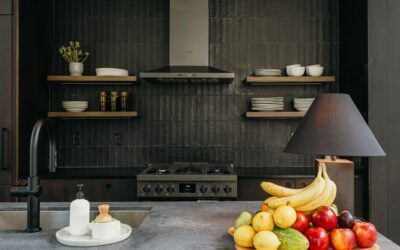
A black backsplash, especially in a small herringbone or subway format, frames open shelving and light countertops with crisp contrast. Black floor tile in a kitchen looks elegant but does show crumbs, so reserve it for lower-traffic, well-lit kitchens or choose a speckled stone-look.
Entryways and Floors
Large-format black porcelain creates a polished, gallery-like entry. Mixing black with white in a checkerboard remains a timeless choice for foyers and mudrooms.
Keeping Black Tile Looking Clean
The “black tile shows everything” complaint is mostly about glossy finishes and hard-water areas. A few habits keep it sharp.
- Wipe glass and glossy surfaces with a microfiber cloth and a streak-free cleaner.
- Squeegee shower walls after use to prevent water spots.
- Skip harsh abrasives that can dull the finish over time.
- Use a pH-neutral cleaner on natural stone and reseal it on schedule.
- Choose matte and textured finishes in spots that get heavy use or hard water.
Patterns and Layouts That Flatter Black
The layout you choose shapes how bold the black reads. A running-bond or brick pattern in black subway tile feels classic and a little softer than a rigid grid. Herringbone adds movement and a high-end, custom look, especially in a backsplash. Large-format black tile with minimal grout lines creates a sleek, almost monolithic plane that suits modern interiors. Hexagon and penny-round mosaics in black bring vintage character to bathroom floors. For a timeless statement, black and white checkerboard remains a designer favorite in entries, kitchens, and powder rooms.
Consider scale relative to the room. In a small space, a large continuous field of black with matching grout can feel expansive rather than closed-in because the eye is not chopped up by grout lines. In a bigger room, mixing black tile with lighter accents or a patterned layout keeps the surface from feeling like a heavy void.
Pairing Fixtures and Finishes
Black tile is a backdrop, and the metals and materials you set against it determine whether the result feels warm or cold. Brass and brushed gold fixtures pop beautifully against black and add warmth, a pairing that has become a signature of modern bathrooms and kitchens. Matte black hardware on black tile creates a moody, monochromatic, tone-on-tone look. Chrome and polished nickel keep things crisp and contemporary. Warm wood vanities, cabinets, and shelving counter the coolness of black and prevent a space from feeling stark. Natural stone counters with veining echo the depth of black marble tile for a layered, luxurious effect.
Balancing Black in a Room
Black absorbs light, so balance is key in smaller or darker spaces. Bring in good lighting, reflective surfaces like a mirror or glossy counter, and lighter accents in textiles, wood, or metal. Used as a full surround in a sunlit room, black tile feels rich; used in a windowless space without contrast, it can feel heavy. Treat it as a strong base and let the rest of the room breathe around it.
Black Floor Tile: What Changes When Black Goes Underfoot
Black on a wall is mostly a style decision. A black floor tile has to handle foot traffic, spills, grit, and the way light hits a horizontal surface. Those factors change which products and finishes work best, so it is worth thinking about the floor separately from backsplashes and shower walls.
Check the Slip Rating First
Glossy black tile looks striking in the showroom but can be slick when wet. For floors, look for the DCOF rating, a measure of wet slip resistance. A value of 0.42 or higher is the common benchmark for level interior floors that may get wet, such as bathrooms, kitchens, and entryways. Matte, honed, and lightly textured black porcelain usually meet it easily. Polished finishes often do not, so save them for walls or low-risk spaces.
What Shows on a Black Floor
Dark floors do hide some stains, but they highlight anything light-colored. Expect to notice these more than you would on a mid-tone floor:
- Dust, lint, and pet hair from light-coated pets
- Dried footprints and water spots, especially after mopping with hard water
- Tracked-in sand, salt, and road residue near exterior doors
- Fine scratches on glossy glazed surfaces
The practical fix is texture and variation. Black tile with subtle veining, speckles, or a slate-like surface disguises daily debris far better than a flat, uniform black. A good entry mat and a pH-neutral cleaner rinsed well will also cut down on hazy residue.
Grout Choices Specific to Floors
Floor grout lines collect dirt faster than wall grout, and light grout on a black floor will darken unevenly in traffic paths. Charcoal or dark gray grout is usually the most forgiving choice underfoot. Pure jet-black grout can reveal efflorescence or cleaning residue as a whitish film, so charcoal is often the safer match. For kitchens and mudrooms, consider epoxy or high-performance grout, which resists staining and does not need regular sealing.
Durability and Comfort Considerations
| Factor | What to Look For |
|---|---|
| Wear rating | PEI 3 or higher for most residential floors |
| Body color | Through-body or color-body porcelain so chips stay less visible |
| Finish | Matte or textured in wet and high-traffic areas |
| Sunlight | Black absorbs heat; sunny rooms can feel warm underfoot |
Glazed tile with a lighter clay body shows a pale spot when chipped, which stands out sharply on black. Through-body porcelain keeps the color consistent, so a dropped pan leaves a much less noticeable mark.
Black floors also pair well with radiant heating, since the tile holds warmth nicely. With the right slip rating, a forgiving finish, and dark grout, a black floor can be just as practical as it is dramatic.
Final Thoughts
Black tile is one of the most versatile and sophisticated choices you can make, capable of feeling modern, classic, or moody depending on finish and pairing. Choose porcelain or sealed stone for durability, lean matte for low-maintenance areas, and treat grout color as part of the design. Handled with a little intention, dark tile delivers the kind of high-end look that elevates an entire room.
Prefer to explore on your own?
See how new flooring looks in your actual room in seconds — free, no signup.
Try the free Floor Studio →