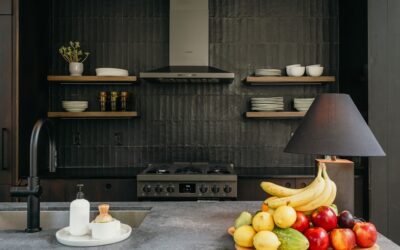
Black subway tile takes the most familiar shape in American tile design and turns up the drama, trading the safe, bright look of white for depth, contrast, and unmistakable modern edge. The classic 3 by 6 inch rectangle has covered kitchen backsplashes and shower walls for more than a century, but in black it reads as intentional and sophisticated rather than default. Whether you want a moody statement wall or a crisp graphic backdrop for brass hardware, black subway tile delivers a look that photographs beautifully and ages slowly.
Part of our Tile & Grout guide — explore the full guide →
- Why Black Subway Tile Works
- Finishes: Glossy, Matte, and Everything Between
- Grout Choices Change the Look Completely
- Layout Patterns That Add Interest
- Where to Use It
- What Black Subway Tile Costs
- Installation and DIY Tips
- Cleaning and Upkeep
- Pairing It With the Rest of Your Design
- Sizes and Shapes Beyond the Classic 3×6
- Common Mistakes to Avoid
- The Bottom Line
Why Black Subway Tile Works
The appeal comes down to contrast and proportion. The small, uniform rectangles keep a large expanse of dark color from feeling heavy, while the grout lines add rhythm and texture. Against white or light cabinetry, black tile creates a high-contrast, almost gallery-like frame. Paired with wood tones or warm metals it feels grounded and rich. Because the shape itself is timeless, you get boldness without the risk of a trend that dates quickly, the way a niche mosaic or a bright color might.
Finishes: Glossy, Matte, and Everything Between
Finish changes the entire personality of the tile. A high-gloss black tile bounces light around the room and hides its darkness, making a small kitchen feel less closed in. Matte black tile absorbs light for a soft, velvety, contemporary look that pairs well with flat-panel cabinets and black plumbing fixtures. Between the two sit satin and honed finishes that offer a subtle sheen without glare.
- Glossy — Reflective, easy to wipe clean, brightens tight spaces, shows fewer smudges.
- Matte — Modern and understated, but shows fingerprints and water spots more readily.
- Handmade or crackle glaze — Adds artisan variation and light-catching irregularity for a custom feel.
Grout Choices Change the Look Completely
Grout color is where black subway tile becomes a design decision rather than just a material. Three approaches dominate:
- Matching black or charcoal grout makes the wall read as a single seamless dark plane, minimizing the grid and maximizing drama.
- Gray grout softly outlines each tile without shouting, a popular middle path that highlights the pattern gently.
- White or light grout creates a striking graphic grid, emphasizing every rectangle for a bold, high-contrast look reminiscent of a Parisian metro station.
Whichever you choose, use a stain-resistant grout. Epoxy grout resists staining and never needs sealing but is harder to install. Sanded cement grout with a quality sealer is the more DIY-friendly option, though white grout in a kitchen will need periodic cleaning to stay bright.
Layout Patterns That Add Interest
The tile shape is simple, so the pattern carries the design. The standard running bond, offset by half a tile, is the default and always works. But black subway tile shines in more expressive layouts:
- Herringbone — Angled rectangles create energy and a custom, upscale feel.
- Vertical stack — Straight vertical lines feel modern and make low backsplashes look taller.
- Vertical offset — A brick pattern turned 90 degrees for a fresh take on the classic.
- Straight stack (grid) — Clean horizontal and vertical lines for a minimalist, architectural statement.
Where to Use It
Black subway tile is versatile, but placement matters. As a kitchen backsplash it anchors the room and hides splatters better than white. In a shower or tub surround it creates a spa-like, hotel-bathroom mood, especially in matte with matching grout. A powder room accent wall behind a floating vanity turns a small space into a jewel box. It also works as a fireplace surround or a laundry room backsplash. Just be mindful of light: in a windowless room, glossy tile and lighter grout keep the space from feeling like a cave.
What Black Subway Tile Costs
Ceramic black subway tile is one of the most affordable ways to make a bold statement, running $2 to $8 per square foot for standard machine-made ceramic. Porcelain versions cost $4 to $12 per square foot and offer better durability and color consistency. Handmade or zellige-style black tile with artisan variation jumps to $15 to $35 per square foot. Add $5 to $15 per square foot for professional installation, plus materials like thinset, grout, and edge trim.
For a typical 30-square-foot kitchen backsplash, expect a total installed cost of $300 to $900 with ceramic, or $600 to $1,500 with premium tile and complex patterns like herringbone, which increase labor and waste.
Installation and DIY Tips
A standard backsplash is one of the more approachable tile projects for a confident DIYer. Start with a clean, flat, primed wall. Use a quality thinset or premixed adhesive rated for your location, and work off a level ledger line rather than the countertop, which is rarely perfectly level. Use tile spacers for consistent grout lines, and plan your cuts so the smallest, most awkward pieces land in corners or under cabinets where they are less visible.
Cutting glossy black tile cleanly requires a good wet saw or a quality snap cutter with a fresh scoring wheel, since chips show badly against the dark glaze. Seal cement grout after it cures, wait 48 to 72 hours before heavy use, and keep a few spare tiles for future repairs.
Cleaning and Upkeep
Dark glossy tile shows water spots, dust, and fingerprints more than white, so plan on a quick wipe with a microfiber cloth and glass cleaner to keep it looking sharp. Matte tile hides dust but can trap grease in its texture near a stove, so degrease it periodically. Avoid abrasive pads that dull the finish. With black grout you will notice mineral deposits from hard water, which a diluted vinegar rinse removes on non-natural-stone tile.
Pairing It With the Rest of Your Design
Black subway tile is a strong anchor, so let it lead and keep supporting elements coordinated. Brass and gold fixtures pop dramatically against it, while matte black hardware creates a monochrome, tonal look. Warm wood open shelving softens the darkness, and white or light countertops such as quartz or marble keep the space balanced. In a bathroom, pair it with white fixtures and a wood vanity for warmth. The tile does the talking, so a restrained palette around it reads as intentional and polished rather than busy.
Sizes and Shapes Beyond the Classic 3×6
While the traditional 3 by 6 inch rectangle is the definitive subway format, black subway tile now comes in a range of proportions that change the mood considerably. Skinny 2 by 8 and 3 by 12 inch tiles read as more contemporary and elongated, emphasizing horizontal or vertical lines and reducing the number of grout joints. Larger 4 by 12 and 4 by 16 formats suit bigger walls and modern kitchens, minimizing the busy grid. Beveled subway tile, with angled edges that catch the light, adds dimension and a subtle vintage feel, while flat-edged tile reads cleaner and more modern. Choosing the size is as important as the color: a small bathroom often looks best with the classic 3 by 6, while a large feature wall can carry the drama of elongated 3 by 12 planks laid in a stacked or herringbone pattern.
Common Mistakes to Avoid
- Skipping the trim. Raw tile edges at outside corners and where the field ends look unfinished; use bullnose tiles, a metal Schluter edge, or a pencil-liner to cap them cleanly.
- Choosing the wrong grout for the space. White grout in a greasy kitchen backsplash discolors fast; darker grout hides staining and needs less scrubbing.
- Ignoring lighting. Matte black in a dim room can feel oppressive; add under-cabinet or sconce lighting to keep it from swallowing the space.
- Buying too little. Patterns like herringbone waste 10 to 15 percent in cuts; order extra and keep spares for repairs.
- Rushing the layout. Dry-lay a section first to plan where cut tiles fall so awkward slivers do not land in the most visible spot.
The Bottom Line
Black subway tile offers rare value: a bold, high-impact look built on a shape that will never go out of style, at a price point that starts genuinely affordable. Decide your finish and grout first, since those two choices define whether the result feels dramatic and seamless or graphic and crisp. Choose a layout that fits your room’s proportions, invest in stain-resistant grout, and you will have a backsplash or shower that looks custom and current for many years to come.
Prefer to explore on your own?
See how new flooring looks in your actual room in seconds — free, no signup.
Try the free Floor Studio →