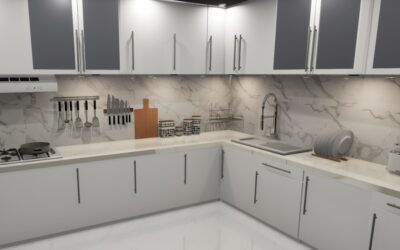
A black parquet floor is the boldest flooring statement money can buy, and either it elevates a home into magazine-cover territory or makes it feel like a cave. Black parquet flooring works best when the rest of the design lives up to it: high ceilings, generous natural light, and crisp white or warm-neutral walls. After installing several of these in luxury renovations, here is the buyer’s guide that covers what showrooms gloss over.
- What Black Parquet Actually Looks Like
- Real Cost Per Square Foot
- Pattern Choices and Visual Impact
- Pros That Justify the Look
- Cons That Are Real
- Finish Types and Their Maintenance
- Where Black Parquet Works Best
- Installation Considerations
- Lighting and Wall Pairings
- Cleaning and Daily Care
- Final Take
What Black Parquet Actually Looks Like
True black flooring is rare in nature. Ebony, wenge, and Brazilian walnut come close but are CITES-restricted or environmentally questionable. Most black parquet flooring sold today is white oak or European oak with a black reactive smoke treatment, an ebony stain, or a black hard wax oil that lets the grain show through.
The grain visibility is what separates a sophisticated black floor from a flat painted-looking one. Reactive smoked oak shows depth and dimensional color that flat black stain cannot match.
Real Cost Per Square Foot
- Engineered black-stained oak herringbone: $7.50 to $14 per sq ft material
- Premium reactive smoked European oak chevron: $12 to $20 per sq ft
- Solid black-stained oak parquet (rare): $10 to $18 per sq ft
- Custom black Versailles panels: $25 to $50 per sq ft
Installation runs $7 to $12 per sq ft for herringbone, $9 to $14 for chevron. A 500 sq ft formal living room in mid-grade black parquet flooring typically lands at $9,000 to $15,000 fully installed.
Pattern Choices and Visual Impact
- Single herringbone: Classic and slightly less dramatic than chevron, suits transitional and traditional homes
- Chevron: Modern and architectural, the go-to for contemporary luxury renovations
- Double herringbone: Larger-scale pattern for big rooms with high ceilings
- Versailles panels: Drama on top of drama, reserved for formal foyers and statement rooms
Black parquet works best in rooms over 250 sq ft with at least 9-foot ceilings. Smaller rooms can feel boxed in unless paired with white walls and large windows.
Pros That Justify the Look
Visual sophistication is the headline benefit. Black parquet reads as designer-touched in a way that almost no other flooring choice can match. Real estate photos pop, and high-end buyers respond positively in luxury markets.
The dark surface also hides certain types of soil. Mud, dark pet hair, and dropped chocolate (the kid-test) are less visible against black than against light or medium tones. The floor stays looking clean longer between deep mops in moderate-traffic households.
Cons That Are Real
Dust shows aggressively on black floors. Light-colored pet hair, dryer lint, drywall dust during renovation, and pollen all stand out against the dark surface. Plan on vacuuming or microfiber sweeping every other day at minimum.
Scratches are more visible because the underlying lighter wood color shows through whenever the surface is damaged. Felt pads, pet nail trimming, and entry mats become non-negotiable rather than optional.
Black parquet also absorbs heat. South-facing rooms with large windows can run noticeably warmer in summer, and dark floors over slab give up some of the radiant heat efficiency that lighter floors retain.
Finish Types and Their Maintenance
Hard wax oils like Rubio Monocoat Charcoal, Loba 2K SupraColor Black, and Pallmann Magic Oil Black give the most natural depth and are spot-repairable with a maintenance recoat every 18 to 36 months. The finish is part oil, part wax, sealed into the wood rather than coated on top.
Polyurethane finishes with black pigment cure harder and last longer (7 to 10 years before screen-and-recoat) but cannot be spot-repaired. Walking paths show wear pattern more obviously, and the entire floor must be screened and recoated when refinishing.
Where Black Parquet Works Best
- Formal living and dining rooms with white or off-white walls and ceilings
- Modern luxury master bedrooms paired with warm-toned bedding for contrast
- Foyers and entries where dramatic first impressions matter
- Home offices and libraries with plenty of natural or task lighting
- Speakeasy-style bars and lounge spaces where the dark tone reinforces atmosphere
Avoid black parquet in tight rooms under 200 sq ft, low-ceiling basements, and rooms with limited natural light unless the design intent is dramatic and you commit to ample artificial lighting.
Installation Considerations
Glue-down installation is the only acceptable method for black parquet flooring. Use Bostik Ultra-Set SingleStep, Mapei Ultrabond ECO 985, or Sika MB urethane adhesive on a subfloor flat to within 1/8 inch over 10 feet.
Black finishes are unforgiving of glue squeeze-out. Wipe immediately with mineral spirits and clean rags during install. Cured glue on a black-oiled surface is nearly impossible to remove without damaging the finish, often requiring full plank replacement.
Lighting and Wall Pairings
Black parquet demands deliberate lighting. Layer ambient (recessed cans on dimmers), task (table and floor lamps), and accent (sconces, picture lights). A black floor with only overhead recessed lighting reads heavy and oppressive.
Wall colors that pair best: bright white (Benjamin Moore Chantilly Lace), warm white (Sherwin Williams Alabaster), warm grey (Benjamin Moore Revere Pewter), and dark moody (Farrow & Ball Hague Blue or Studio Green) for a fully saturated luxury look.
Cleaning and Daily Care
Vacuum or microfiber sweep every other day. Damp mop weekly with a manufacturer-approved cleaner like Bona Pro Hardwood Cleaner or Loba ChemTec. Avoid steam mops, vinegar-water, ammonia, and oil soaps.
Felt pads on every furniture leg are mandatory. A walk-off mat at every exterior door catches the grit that scratches the surface. Consider a strict no-shoes-indoors policy in homes with black parquet to extend the finish life dramatically.
Final Take
Black parquet flooring is for owners who want to commit to the maintenance and design discipline it demands. Choose engineered European oak with a reactive smoked or quality black hard wax oil finish, install via glue-down on a flat subfloor, and pair with bright walls and layered lighting. Done right, it is one of the most striking flooring statements possible and elevates a home into design-magazine territory.
Prefer to explore on your own?
See how new flooring looks in your actual room in seconds — free, no signup.
Try the free Floor Studio →