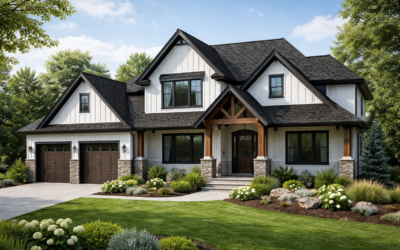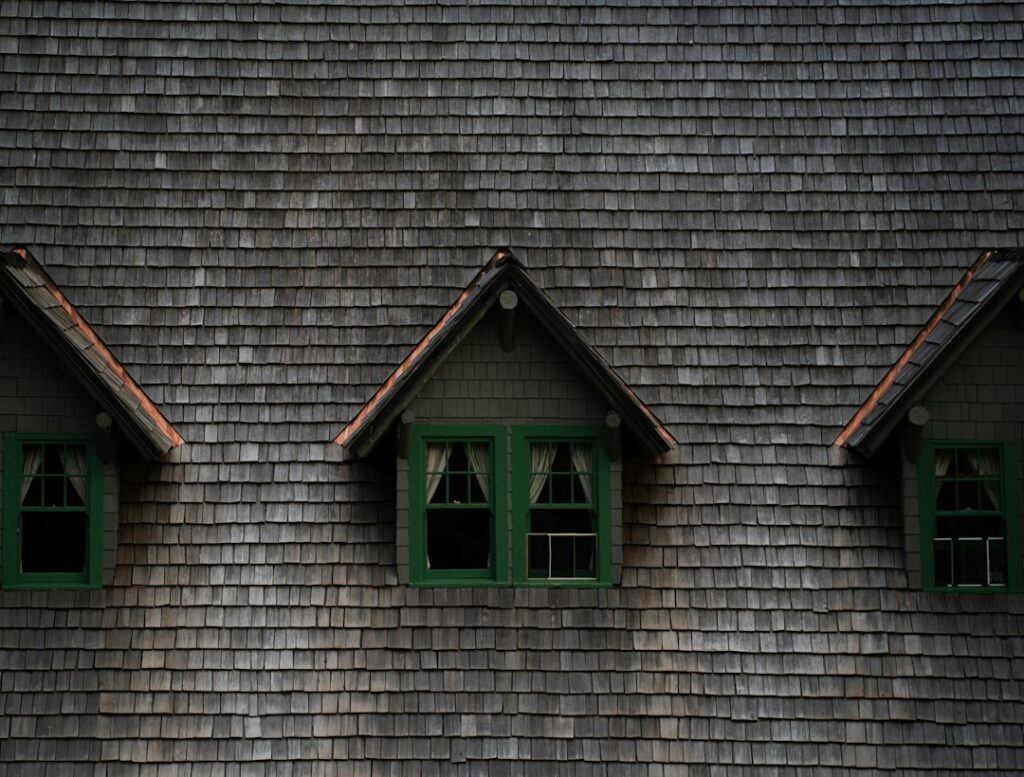
From the curb, these two dark roofs can look closer than they really are. In the Black Sable vs Colonial Slate decision, the short answer is this: Black Sable is a black roof with warm brown and taupe flecks, while Colonial Slate is a dark gray roof with a scattering of red. Owens Corning describes Black Sable as having an overall color of black, achieved with a mix of brown, black, taupe and dark gray granules, and Colonial Slate as having an overall color of gray, achieved with dark gray, light grays and red granules.
Part of our Roofing guide — explore the full guide →
That difference matters for the rest of the house. Black Sable leans warm and suits brick, cream, tan and wood tones. Colonial Slate leans cool and suits white, gray, blue and other crisp exteriors, with the red flecks adding a hint of life up close. If you want a near-solid black instead, Owens Corning’s Onyx Black is the third dark option most people compare.
Both names are offered as architectural (laminated) shingles in the TruDefinition Duration family, though Black Sable belongs to the Duration Designer color collection and Colonial Slate and Onyx Black sit in the standard Duration palette. Color availability varies by region, so confirm with a local supplier before you fall in love with a sample.
Black Sable vs Colonial Slate: Side-by-Side
The table compares the three dark Owens Corning colors most shoppers weigh against each other, using the manufacturer’s own granule descriptions.
| Color | Collection | Overall color and granule mix | Undertone | House colors it suits |
|---|---|---|---|---|
| Black Sable | TruDefinition Duration Designer (also offered in the Duration FLEX line) | Black, from brown, black, taupe and dark gray granules | Warm | Red or brown brick, cream, tan, warm white, wood siding, deep red accents |
| Colonial Slate | TruDefinition Duration | Gray, from dark gray, light grays and red granules | Cool with a red fleck | White, light or mid gray, blue, gray stone, red brick with gray mortar |
| Onyx Black | TruDefinition Duration | Black, from dark gray and black granules | Neutral to cool | Crisp white, modern farmhouse, black and white palettes, any bold door color |
All three are dark, so all three absorb more sunlight than light gray or tan shingles. In hot climates that means more heat in the attic, which good ventilation and insulation offset more than shingle color does. Owens Corning also sells hip and ridge shingles color matched to its Designer colors, which keeps the ridge lines from looking patchy.
How Black Sable Reads on a Roof
Owens Corning named Black Sable its 2019 Shingle Color of the Year and described it as using classic black granules with gray, umber brown and a hint of sable. On a roof, that blend gives a soft, rich black rather than the flat, inky look of a pure black shingle.
In full sun, the brown and taupe granules show up as subtle warmth and texture, especially on a low-sloped porch roof close to eye level. In shade or on overcast days, it reads as plain black from the street. That makes it a safe pick when you want a black roof but your house has warm materials that would clash with a cold, blue-black.
Good matches include red brick, brown brick, natural stone in tan or buff tones, cedar shakes, cream or warm white siding, and deep greens. Owens Corning’s own style boards pair it with a deep maroon for an updated Craftsman palette. It is a weaker match for very cool, blue-gray siding, where the warm flecks can look slightly muddy.
How Colonial Slate Reads on a Roof
Colonial Slate is the one to choose if you want the depth of a dark roof without committing to black. The mix of dark gray and light gray granules gives a weathered, slate-like variation, and the red granules add small warm sparks that keep it from looking flat or industrial.
From the street it usually reads as a charcoal or dark slate gray. On a bright day the lighter grays lift it toward a medium-dark gray, and on a cloudy day it can look close to black. The red flecks are visible mostly up close, so they rarely fight with siding color, but they do tie in nicely with red brick, red doors or rust-toned shutters.
Best partners are white, light gray, greige, blue, navy and sage siding, gray stone, and red brick with gray mortar. It is a common choice for colonial and Cape Cod homes, which is no surprise given the name. Pairing it with heavy tan or yellow siding works less well because the cool gray base can look mismatched beside strongly warm colors.
Where Onyx Black Fits
Onyx Black is the simplest of the three. Owens Corning describes it as an overall black from a mix of dark gray and black granules, with no brown or red in the blend. On a roof it reads as a clean, deep black with only slight dimensional shading from the laminated layers.
Choose Onyx Black for high-contrast looks: white board and batten, modern farmhouse, black window frames, or a bright front door. It is also the easiest black to coordinate with black gutters and trim. If you like the black-roof look but your house has warm brick or wood, Black Sable is usually the gentler match.
How to Choose Between Them
For most homes, black sable vs colonial slate comes down to undertone. Use your fixed materials as the deciding factor. Brick, stone, and any siding you are not replacing should drive the choice, because the roof is far harder to change later.
- Identify your undertones. Hold a piece of white printer paper against your brick, stone or siding. If it looks yellow, tan, orange or pink by comparison, you have a warm house. If it looks blue, gray or green, you have a cool house.
- Match warm to warm. Warm houses usually look best with Black Sable. Cool houses usually look best with Colonial Slate or Onyx Black.
- Decide how much contrast you want. Onyx Black gives the most contrast against light siding. Colonial Slate gives the least. Black Sable sits between.
- Get physical samples. A roof shingle sample or a full bundle wrapper sample from a supplier is far more reliable than a screen. Lean it at roof pitch against the house, never flat on the ground.
- Check several times of day. Look at the samples in morning, midday and late afternoon light, and on a cloudy day.
- Drive by real roofs. Ask your roofer or supplier for addresses of local homes with each color. Seeing a full roof at street distance is the best test there is.
- Confirm availability. Owens Corning notes that some colors are not offered in every service area. Confirm your pick is stocked locally before signing a contract.
Performance and Warranty Notes
Because all three are TruDefinition Duration family shingles, the color choice does not change how the shingle performs. The Duration line uses Owens Corning’s SureNail technology, a reinforced nailing strip designed for holding power, and the shingles are algae resistant to help fight dark streaking. Duration shingles are marketed with a limited lifetime warranty (for as long as you own the home) and wind resistance ratings that increase when specified Owens Corning starter and hip and ridge components are installed. Read the actual warranty document for the exact terms, because coverage depends on the installation and components used.
Dark shingles do show some things more than lighter ones. Pollen, dust and light granule shedding on a new roof are more visible on black. Algae streaks show more on light gray. In practice, a well-ventilated attic and clean gutters affect longevity far more than the color.
Cost Considerations
Within a single product line, color rarely changes price, so a Duration roof in Colonial Slate or Onyx Black usually costs the same as any other standard Duration color. Designer collection colors such as Black Sable are sometimes priced slightly higher depending on the market and supplier. Installed architectural shingle roofs typically run in a broad range of roughly $4 to $8 per square foot depending on region, roof pitch, tear-off layers and decking repairs, so get at least three written quotes and confirm the exact color and product name on each.
Safety and When to Call a Pro
Roofing is one of the more dangerous home projects. If you inspect samples or an existing roof yourself, keep to these basics:
- Set extension ladders on firm, level ground at roughly a 4 to 1 angle (1 foot out for every 4 feet up) and extend the ladder at least 3 feet above the roof edge.
- Keep three points of contact while climbing and never carry bundles up a ladder by hand.
- Stay off steep, wet, icy or freshly installed roofs, and use a fall-arrest harness for any roof work.
- Leave two-story or steep roofs to a licensed, insured roofing contractor.
Re-roofing generally needs a permit, and many HOAs require approval of the shingle color before work begins. A certified installer can also register the warranty, which can extend coverage beyond the standard terms.
Frequently Asked Questions
Is Black Sable a true black shingle?
It reads as black from the street, but Owens Corning builds it from brown, black, taupe and dark gray granules, so it has a softer, warmer look than a pure black like Onyx Black.
Is Colonial Slate gray or black?
It is a dark gray. Owens Corning lists its overall color as gray, from dark gray, light grays and red granules. In shade or on cloudy days it can look nearly black.
Which is darker, Black Sable or Colonial Slate?
Black Sable is darker overall because its base is black. Colonial Slate has light gray granules mixed in, which lift it to a charcoal gray.
Do Owens Corning black shingles make the house hotter?
Dark shingles absorb more sun than light ones, which can raise attic temperatures. Proper attic ventilation and insulation have a larger effect on comfort and energy use than shingle color alone.
Are all Owens Corning colors available everywhere?
No. Owens Corning lists some colors as unavailable in certain service areas, so check with a local supplier or roofer before choosing.