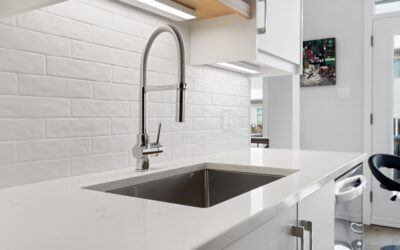
The finish that ruled kitchens for twenty years is finally getting some competition. A black stainless steel kitchen faucet delivers the durability homeowners love about traditional stainless while trading the shiny silver look for a deep, warm gunmetal tone that hides fingerprints and water spots far better. If you’ve ever wiped smudges off a bright chrome faucet three times a day, you already understand the appeal. This guide covers what the finish actually is, how to choose the right style, and how to keep it looking sharp.
Part of our Kitchen Remodeling guide — explore the full guide →
Black stainless has surged in popularity because it works with more design schemes than you’d expect. It complements matte black cabinet hardware, warms up an all-white kitchen, and disappears elegantly against dark countertops. Before you buy, though, it helps to understand what separates a quality finish from one that will chip within a year.
What “Black Stainless Steel” Actually Means
Here’s a detail worth knowing: black stainless steel isn’t solid black metal. Manufacturers start with a stainless steel or solid-brass base and apply the dark finish through one of two main processes. The premium method is PVD (physical vapor deposition), which bonds the color to the metal at a molecular level. PVD finishes resist scratching, corrosion, and fading, and they’re the ones worth paying for.
The cheaper approach is a painted or powder-coated layer applied over the base. These look fine on day one but can chip at high-contact points like the handle and spray head, exposing the lighter metal underneath. When you shop, look specifically for the letters “PVD” in the product specifications. A PVD black stainless steel kitchen faucet typically carries a lifetime finish warranty, which tells you the manufacturer trusts the coating.
Choosing the Right Faucet Style
Once you’ve settled on the finish, the body style shapes how the faucet functions day to day. The most common configurations each suit a different kind of cook and sink.
- Pull-down: A tall gooseneck spout with a spray head that pulls straight down into the sink. Ideal for deep single-basin sinks and filling large pots. This is the most popular style by a wide margin.
- Pull-out: A lower spout where the head pulls out toward you. Better for shallow sinks, tight spaces under a window, or rinsing items on the counter.
- Single-handle: One lever controls temperature and flow, letting you adjust with a wrist or elbow when your hands are full.
- Bridge or two-handle: A traditional look with separate hot and cold handles, suited to farmhouse and transitional kitchens.
For most families, a single-handle pull-down in black stainless is the practical workhorse. Look for a spray head with at least two modes, typically a soft aerated stream for filling glasses and a powerful spray for scrubbing pans. A magnetic docking system keeps the head snapped securely into place instead of drooping over time, which is a common complaint with weaker spring-clip designs.
Measuring for a Proper Fit
Nothing ruins a weekend project faster than a faucet that doesn’t fit. Before ordering, count the number of holes in your sink or countertop. Many sinks have one to four pre-drilled holes. A single-hole faucet needs just one, while widespread setups need three. If your sink has extra holes you won’t use, a deck plate (also called an escutcheon) that matches the black stainless finish covers them cleanly.
Check your spout height and reach against the space you have. If a window sits behind the sink, measure how tall the spout can be before it blocks the sash from opening. Spout reach determines whether water lands in the center of the basin or splashes against the front wall. For a standard 22-inch sink, a reach of 8 to 9 inches usually centers the stream nicely.
Installation: DIY or Hire It Out
Swapping a kitchen faucet is one of the more approachable plumbing projects, and many homeowners tackle it in an afternoon. You’ll need a basin wrench, plumber’s tape, an adjustable wrench, and a flashlight for the cramped cabinet below. Shut off the hot and cold supply valves under the sink, disconnect the old supply lines, and loosen the mounting nuts holding the old faucet.
Modern black stainless steel kitchen faucet models often ship with quick-connect hoses and a single top-mount design that tightens from above, which makes the job dramatically easier than the old thread-from-below method. Wrap plumber’s tape around threaded connections, hand-tighten plus a quarter turn with a wrench, and run the water for a minute to flush debris before reattaching the aerator. If your shutoff valves are old and corroded, that’s the moment to replace them too, or call a plumber rather than risk a leak inside the cabinet.
Keeping the Finish Looking New
The best thing about black stainless is how little it demands. It hides water spots and fingerprints that would show glaringly on chrome. Still, a few care habits keep it flawless for years.
- Wipe with a soft microfiber cloth and warm water for daily cleaning.
- For buildup, use a drop of mild dish soap, then dry to prevent water marks.
- Never use abrasive pads, scouring powders, or bleach-based cleaners, which can dull or scratch the coating.
- Avoid ammonia and acidic cleaners that attack PVD and coated finishes alike.
- Once a month, a tiny bit of mineral or baby oil buffed on with a cloth restores the deep luster.
Hard water is the finish’s only real enemy. In areas with heavy mineral content, dry the faucet after use to prevent chalky lime deposits from forming around the base and spray head.
Pairing It With Your Kitchen
A common worry is whether black stainless will clash with existing appliances. The good news is that it reads as a neutral, so it plays well with brushed nickel, matte black, and even brass accents. If you have traditional stainless appliances, a black stainless faucet creates an intentional two-tone look rather than a mismatch, especially when you echo the black in cabinet pulls or pendant lights above the island.
Undermount sinks in stainless, white fireclay, or dark granite composite all frame a black faucet beautifully. If you want the faucet to be a subtle statement rather than the star, a composite sink in a matching charcoal tone lets the fixture blend into a cohesive whole.
Features Worth Paying For
Beyond the finish, certain features separate a faucet you’ll love from one you’ll tolerate. A magnetic docking spray head snaps back into place firmly instead of sagging over the years, which is the single most common complaint about pull-down faucets. Look for a solid-brass body rather than a lightweight zinc or plastic one, since brass resists corrosion and gives the faucet reassuring heft.
Ceramic disc valves are the gold standard for the internal cartridge, delivering smooth handle action and drip-free performance for decades. Touchless and touch-activated models add real convenience when your hands are covered in raw chicken or bread dough, letting you start the water with a tap of your wrist or a wave. A high-arc spout that swivels a full 360 degrees makes filling stockpots and cleaning a double-basin sink far easier.
Common Mistakes to Avoid
The biggest error shoppers make is buying the cheapest black finish they can find, which is almost always a painted coating that chips within a year. Insist on PVD. The second mistake is ignoring the sink hole configuration and ordering a single-hole faucet for a three-hole sink, or vice versa, then scrambling for a deck plate after the box arrives.
Homeowners also frequently overlook water pressure and flow rate. Most modern faucets are limited to 1.8 gallons per minute for efficiency, which is fine for daily use, but if you have chronically low household pressure, a faucet with a wider waterway helps. Finally, resist using abrasive cleaners in the first weeks of excitement over a shiny new fixture; they are the fastest way to dull the finish you paid extra for.
Is It Worth the Investment?
Expect to pay $120 to $400 for a solid black stainless steel kitchen faucet from a reputable brand, with PVD-finished, magnetic-docking pull-downs landing in the middle of that range. Cheaper options exist, but they’re usually the painted-finish models that disappoint within a year. Given that a faucet is touched dozens of times a day and lasts a decade or more, spending a little extra for PVD and a lifetime warranty is money well spent.
For a finish that hides smudges, resists corrosion, and quietly modernizes the whole room, black stainless earns its growing popularity. Match the style to how you actually cook, confirm the fit before you buy, and give it the light care it needs. You’ll end up with a fixture that looks as good in year ten as it did the day it went in.