Here is the frustrating truth most homeowners learn the hard way: a standard “blackout” shade still leaks a bright halo of light down both sides of the window. That glow is enough to wake a napping baby or ruin a home theater. Blackout roller shades with side tracks solve the problem by capturing the fabric edges inside recessed aluminum channels, eliminating the light gap that ordinary roller shades leave behind. If you have chased darkness with foil, towels, or oversized shades and still failed, this is the upgrade that actually works.
- Why a Regular Blackout Shade Still Leaks Light
- How Side Tracks Actually Work
- Where These Shades Earn Their Keep
- What They Cost
- Measuring So the Tracks Fit
- Installing Them Yourself
- Getting to a True 100 Percent Blackout
- Manual, Cordless, or Motorized?
- Keeping the Shade Working and Clean
- Are Side Tracks Worth It for You?
Why a Regular Blackout Shade Still Leaks Light
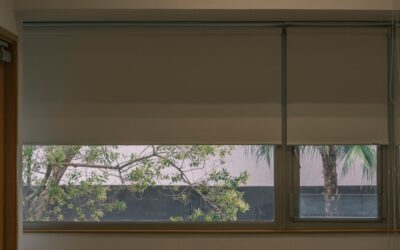
A roller shade has to be narrower than the window opening so the fabric can travel up and down without scraping. That clearance leaves a gap of roughly 3/8 to 1/2 inch on each side. Blackout fabric stops light from passing through the material itself, but nothing stops it from spilling around the edges. In a bedroom facing a streetlight or the morning sun, those two vertical strips of light can be surprisingly bright.
Side tracks close that loophole. The channels mount to the window jambs and the shade rolls down inside them, so the fabric edge sits behind an aluminum lip. Paired with a bottom rail that seals against the sill and a fascia or valance up top, you get a light-blocking envelope on all four sides. That is the difference between “dim” and genuinely dark.
How Side Tracks Actually Work
Most systems use extruded aluminum U-channels roughly 1 inch wide and 3/4 inch deep. The channel has a felt or brush insert along the inner lip that hugs the fabric, blocks light, and quiets the shade as it moves. The roller tube mounts inside the window recess, and each side channel screws to the jamb so the fabric feeds cleanly into it.
Quality matters here. Cheap kits let the fabric rattle or pop out of the track on windy days. Better systems from brands like SelectBlinds, Blindster, and Sivoia by Lutron use a stiffer fabric with welded or ultrasonically sealed edges that stay seated. For the darkest result, look for a “zip” style shade where the fabric edge is bonded to a bead that locks into the channel and cannot pull free.
Where These Shades Earn Their Keep
Not every window needs this level of light control. Reserve the investment for the rooms where darkness genuinely matters:
- Nurseries and kids’ rooms — better naps and earlier bedtimes, the single most common reason parents buy them.
- Primary bedrooms — shift workers, light sleepers, and anyone tired of a 5:30 a.m. wake-up from summer sun.
- Home theaters and media rooms — projector contrast collapses with any stray light, so edge sealing is non-negotiable.
- Home offices with screens — killing glare on monitors during video calls and editing work.
For a living room or kitchen where you just want privacy and glare control, standard shades are fine and cost far less. Match the product to the actual need.
What They Cost
Expect to pay more than a basic roller shade, because you are buying the channels, the specialized fabric, and often motorization. Rough pricing per window, custom-made:
- Entry-level manual with light-gap channels: $120 to $200 for a standard 36-inch-wide bedroom window.
- Mid-range with sealed-edge fabric and quality tracks: $200 to $400.
- Premium motorized systems such as Lutron Serena or Sivoia QS: $500 to $1,000-plus per window once you add a hub and installation.
Wider windows, arched tops, and battery or hardwired motors push the number up. A four-window nursery and bedroom pair can realistically run $1,200 to $2,500 done well. DIY kits from online blind retailers save 30 to 50 percent over a local installer if you are comfortable measuring and mounting.
Measuring So the Tracks Fit
Accurate numbers make or break an inside-mount job. Measure the window width at the top, middle, and bottom, and use the narrowest figure. Do the same for height at the left, center, and right. Note your depth too — most channel systems need at least 2 to 2.5 inches of flat jamb to mount the roller and both tracks without the fascia protruding.
If your recess is shallow or out of square, an outside mount is the smarter choice. In that case the side tracks screw to the wall on either side of the window and the shade overlaps the frame, which actually improves light sealing because there is no gap to the jamb at all. Add at least 2 inches of overlap on each side and 3 inches at the top.
Installing Them Yourself
A handy homeowner can install a track system in under an hour per window with a drill, a level, and a tape measure. The sequence looks like this:
- Mount the roller brackets and hang the tube first, checking that the shade rolls straight and level.
- Hold each side channel in place, thread the fabric edge into it, and mark your screw holes with the shade partially lowered.
- Fasten the channels to the jamb or wall, keeping them plumb so the fabric feeds without binding.
- Attach the top fascia or valance to cap the light gap above the roller.
- Lower the shade fully and check the sill seal, adding a self-adhesive bottom-rail gasket if any light sneaks under.
Pro tip: run a bead of the included brush seal or a strip of adhesive weatherstrip felt where the fascia meets the wall. That top corner is the most common spot where installers leave a pinhole of light.
Getting to a True 100 Percent Blackout
Even the best track shade can disappoint if you skip the details. To reach the darkness a nursery or theater demands, seal all four edges as a system: side channels on the verticals, a light-blocking fascia at the top, and a bottom rail that meets the sill. Choose a genuinely opaque fabric with a reflective or dark backing rather than a light-filtering weave. And accept a small trade-off, because the same seal that blocks light also traps a bit more heat, which is a bonus in winter and a minor factor in a sunny summer room.
Done right, these shades transform how a room feels at any hour. You flip the panel down at noon and the space reads like midnight, which is exactly what a shift worker, a new parent, or a movie fan is paying for.
Manual, Cordless, or Motorized?
Your lift mechanism affects both safety and daily convenience. A corded chain is the cheapest option, but hanging cords are a real hazard around cribs and are increasingly restricted under child-safety standards. A cordless spring-lift shade removes the cord and works well up to about 60 inches wide; beyond that the spring struggles against the fabric weight plus the drag of the side channels.
Motorization is the sweet spot for a track shade. The channels add friction that a motor handles effortlessly, and you avoid the cord entirely. Battery tubes from Lutron, SelectBlinds, and Graber recharge two or three times a year and pair with a remote, a wall switch, or a phone app. Set a nursery shade to drop automatically at nap time, and you never fumble in a dark room again. Budget an extra $150 to $350 per window for a quality motor and hub.
Keeping the Shade Working and Clean
Track shades ask for a little upkeep the ordinary ones do not. Dust the channels every few weeks so grit does not build up in the felt insert, which is what keeps the fabric gliding quietly and seated for a full seal. Wipe blackout fabric with a barely damp microfiber cloth; avoid soaking it, because water can lift the edge bonding on cheaper shades. If a shade starts dragging or popping out of a channel, check that the roller is still level, since a tube that has crept out of square is the usual culprit. Handled promptly, a good system stays whisper-quiet and light-tight for a decade or more.
Are Side Tracks Worth It for You?
If your only complaint is a little glare, save your money. But if you have genuinely struggled to darken a room, blackout roller shades with side tracks are the one solution that reliably delivers. They cost more than off-the-shelf shades, yet they succeed where cheaper products fail, and the payoff shows up the very first morning you sleep past sunrise. For nurseries, bedrooms, and media rooms, they are the clear upgrade worth budgeting for.