An underinsulated attic can add $40 to $80 per month to your energy bill in climate zones 4 through 7, which is why blow-in insulation is one of the highest-ROI home improvements on the table. Blow in insulation cost runs $1.50 to $4.80 per square foot of attic floor area installed, depending on material choice, target R-value, and whether the job is a top-up or a full clean-out and re-insulate. Federal tax credits under Section 25C knock 30 percent off the price, capped at $1,200 annually.
Material Costs Compared
Three blow-in materials dominate the residential market. Each hits a different price and performance point.
- Fiberglass blown-in: $0.60 to $1.20 per sq ft at R-30, lightest weight, lowest dust
- Cellulose blown-in: $0.90 to $1.65 per sq ft at R-30, best for dense-packing walls, 80 percent recycled content
- Mineral wool blown-in: $1.80 to $2.80 per sq ft at R-30, fire-resistant, highest sound dampening
Cellulose typically wins for attic retrofits because it flows into irregular cavities, settles predictably, and delivers the best value per R.
Labor Costs and Minimum Job Fees
Professional installation runs $60 to $110 per hour in most US markets, with a typical 1,200 square foot attic taking 4 to 7 hours for a two-person crew. Most contractors have a minimum job fee of $450 to $700 regardless of project size, so tiny jobs do not scale down proportionally. Expect labor to account for roughly 40 to 55 percent of the total invoice.
Cost by R-Value Target
R-value is a measure of thermal resistance. The Department of Energy recommends R-49 to R-60 for attics in climate zones 4 and above as of 2026 updates to the IECC. Here is what different targets cost per 1,000 sq ft of attic.
- R-30 cellulose top-up: $900 to $1,650
- R-38 cellulose full install: $1,200 to $2,100
- R-49 cellulose full install: $1,500 to $2,650
- R-60 cellulose full install: $1,850 to $3,200
Higher R-values require thicker insulation piles, which means more material and more bag count. Going from R-38 to R-49 typically adds 3 to 4 inches of depth.
Prep Work That Affects the Bill
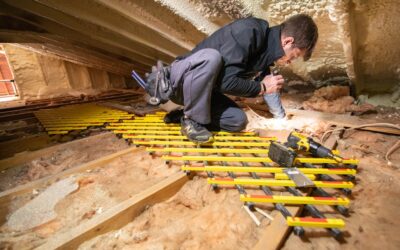
Before blowing any material, the crew should air-seal the attic plane. Plan for $400 to $900 in additional charges for sealing can lights, plumbing chases, wiring penetrations, and the attic hatch itself. Without air sealing, new insulation underperforms by 15 to 30 percent because convection bypasses the thermal barrier. Some contractors roll this into a package price, others quote it separately.
Baffle installation at the eaves to protect soffit ventilation runs another $15 to $30 per bay.
Wall Retrofits vs Attic Installs
Dense-packing cellulose into existing wall cavities costs $2.20 to $4.50 per sq ft of wall area. The crew drills 2 inch holes through exterior siding or interior drywall, blows the material under pressure to a density of 3.5 pounds per cubic foot, and patches the holes. Wall work is about twice as labor-intensive as attic work per dollar of R-value added, but the comfort improvement is often more noticeable because walls are where most drafts originate.
DIY Cost Savings
Home Depot and Lowes both offer free blower rental with the purchase of 10 or more bags of Greenfiber or TruSoft cellulose. Material alone for a 1,200 sq ft attic to R-49 runs $650 to $900. Plan on two people, a full weekend, and N95 respirators. DIY makes sense for simple attics with good access and a clear floor plan, less so for complex rooflines or attics with multiple levels.
Removal and Clean-Out Jobs
If existing insulation is contaminated by rodents, water damage, or heavy dust, a full removal adds $1.00 to $2.50 per sq ft to the project. Vermiculite insulation requires asbestos testing before disturbance, and confirmed contamination drives remediation costs to $5 to $10 per sq ft with licensed abatement crews.
Energy Savings and Payback
A typical attic insulation upgrade from R-19 to R-49 cuts heating and cooling costs by 15 to 25 percent in mixed and cold climates. For a home with a $2,400 annual HVAC bill, that is $360 to $600 per year. At a project cost of $2,200 after tax credit, payback falls between 3.5 and 6 years. Insulation itself lasts 40 to 80 years, so the net savings over its lifespan easily exceed $15,000.
Tax Credits and Utility Rebates
Section 25C of the federal tax code reimburses 30 percent of insulation material costs (not labor) up to $1,200 per tax year. Many utilities layer additional rebates of $0.10 to $0.30 per square foot on top. Check the ENERGY STAR rebate finder for your zip code before signing a contract, as some incentives require pre-approval.
Hiring Tips
Get three quotes and verify each contractor is certified by the insulation manufacturer they are installing. Ask for R-value documentation including the settled depth markers (cardboard rulers stapled to rafters) required by EPA label rules. Reject any bid that does not specify air-sealing scope separately from the blow-in line item.