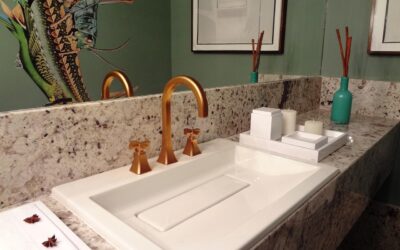
Most granite falls into predictable browns, blacks, and speckled grays, which is exactly why a stone with genuine blue-gray movement turns heads in the showroom. Blue Dunes granite countertops offer a soft, flowing blend of gray, blue, cream, and hints of gold that reads calm and sophisticated rather than busy, making them a favorite for kitchens that want subtle color without a bold commitment. Quarried as natural stone, every slab is unique, so your counters will have a character no engineered surface can copy. This guide covers the look, the pairings, and the practical care and cost of choosing Blue Dunes.
Part of our Countertops guide — explore the full guide →
What Blue Dunes Granite Looks Like
Blue Dunes is named for its wavy, dune-like patterning and its cool undertones. The stone typically features a light-to-medium gray background washed with soft blue tones, cream and beige areas, and occasional flecks of black, gold, or amber that add warmth and depth. The movement tends to be gentle and flowing rather than sharply veined, giving the surface a soothing, watery quality that works in both traditional and contemporary kitchens.
Because it is natural granite, the exact balance of blue, gray, and cream varies from slab to slab and even across a single slab. Some pieces lean cooler and grayer, others show more of the blue or warm gold. That is why viewing and hand-selecting the actual slabs for your project is essential; a small sample cannot show how the pattern flows across a full countertop.
Why Homeowners Love It
The appeal of Blue Dunes granite countertops is a mix of looks and the durability that makes granite a lasting kitchen material.
- Soft, versatile color: The muted blue-gray palette pairs with a wide range of cabinet colors and design styles.
- Natural durability: Granite is very hard, scratch-resistant, and stands up to daily kitchen use.
- Heat tolerance: Hot pans can be set down without the scorching risk some surfaces have.
- Forgiving pattern: The gentle movement and mid-tone coloring hide crumbs, water spots, and minor smudges.
- Unique character: No two installations look alike, giving your kitchen a custom feel.
That combination of a calming appearance and real toughness makes it a practical choice for busy households that still want their counters to feel special.
Pairing With Cabinets and Finishes
The cool, flowing tones of Blue Dunes are remarkably flexible, which is part of why it stays popular. White cabinets are the classic partner, creating a bright, clean, airy kitchen where the stone’s blue and gray tones stand out softly. Gray cabinets in a lighter or darker shade build a cohesive, modern monochrome look that leans into the stone’s cool undertones.
For warmth, natural wood cabinetry draws out the cream and gold flecks in the stone, balancing the cool blues with an organic feel. Navy blue cabinets create a rich, on-trend pairing that echoes the granite’s blue notes, especially striking on an island. For backsplashes, a simple white or light gray tile lets the counter shine, while a soft glass tile with a hint of blue ties the palette together. Hardware in brushed nickel, chrome, or matte black complements the cool tones, and brushed brass can pick up the warm flecks if your slab has them.
Sealing and Everyday Care
Like all natural granite, Blue Dunes is porous and should be sealed to resist stains. Seal it at installation and check the seal periodically with the simple water test: drip a little water on the surface, and if it beads the seal is holding, but if it soaks in and darkens the stone, it is time to reseal. Most kitchens need resealing every one to three years depending on use and the sealer.
Daily maintenance is easy. Clean with warm water and a pH-neutral stone cleaner or a little mild dish soap, and skip acidic or abrasive cleaners that can dull the polish and break down the sealer. Wipe up spills, particularly oil, wine, and citrus, before they have time to sit. The mid-tone, flowing pattern is forgiving of the everyday water marks and crumbs that show plainly on solid dark or solid light counters, so Blue Dunes tends to look tidy with minimal fuss.
Where It Works Best
Blue Dunes granite countertops shine anywhere their soft movement can spread out. Kitchen counters and islands are the natural home, where a large surface shows the dune-like flow to full effect. The stone also works beautifully on bathroom vanities, bringing a spa-like calm to the space, and it makes an elegant surface for a wet bar, laundry counter, or fireplace surround.
Because the pattern is gentle rather than loud, it does not overwhelm a room the way a highly dramatic granite can, so it is a safe choice even for smaller kitchens or for homeowners who want color without a strong statement. It coordinates easily with both cool and warm palettes, which makes future updates to paint and hardware simpler down the road.
Cost Expectations
Granite pricing depends on the stone’s availability, origin, and your local market. Blue-toned granites can command a premium because true blue coloring is less common in natural stone, but Blue Dunes is generally a moderately priced option compared with rare exotic blues. As a rough guide, installed costs commonly land in the range of about $45 to $90 per square foot, with fabrication, edge profiles, sink cutouts, and installation included in that figure. Always price the project from the actual slabs you approve, and get more than one fabricator quote.
How It Compares to Blue Quartz and Marble
Homeowners drawn to Blue Dunes often weigh it against engineered blue quartz and blue-veined marble, and the differences are worth understanding. Blue quartz gives you a consistent, predictable pattern and a nonporous surface that never needs sealing, but it lacks the one-of-a-kind natural movement of real granite, and it can be less heat-tolerant, so a hot pan poses more risk. If you want a controlled, uniform look with zero sealing, quartz may suit you better; if you want genuine natural character, Blue Dunes wins.
Blue-toned marble offers gorgeous soft veining but is far more delicate: it is softer, etches easily from acids like lemon and vinegar, and stains readily, demanding careful maintenance. Blue Dunes granite countertops deliver a comparably soothing, watery look with dramatically better durability, resisting the scratches, heat, and etching that plague marble in a working kitchen. For most families who cook regularly and want blue-gray color without babying the surface, granite hits the sweet spot between marble’s beauty and quartz’s toughness, which is a large part of why Blue Dunes has stayed a popular request among natural stones.
The Bottom Line
Blue Dunes granite countertops offer a rare combination of soft, soothing blue-gray color and the hard-wearing durability that keeps granite a kitchen favorite. Their gentle, flowing pattern pairs effortlessly with white, gray, wood, or navy cabinets and forgives everyday messes. Hand-select your slabs, keep the stone sealed and cleaned with gentle products, and this understated natural stone will bring a calm, custom character to your kitchen or bath for decades.