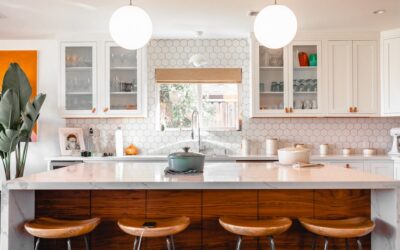
Bright, durable, and endlessly varied, a white granite slab is one of the smartest ways to lighten a kitchen without giving up the toughness natural stone is known for. After installing hundreds of these countertops, I can tell you the difference between a slab that looks flat and one that glows comes down to how you shop, seal, and light it.
Part of our Countertops guide — explore the full guide →
This guide walks through what white granite actually is, what it costs, which named varieties hold up best, and the field-tested steps that keep the surface looking new for 20 years or more.
- What Makes Granite "White" Anyway
- Popular White Granite Varieties
- What a White Granite Slab Costs
- Sealing and Everyday Care
- Edge Profiles and Finishes
- White Granite vs. Quartz and Marble
- Buying and Installation Tips
- Pairing White Granite With Your Kitchen
- Common Problems and How to Avoid Them
- Key Takeaways
What Makes Granite “White” Anyway
Granite is an igneous rock built from interlocking crystals of quartz, feldspar, and mica. A slab reads as white when light-colored feldspar and quartz dominate and the darker minerals show up only as flecks, veins, or scattered specks. No two blocks come out of the quarry identical, so the “white” you pick is really a background tone that ranges from icy blue-white to warm cream.
Because the color comes from mineral content and not a coating, it runs all the way through the 3/4-inch or 1 1/4-inch thickness. Chip an edge and you see the same stone underneath, which is a big part of why granite survives decades of daily abuse that would ruin a laminate top in a year or two.
Popular White Granite Varieties
Names get thrown around loosely at the yard, so know what you are actually looking at. Here are the workhorses I recommend most often:
- White Ice — soft gray waves over a bright base; hides crumbs and forgives fingerprints.
- Alaska White — creamy field with burgundy and charcoal speckles; pairs well with warm woods.
- Colonial White — pale gray with garnet flecks; a budget-friendly favorite.
- River White — light gray with flowing maroon veins; dramatic without going dark.
- Bianco Antico — warm taupe-white with pink undertones; reads elegant in transitional kitchens.
- Delicatus White — creamy background broken by bold black and gold movement.
Whichever you like, always approve the exact slab, not just a 4-inch sample. Movement and tone swing hard from one block to the next.
What a White Granite Slab Costs
Pricing runs by the square foot and covers the material plus fabrication and installation in most quotes. Expect these ranges in 2026 for installed countertops:
- Entry-level whites (Colonial, Luna Pearl): $40 to $60 per square foot installed.
- Mid-grade (Alaska White, River White): $55 to $80 per square foot.
- Premium exotics (Delicatus, Bianco Antico): $80 to $120 per square foot.
A typical 40-square-foot kitchen lands somewhere between $2,400 and $4,500 all-in. Add roughly $150 to $350 for a stainless undermount sink cutout and $10 to $20 per linear foot for an upgraded edge. A full slab measures around 105 by 65 inches, so smaller kitchens often get built from a single slab with no seams.
Sealing and Everyday Care
White granite is porous, and lighter stone shows a stain faster than a black slab would, so sealing matters more here than most people think. Test whether your slab needs it: drop a tablespoon of water on the surface and wait 15 minutes. If the stone darkens where the water sat, it needs sealer. If it beads up, you are fine for now.
Most white granite wants a penetrating sealer once or twice a year. Wipe on a quality impregnating sealer, let it soak 5 minutes, then buff off the excess before it hazes. For daily cleaning, skip the vinegar and citrus sprays that etch and dull the finish. Warm water and a drop of dish soap, or a pH-neutral stone cleaner, keeps the shine without stripping the seal.
Edge Profiles and Finishes
The edge you choose changes both the look and the price. Standard options usually come with the base quote, while decorative profiles add cost:
- Eased or straight — clean 90-degree edge with a softened corner; modern and no upcharge.
- Beveled — a 45-degree cut across the top edge; crisp and low-cost.
- Bullnose — fully rounded; kid-friendly and easy to wipe.
- Ogee — an S-curve for traditional kitchens; expect the biggest upcharge.
Finish matters too. A polished finish is glossy and stain-resistant. A honed matte finish looks soft and contemporary but shows fingerprints and water spots more on white stone, so seal honed tops more often.
White Granite vs. Quartz and Marble
Homeowners cross-shopping the light-countertop category usually land on granite, engineered quartz, or marble. Each has trade-offs:
- Granite — natural, heat-tolerant to about 480°F, unique movement, needs periodic sealing.
- Quartz — nonporous and no sealing, but the pattern repeats and it can scorch above 300°F.
- Marble — the softest look, but it etches from any acid and scratches easily.
If you want a bright natural surface that shrugs off a hot pan and a busy family, white granite hits the sweet spot. You trade a little maintenance for a material that outlasts almost everything else in the kitchen.
Buying and Installation Tips
Do the legwork before you sign. A few habits separate a smooth job from a frustrating one:
- Visit the slab yard in person and tag your exact slabs with tape; photograph them under bright light.
- Ask where seams will fall and request them at low-traffic spots, never centered on the sink.
- Confirm the fabricator does a laser or digital template after cabinets are set, not before.
- Check that the quote includes cutouts, edge work, and sealing so no surprise line items appear.
- Inspect the finished top for pits, fissures, and lippage at seams before the crew leaves.
Lead time usually runs 1 to 3 weeks from template to install. Plan your sink and faucet purchases early so the cutouts get templated correctly.
Pairing White Granite With Your Kitchen
The stone is only as good as the design around it. White granite plays well with almost any cabinet color, which is exactly why it stays popular year after year. A few combinations I reach for again and again:
- White cabinets: a low-contrast, timeless look; add a gray-veined granite so the counter reads as a distinct layer, not a blur.
- Navy or deep green cabinets: the white top brightens the whole room and keeps a dark base from feeling heavy.
- Natural wood cabinets: warm cream granites with garnet flecks tie into the wood grain beautifully.
- Black or charcoal islands: a bright white perimeter with a dark island reads high-end for very little extra money.
Lighting makes or breaks the effect. Add under-cabinet LEDs at around 3000K to 3500K so the stone shows its true tone at night. Warm bulbs push white granite toward yellow, while cooler light keeps the crisp look most homeowners are after.
Common Problems and How to Avoid Them
White granite is tough, but a few issues catch homeowners off guard. Knowing them ahead of time saves grief:
- Oil and grease stains: lighter stone shows an oil spot fast; wipe cooking oil, butter, and salad dressing right away and keep the seal fresh.
- Etching near acids: some white granites contain calcite that dulls where lemon juice or wine sits; blot spills quickly.
- Visible seams: insist the fabricator color-match epoxy to the stone and place seams away from sight lines.
- Natural fissures: hairline mineral lines are normal in granite, not cracks; run a fingernail across to confirm the surface is smooth.
None of these are dealbreakers. Prompt cleanup and a yearly seal handle the vast majority of them, and a good fabricator handles the rest at install.
Key Takeaways
A white granite slab brightens a kitchen while giving you the durability and heat resistance that only natural stone delivers. Budget $40 to $120 per square foot installed depending on the variety, always approve the exact slab, and seal a light stone once or twice a year to keep stains out.
Choose an edge profile that fits your style, favor a polished finish if you want the easiest upkeep, and inspect the finished work before the crew packs up. Handle those few details and your countertop will look as good in 2040 as it does the week it goes in.