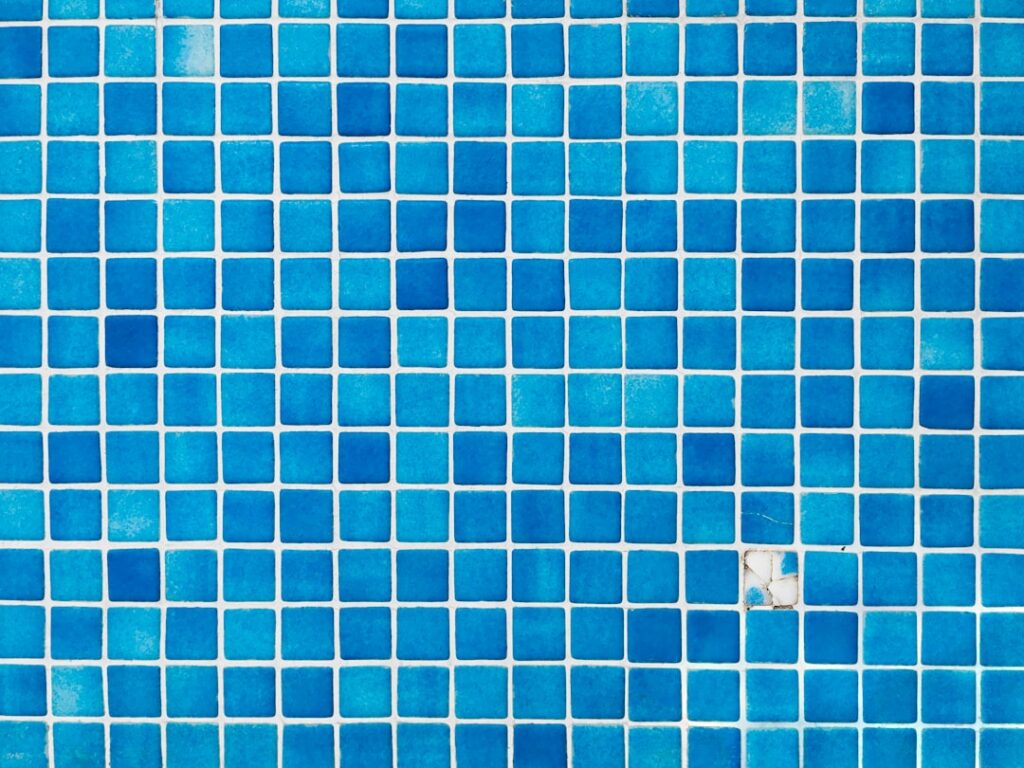
The inviting color of a backyard pool comes as much from its tile as from the water itself. Blue pool tile lines the waterline, accents the steps, and often covers spas and water features, and the exact shade you choose, paired with the interior finish, determines whether your pool reads tropical turquoise, deep ocean, or cool Mediterranean blue.
Part of our Tile & Grout guide — explore the full guide →
Pool tile also does serious work. It marks the waterline where scale and oils collect, protects the pool’s edge, and must survive constant water exposure, pool chemicals, sun, and in many climates, freezing temperatures. Choosing the right material matters as much as choosing the right color.
What Pool Tile Has to Withstand
Unlike interior tile, pool tile lives a demanding life. It is submerged or splashed constantly, exposed to chlorine or salt systems, baked by UV, and, in cold regions, subjected to freeze-thaw cycles that can crack the wrong material. Because of this, pool tile must be:
- Highly water-resistant with very low water absorption
- Resistant to pool chemicals and salt
- Frost-resistant if you live anywhere that freezes
- Slip-appropriate for steps and ledges
Standard indoor tile is not a substitute. Always confirm a product is rated specifically for pool or submerged use.
Glass Versus Porcelain and Ceramic
Two material families dominate, each with clear trade-offs. Glass tile is prized for pools because it is non-porous, color-rich, and stunning underwater; light passes through it and shimmers, producing those deep, jewel-like blues. It is the premium option and typically the most expensive.
Porcelain and specialized ceramic pool tile are more affordable and very durable, with low absorption and good frost resistance when rated for it. They come in a huge range of blue glazes and mosaic patterns. Natural stone is also used for coping and accents but generally needs sealing and careful chemical management. For most homeowners, the choice comes down to glass for maximum visual impact or porcelain for value and toughness.
Choosing Your Shade of Blue
The tile color interacts with the interior finish and the water to create the final look. Light turquoise and aqua mosaics evoke a tropical, resort feel. Mid-tone royal and azure blues give a classic swimming-pool look. Deep navy and cobalt create a sophisticated, reflective, almost lake-like surface.
Remember that water amplifies and deepens color, so tile often looks richer once the pool is filled. Iridescent and blended-blue mosaics add movement and catch sunlight beautifully. View samples wet and in outdoor light, and consider how the tile will pair with your coping, decking, and interior plaster or aggregate finish.
Where Tile Goes in a Pool
Tile typically appears in several zones, and you can mix uses:
- Waterline band – the most common application, a row of tile at the water surface where scale builds up and is easiest to clean.
- Steps and benches – often marked with contrasting tile for visibility and safety.
- Spas and spillways – frequently fully tiled for a luxe look.
- Full-tile pools and water features – a premium, all-over application.
Installation and Waterproofing
Pool tile installation is specialized work, and waterproofing is non-negotiable. The structure must be properly prepared and waterproofed so the assembly handles constant submersion and movement. Tile is set with a polymer-modified or specialty thinset rated for submerged, exterior use, never an ordinary indoor mortar.
Grout choice matters too: many installers use epoxy grout at the waterline and in spas because it resists chemicals, staining, and water far better than cement grout. Freeze-prone climates demand frost-resistant tile and proper installation to prevent cracking. Because mistakes here are expensive and hard to fix underwater, pool tile is one project where hiring an experienced pool tile professional is strongly recommended. Always follow the material and waterproofing manufacturers’ instructions.
Cost Expectations
Budget varies widely by material and scope. Porcelain and ceramic pool tile generally fall in the lower range, while glass mosaics command a premium, often several times the price per square foot. A waterline-only tile band is far cheaper than fully tiling a pool. Labor for pool tile installation is significant because of the prep, waterproofing, and precision involved.
Treat any figures as estimates and get quotes from local pool builders or tile specialists, since regional pricing, pool size, and tile selection swing the total considerably.
Maintenance That Keeps the Color
Blue pool tile stays beautiful with routine care. The waterline collects calcium scale and body oils, so brush it regularly and clean buildup with products approved for your tile and pool surface. Keep water chemistry balanced; aggressive or imbalanced water can etch grout and dull finishes over time.
For stubborn scale, especially on glass, use only manufacturer-approved cleaners and gentle tools to avoid scratching. With balanced water and regular brushing, a quality blue tile installation will hold its color and shine for the life of the pool.
How Tile Color Affects Water Appearance
One detail surprises many first-time pool owners: the water color you see is largely created by the pool’s interior finish, not just the tile. A white plaster interior produces bright, light blue water; darker aggregate or pebble finishes yield deeper blue, green, or even near-black water. The blue tile at the waterline frames and reinforces that effect rather than dictating it.
Because of this, coordinate your tile choice with the interior finish. A turquoise tile pairs naturally with a light interior for a tropical, Caribbean look, while deep navy or cobalt tile complements a darker finish for a sophisticated, reflective surface. Sunlight, depth, and surroundings all shift the perceived color too, so a pool can look different at noon than at dusk. Whenever possible, look at samples of your tile and interior finish together, outdoors and wet, before deciding.
Glass Tile and Iridescent Options
If budget allows, iridescent glass mosaics are worth considering for accents and spas. Their coated surface shifts color as light and viewing angle change, adding shimmer and movement that flat tile cannot. They are stunning on raised spa walls and spillways where moving water catches the light. Because glass is the most expensive and most demanding to install correctly, many owners use it selectively, on a spa, steps, or a feature wall, while tiling the main waterline in durable, cost-effective porcelain. That blend delivers visual impact where it counts without the cost of an all-glass pool.
Prefer to explore on your own?
See how new flooring looks in your actual room in seconds — free, no signup.
Try the free Floor Studio →