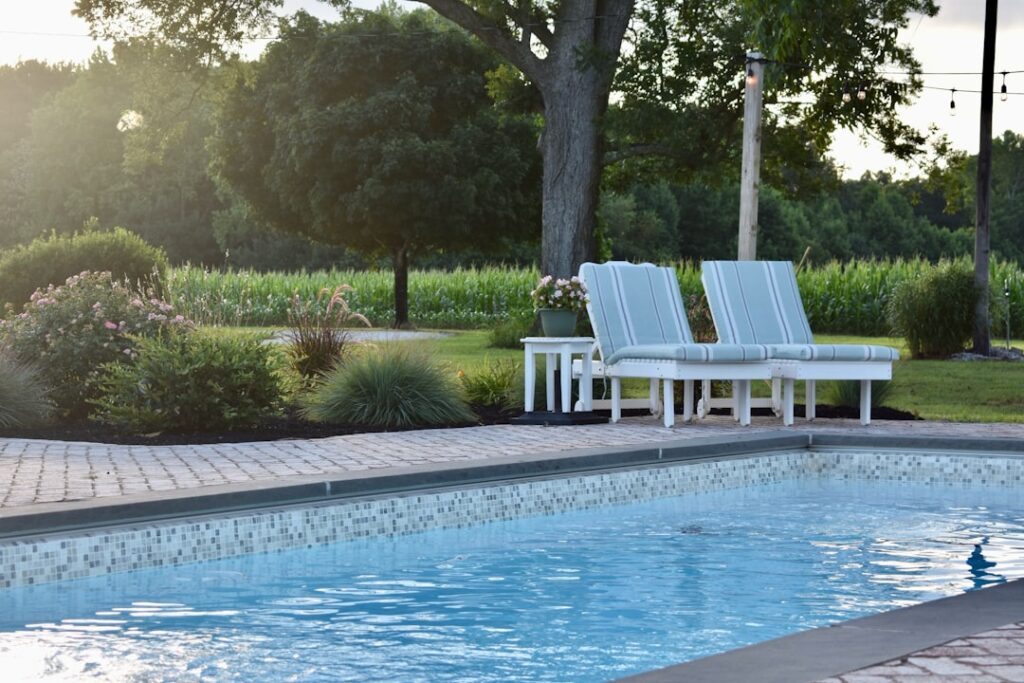
The color of your pool water is decided long before it is filled, and much of it comes down to the tile lining the walls and waterline. Green pool tile is a favorite for homeowners who want a natural, lagoon-like water color that reads more tropical and organic than the classic blue. From glass mosaics that shimmer emerald to earthy stone-look porcelain, green tile can transform a backyard pool into a resort-style retreat. This guide covers the shades, materials, costs, and installation details you need to make a confident choice.
Part of our Tile & Grout guide — explore the full guide →
- Why Choose Green Pool Tile
- Popular Shades of Green
- Materials for Green Pool Tile
- How Much Does Green Pool Tile Cost
- Where to Use Green Pool Tile
- Installation and Maintenance Tips
- Pros and Cons
- How Green Tile Affects Water Color
- Comparing Green Tile to Plaster and Aggregate
- Choosing a Green That Suits Your Backyard
- Planning Your Pool Tile Project
- Final Thoughts
Why Choose Green Pool Tile
Green tile gives water a warmer, more natural appearance reminiscent of tropical lagoons, spring-fed swimming holes, and high-end resort pools. Where blue tile reads crisp and traditional, green leans lush and inviting, blending beautifully with landscaping, stone decking, and garden surroundings. It also masks the natural green tint that leaves, algae shadows, and reflected foliage can cast on water, so the pool looks intentional rather than neglected. For homeowners building a naturalistic or tropical backyard, green is often the most cohesive choice.
Popular Shades of Green
Green pool tile spans a wide spectrum, and the shade dramatically changes the water color:
- Emerald and jade: Rich, saturated greens that create a deep, jewel-like lagoon effect.
- Teal and blue-green: A balance of blue and green for a tropical, Caribbean water tone.
- Sage and moss: Muted, earthy greens that blend with natural stone and planting.
- Seafoam and mint: Light, airy greens that keep water looking bright and fresh.
Remember that water depth, sky reflection, and pool finish all shift the final color, so the tile will usually read a shade or two deeper once the pool is filled.
Materials for Green Pool Tile
Pool tile must withstand constant water contact, chemicals, sun, and freeze-thaw cycles, so material matters:
- Glass mosaic: The premium choice, with rich color, shimmer, and excellent resistance to chemicals and fading. It is the most reflective and vibrant option.
- Porcelain and ceramic: Durable, frost-resistant, and budget-friendly, available in many green glazes and stone looks.
- Natural stone: Green slate or quartzite for an organic waterline, though it requires sealing and more upkeep.
For waterline and full-pool applications, glass and porcelain rated specifically for pool use are the safest bets because they resist the harsh combination of chlorine, salt, and UV exposure.
How Much Does Green Pool Tile Cost
Pool tile pricing runs higher than interior tile because of the specialized materials and installation:
- Ceramic and porcelain pool tile: $5 to $15 per square foot.
- Standard glass mosaic: $12 to $30 per square foot.
- Premium and iridescent glass: $30 to $75 per square foot.
- Natural stone: $15 to $40 per square foot.
Installation is labor-intensive and typically adds $30 to $60 per square foot because it requires waterproofing, specialized thinset, and skilled setting. A waterline band of about 80 linear feet might cost several thousand dollars, while fully tiling a pool interior can run tens of thousands. Because of the expense and difficulty, pool tile is almost always a professional job.
Where to Use Green Pool Tile
The most common application is the waterline, a band of tile around the pool’s perimeter at the water’s surface where sunscreen, oils, and scale accumulate and where tile is easy to clean. Green tile also appears on steps, spa spillways, raised walls, and water features. Some luxury pools are fully tiled inside, which produces the most vivid water color but at a significantly higher cost than plaster or aggregate finishes. Accent bands, tile murals, and step markers are more affordable ways to introduce green without tiling the entire shell.
Installation and Maintenance Tips
- Insist on proper waterproofing and pool-rated thinset and grout; standard interior products will fail underwater.
- Use epoxy grout for maximum chemical and stain resistance at the waterline.
- Brush the waterline regularly to prevent calcium scale from dulling the color.
- Maintain balanced water chemistry, since high calcium and pH accelerate scale buildup on tile.
- Address scale promptly with pool-safe cleaners rather than harsh acids that can etch glass and stone.
Pros and Cons
The advantages of green pool tile are a warm, natural water color, excellent durability, and a resort-like aesthetic that blends with landscaping. The trade-offs are higher material and installation costs than plaster finishes, the need for professional installation, and ongoing waterline cleaning to keep the color vivid. For homeowners investing in a backyard they intend to enjoy for decades, the durability and beauty usually justify the premium.
How Green Tile Affects Water Color
Understanding why the tile changes the water color helps you pick the right shade. Water itself is nearly clear in small amounts, but in a pool it reflects the sky and picks up color from the surfaces around and beneath it. Green tile, whether on the waterline, walls, or entire interior, tints the reflected and transmitted light toward green, and the deeper and more fully tiled the pool, the more saturated the effect. A pool with green tile only at the waterline shows a subtler shift than one fully tiled in emerald glass. Depth matters too: the same tile reads lighter in shallow steps and richer in the deep end, so plan for that gradient.
Comparing Green Tile to Plaster and Aggregate
Homeowners often weigh tile against cheaper plaster or aggregate finishes, and the differences are significant. Plaster is the least expensive interior finish but has a shorter lifespan, typically needing replastering after a decade or so, and it offers limited color depth. Aggregate finishes like pebble and quartz last longer and add texture but still cannot match the vivid color and reflective quality of glass tile. Tile is the most expensive and longest-lasting option, resisting chemicals and fading for decades while delivering the richest color. Many homeowners compromise by using green tile at the waterline and on features while choosing an aggregate finish for the bulk of the interior.
Choosing a Green That Suits Your Backyard
The best green depends on your surroundings and the mood you want. For a tropical, resort feel, emerald or teal glass creates a vivid, jewel-like lagoon. For a natural, understated look that blends with landscaping, sage and moss tones on a stone-lined pool feel organic and timeless. Consider your decking and landscaping colors, since the tile will be seen against them, and think about how much sun the pool gets, as bright light intensifies the color while shade mutes it. Ordering samples and viewing them wet, since tile darkens when submerged, is the surest way to avoid surprises.
Planning Your Pool Tile Project
A successful green pool tile installation starts long before the first tile is set. Decide early how much of the pool you want to tile, since a waterline band, feature accents, and a fully tiled interior carry very different price tags and visual effects. Coordinate the tile color with your decking, coping, and landscaping so the finished pool feels integrated with the backyard. Because pool tile installation demands waterproofing, pool-rated materials, and specialized skill, hire an experienced pool tile contractor and confirm they use appropriate thinset and grout rated for submerged, chemically treated environments. Ask to see samples wet, since tile darkens underwater, and order extra for future repairs so you can match the color years later. Investing this planning up front ensures the vivid, lagoon-like result you imagined and protects the significant money you are putting into a feature meant to last for decades.
Final Thoughts
A green pool tile selection is one of the most impactful choices you can make for your pool’s character, turning ordinary water into a lush, lagoon-like centerpiece. By choosing pool-rated glass or porcelain in a shade that suits your landscaping, budgeting realistically for skilled installation, and maintaining the waterline and water chemistry, you can enjoy a vivid, resort-quality pool for many years. Whether you opt for a simple waterline band or a fully tiled shell, green tile delivers a natural, inviting glow that few other finishes can match.
Prefer to explore on your own?
See how new flooring looks in your actual room in seconds — free, no signup.
Try the free Floor Studio →