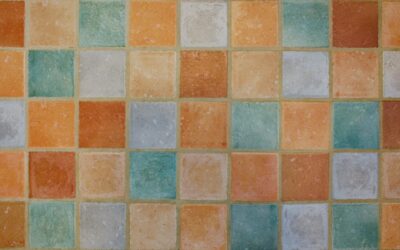
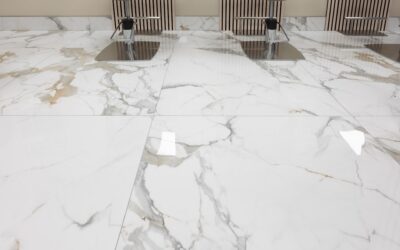
Nothing anchors a room quite like a floor with real color, and blue porcelain floor tile has moved from a niche choice to one of the most requested statement floors in kitchens, baths, and entryways. Because blue porcelain floor tile combines bold color with porcelain’s famous toughness, you get a floor that stands out visually while shrugging off water, scratches, and heavy foot traffic. This guide walks through the shades, finishes, best rooms, durability ratings, and installation basics so your blue floor looks intentional rather than dated.
Part of our Tile & Grout guide — explore the full guide →
- Why Choose Porcelain for a Colored Floor
- Exploring the Shades of Blue
- Finishes and Textures
- Popular Styles and Patterns
- Best Rooms for Blue Porcelain
- Durability and PEI Ratings
- Cost Expectations
- Installation Considerations
- Care and Maintenance
- Pairing Blue With Grout and Trim
- Radiant Heat and Underfloor Comfort
- Final Thoughts
Why Choose Porcelain for a Colored Floor
Porcelain is a denser, less porous cousin of ceramic, fired at higher temperatures around 2,200 degrees Fahrenheit. That density gives it a water absorption rate below 0.5 percent, making it nearly waterproof and ideal for bathrooms, mudrooms, and kitchens. It resists scratches, stains, and fading far better than most flooring, so a bold blue holds its color for decades.
Many porcelain tiles are “through-body” or full-body, meaning the color runs through the entire tile rather than sitting only on a glazed surface. That matters for a colored floor because a chip on a through-body tile is far less noticeable than a chip that exposes a pale clay body underneath.
Exploring the Shades of Blue
Blue is a broad family, and the shade sets the entire mood of the room. Navy and deep cobalt feel dramatic and grounding, perfect for a powder room or an accent floor. Soft powder blue and sky tones read calm and coastal, common in beach-style bathrooms. Teal and peacock blends bridge blue and green for a rich, jewel-toned effect.
Consider your natural light. Deep navy can shrink a small, dim room, while a lighter blue keeps it open and airy. In a large, bright space, a saturated cobalt or teal becomes a stunning focal point without overwhelming the room.
Finishes and Textures
The finish affects both look and safety. A glossy or polished finish makes colors pop and reflects light, but it grows slick when wet and shows footprints. A matte finish offers better slip resistance and hides smudges, a smart pick for bathrooms and kitchens.
Textured and structured finishes, along with encaustic-look patterned tiles, add grip and visual interest. For any floor that gets wet, check the slip rating; look for a Dynamic Coefficient of Friction (DCOF) of 0.42 or higher, the industry benchmark for level interior floors likely to be walked on when wet.
Popular Styles and Patterns
Blue porcelain comes in many looks beyond a solid field tile.
- Encaustic and Moroccan patterns: Blue and white geometric designs that create a vintage, hand-painted feel.
- Marble-look: Blue veining on a lighter ground for an elegant, upscale effect.
- Wood-look planks: Blue-toned or blue-washed plank tiles for a coastal, weathered feel.
- Solid color field tile: Clean, modern squares or large-format tiles in a single blue.
- Subway and hexagon shapes: Blue hex mosaics are especially popular on bathroom floors.
Best Rooms for Blue Porcelain
Bathrooms top the list, where blue evokes water and calm and porcelain handles the moisture effortlessly. Kitchens and mudrooms benefit from the durability and easy cleaning. Entryways make a strong first impression with a patterned blue floor. Because porcelain is frost-resistant when rated for it, some blue tiles even work on covered patios and outdoor kitchens.
Blue also pairs beautifully with white cabinetry, brass fixtures, and natural wood, so it slots into coastal, farmhouse, and modern schemes alike. To keep the look timeless rather than trendy, treat the floor as the bold element and keep walls and fixtures more neutral.
Durability and PEI Ratings
Porcelain tiles carry a PEI rating that indicates their wear resistance. For residential floors, look for PEI 3 or higher; PEI 4 suits busy households, entryways, and light commercial use. A powder room floor can get by with PEI 3, while a kitchen or entry deserves PEI 4 or 5.
Also check the tile is rated for floor use specifically, since some decorative blue tiles are wall-only. The box or spec sheet lists the intended application, the PEI rating, the DCOF, and the water absorption class. Reading these three numbers prevents an expensive mistake.
Cost Expectations
Blue porcelain floor tile ranges widely by style. Basic solid-color field tile runs $3 to $8 per square foot. Patterned encaustic-look and marble-look tiles climb to $8 to $20 per square foot, and imported or designer tiles can exceed that. Professional installation adds $7 to $15 per square foot depending on layout complexity, substrate prep, and your region.
For a 100-square-foot bathroom, budget roughly $1,000 to $3,500 all in, materials and labor. Intricate patterns and mosaics take longer to set and cost more to install than large-format solid tiles.
Installation Considerations
Porcelain is hard and dense, which makes it durable but also tougher to cut; you will need a wet saw with a quality porcelain blade rather than a snap cutter for anything but the simplest cuts. A proper substrate is essential: a flat, rigid subfloor with cement backer board or an uncoupling membrane over concrete prevents cracked tiles and grout.
Use a high-quality modified thin-set rated for porcelain, back-butter large tiles to avoid voids, and maintain consistent grout lines with spacers. For patterned tiles, dry-lay the design first to get the layout right before committing adhesive. Choose a grout color that complements the blue; a soft gray grout suits most blues, while white grout pops on navy but shows dirt faster.
Care and Maintenance
One of porcelain’s biggest advantages is how little it asks of you. Sweep or vacuum regularly and mop with a neutral pH cleaner; avoid harsh acids and abrasive pads that can dull the finish over time. Porcelain itself never needs sealing, though unglazed or textured surfaces and the grout lines benefit from a grout sealer to resist staining. With minimal effort, a blue porcelain floor keeps its color and finish for the life of the room.
Pairing Blue With Grout and Trim
Grout color dramatically changes how a blue floor reads. A tight tone-on-tone grout, such as a medium gray with navy tile, keeps the look seamless and lets the color dominate. A contrasting grout, like white against cobalt or dark charcoal against a light blue, emphasizes the tile shape and the pattern, which suits hexagons and encaustic designs beautifully.
Whatever you choose, factor in maintenance: white grout on a floor shows dirt quickly, so an epoxy or stain-resistant grout in a mid-tone is the practical middle ground. For transitions to other flooring, use a matching or metal T-molding or a Schluter-style profile in a finish that echoes your fixtures, whether brushed brass, chrome, or matte black.
Radiant Heat and Underfloor Comfort
One overlooked advantage of porcelain is how well it works with electric radiant floor heating. Because porcelain is dense and conducts heat efficiently, a blue tile floor over a heating mat warms quickly and holds temperature, turning a cold bathroom or entry into a cozy space on winter mornings. Electric mat systems run roughly $8 to $15 per square foot for materials plus installation.
If you plan radiant heat, install an uncoupling membrane rated for it and choose a thin-set compatible with the system. The membrane also protects against cracking from thermal movement and minor subfloor deflection. Even without radiant heat, that uncoupling layer is cheap insurance on any porcelain floor, especially over a wood subfloor or a slab prone to hairline cracks.
Final Thoughts
Blue porcelain floor tile lets you make a bold color statement without sacrificing durability or easy care. Choose the shade to match your room’s light, pick a finish with enough slip resistance for the space, and confirm the PEI and DCOF ratings before you buy. With proper substrate prep and the right thin-set, a blue porcelain floor becomes a striking, waterproof, and remarkably low-maintenance foundation that will look fresh for decades.
Prefer to explore on your own?
See how new flooring looks in your actual room in seconds — free, no signup.
Try the free Floor Studio →