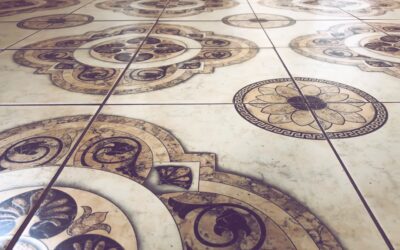
Fire clay at more than 2,200 degrees Fahrenheit and you get one of the hardest surfaces you can put on a floor. Porcelain flooring is denser, harder, and more water-resistant than ordinary ceramic, which is exactly why it dominates kitchens, bathrooms, entryways, and even outdoor patios. It also shrugs off the abuse that scratches wood and dents vinyl. The catch is that not all porcelain is equal, and buying the wrong grade or skipping the right installation details can leave you with cracked tiles and lippage. This guide covers the types, the ratings that matter, real costs, and how to get a floor that lasts fifty years.
Part of our Tile & Grout guide — explore the full guide →
What Makes Porcelain Different From Ceramic
Porcelain is a type of ceramic, but a stricter one. It is made from a refined clay containing fine kaolin and feldspar, pressed and fired at higher temperatures than standard ceramic. The result is a tile with a water absorption rate of 0.5 percent or less, the industry threshold that legally defines porcelain. That density is the source of nearly every advantage: it is harder, far less porous, and rated for freeze-thaw cycles that would crack ordinary ceramic.
Because it absorbs almost no water, porcelain works where ceramic struggles, including outdoor patios in cold climates, shower floors, and mudrooms that see snowmelt. The same density makes it heavier and harder to cut, which is why installation costs run a bit higher than for softer ceramic.
Types of Porcelain Flooring
The porcelain category has expanded far beyond the plain squares of a decade ago. Knowing the subtypes helps you match the tile to the look and performance you want.
- Glazed porcelain: A liquid glass coating is fired onto the surface, giving color, pattern, and a stain-resistant top. The most common and affordable option, ideal for most interior floors.
- Through-body (full-body) porcelain: The color runs all the way through the tile, so chips and wear do not show a different core color. Best for very high-traffic commercial spaces.
- Polished porcelain: Mechanically buffed to a mirror shine that mimics polished stone. Beautiful but more slippery and more prone to showing scratches.
- Wood-look and stone-look porcelain: Digital inkjet printing reproduces oak planks, marble veining, or concrete so convincingly that many buyers cannot tell at arm’s length. This is the fastest-growing segment.
- Large-format and porcelain slabs: Panels up to 5 by 10 feet used for seamless floors and countertops, requiring specialized handling.
Wood-look porcelain deserves a special mention: it gives you the appearance of hardwood in a bathroom or basement where real wood would fail, with none of the refinishing or water worries.
PEI Rating: The Number That Predicts Durability
Before you fall in love with a color, check the PEI rating, a scale from 1 to 5 that measures surface abrasion resistance. Matching the rating to your room prevents premature wear.
- PEI 1: Walls only, no foot traffic.
- PEI 2: Light traffic, such as guest bathrooms with soft footwear.
- PEI 3: Moderate traffic, suitable for most residential floors including kitchens and living areas.
- PEI 4: Heavy traffic, good for busy homes, entryways, and light commercial use.
- PEI 5: Extra-heavy traffic for commercial and industrial settings.
For a typical home, a PEI 3 or 4 tile covers every room. Do not overpay for a PEI 5 unless you run a storefront. Alongside PEI, check the slip rating, expressed as a coefficient of friction or a DCOF value; aim for a DCOF of 0.42 or higher on any wet-area floor like a bathroom or kitchen.
Cost of Porcelain Flooring
Porcelain spans a wide price range depending on grade, finish, and format. Budget for both material and installation, because a professional install roughly doubles the material cost.
- Materials: Basic glazed porcelain runs $2 to $4 per square foot. Mid-range wood-look and stone-look tiles land at $4 to $8. Premium large-format and designer lines reach $10 to $20 or more.
- Installation: Professional labor typically adds $5 to $12 per square foot, higher for intricate patterns, large slabs, or floors that need extensive prep.
- Extras: Thinset, grout, underlayment or uncoupling membrane, and edge trim add $1 to $3 per square foot.
All in, expect a total of roughly $8 to $20 per square foot installed for most residential projects. A 200-square-foot bathroom therefore runs about $1,600 to $4,000. The upside is longevity: a properly installed porcelain floor commonly lasts 50 years or more, giving it one of the lowest lifetime costs of any flooring.
Installation Essentials
Porcelain is unforgiving of a bad substrate, so the prep matters as much as the tile. The subfloor must be flat, within 1/8 inch over 10 feet, and rigid enough not to flex, since deflection cracks grout and tiles. Over a wood subfloor, most pros add a cement backer board or an uncoupling membrane like Schluter Ditra, which isolates the tile from subfloor movement and is the single best insurance against cracking.
Set the tile in a modified or large-format thinset mortar, back-buttering big tiles to ensure full coverage and prevent hollow spots that crack under load. Use tile leveling clips on large-format pieces to eliminate lippage, the uneven edges that catch toes and look sloppy. Cutting dense porcelain requires a wet saw with a diamond blade; a snap cutter struggles with thicker or through-body tiles. After the mortar cures for 24 to 48 hours, grout the joints, then seal cement-based grout to keep it from staining, though the porcelain itself never needs sealing.
Care and Maintenance
This is where porcelain rewards you. Because it absorbs almost no water and resists stains, day-to-day care is simply sweeping or vacuuming grit and damp-mopping with a neutral pH cleaner. Skip acidic or abrasive cleaners on polished finishes, which can dull the shine. The tile surface never needs sealing, waxing, or refinishing.
The grout lines are the weak point, not the tile. Unsealed cement grout traps dirt and can discolor, so seal it on installation and reseal every year or two in wet areas, or choose a stain-resistant epoxy or urethane grout up front to avoid the chore. If a tile ever chips, glazed porcelain shows a lighter body underneath, while through-body tile hides the damage, which is why full-body porcelain is worth the premium in the busiest zones.
One comfort issue worth planning around is temperature. Porcelain does not hold heat, so a bare floor feels cold on winter mornings. The best fix is electric radiant heat mats, which cost roughly $8 to $15 per square foot installed and turn a cold bathroom floor into one of the most pleasant surfaces in the house. Because porcelain conducts heat efficiently and never warps, it is the ideal partner for radiant systems, warming quickly and spreading heat evenly across the room.
Is Porcelain Flooring Right for You?
Choose porcelain flooring when you want a surface that is essentially waterproof, extremely hard, and effectively permanent, and you do not mind a hard, cold underfoot feel that is easily solved with radiant heat or area rugs. It is the strongest all-around choice for kitchens, bathrooms, entryways, laundry rooms, and outdoor living areas, and wood-look porcelain lets you carry a hardwood aesthetic into rooms where real wood cannot go.
The main reasons to look elsewhere are budget, since a quality installed porcelain floor costs more up front than vinyl or laminate, and comfort, since the surface is unforgiving to dropped glassware and standing feet. But measured over decades, porcelain flooring delivers a durability and low maintenance profile that few materials can touch, making it one of the best long-term investments you can make in a home.
Prefer to explore on your own?
See how new flooring looks in your actual room in seconds — free, no signup.
Try the free Floor Studio →