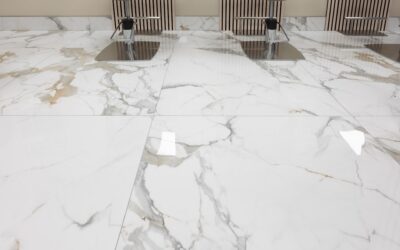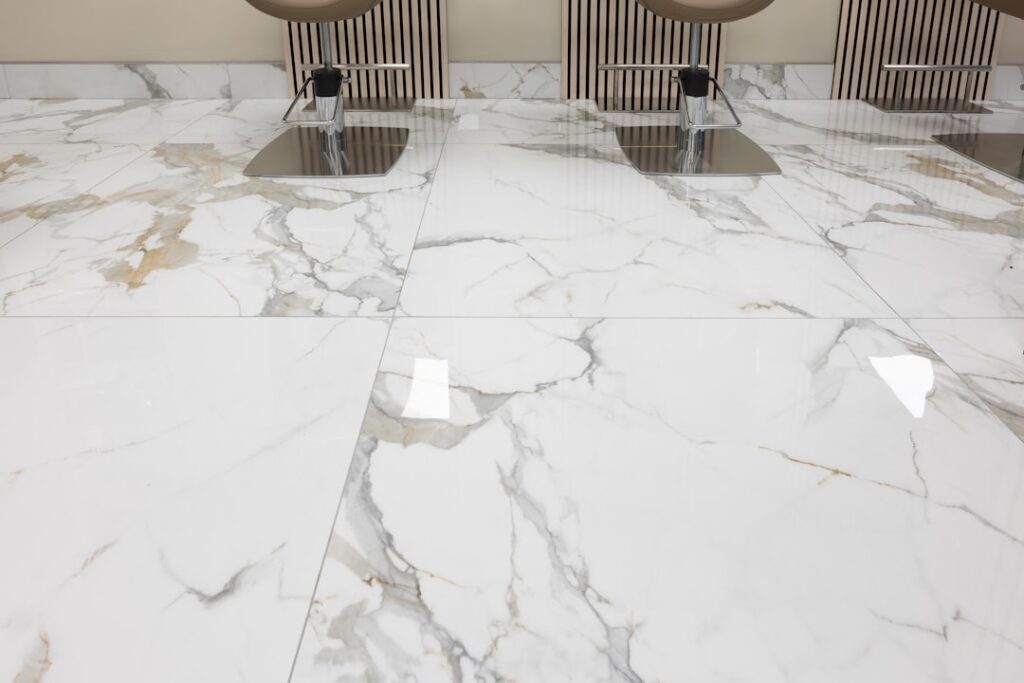
Walk into a modern showroom and you will see floors that look like seamless sheets of marble or concrete stretching wall to wall. That illusion comes from porcelain slab flooring — oversized porcelain panels, often 4 by 8 feet or larger, that dramatically reduce grout lines and mimic natural stone with uncanny realism. It is one of the most striking flooring upgrades available, but the slabs are heavy, demanding to install, and not cheap. Here is what you need to know before you commit.
Part of our Tile & Grout guide — explore the full guide →
I have helped homeowners spec these panels for open-concept living spaces, and the results can be stunning. They can also go badly wrong without the right crew. Let me walk you through it.
What Makes Porcelain Slab Different
Standard porcelain tile tops out around 24 by 24 inches. Slabs are an entirely different product, manufactured in panels up to 5 by 10 feet and as thin as 6mm for walls or 12mm and up for floors. They are fired at high temperatures, making them dense, hard, and nearly impervious to water with absorption rates below 0.5 percent.
The headline benefit is the look. With panels this large, a typical room needs only a handful of seams, so the floor reads as a continuous surface. High-definition inkjet printing reproduces marble veining, travertine, and concrete so convincingly that most guests will never guess it is porcelain.
Pros of Porcelain Slab Flooring
- Seamless look — minimal grout lines create a clean, luxurious, modern surface.
- Extremely durable — scratch-, stain-, and heat-resistant; rated for heavy traffic.
- Waterproof — near-zero porosity makes it ideal for kitchens, baths, and even outdoors.
- Low maintenance — no sealing required, unlike natural marble or travertine.
- Hygienic — the dense, non-porous surface resists mold, bacteria, and stains.
- Realistic — stone and concrete looks without the cost or upkeep of the real thing.
The Cons and Real Challenges
The biggest hurdle is installation. These panels are huge and surprisingly fragile before they are bonded down. They flex, and an unsupported corner can snap. Moving and setting a 4-by-8-foot slab takes two or three trained installers, suction-cup frames, and a perfectly flat substrate. This is not a DIY project, and even many tile setters lack the gear and experience to do it right.
Cost is the other reality. Material alone runs $7 to $20 per square foot, and large-format installation labor often doubles or triples typical tile rates. Cutting requires specialized rail saws and water-fed blades. And while the surface is tough, a dropped cast-iron pan can still chip a corner, and repairing a slab usually means replacing the whole panel — there is no cheap patch.
Where Porcelain Slabs Shine
Open-plan kitchens and living areas are the showcase application, where the uninterrupted surface makes the space feel larger and more cohesive. Bathrooms and walk-in showers benefit from the waterproof, low-grout surface that resists mildew. The panels also extend onto walls, fireplace surrounds, and countertops, letting you carry one material across multiple surfaces for a coordinated, high-end effect.
Outdoors, thicker 20mm porcelain pavers handle patios and pool decks because they resist freeze-thaw cycles, fading, and slip — a major advantage over real stone.
What It Costs Installed
Expect a realistic installed price between $20 and $45 per square foot once you factor in premium material, specialized labor, leveling compound, and waste. A 300 sq ft kitchen floor can land between $6,000 and $13,500. The wide range reflects slab grade, finish, and how flat your existing subfloor is — substrate prep is often the hidden line item that surprises homeowners.
Installation Essentials
- Flatten the substrate. Large panels demand a substrate flat within 1/8 inch over 10 feet; self-leveler is almost always required.
- Use the right mortar. A large-format, medium-bed thinset prevents lippage and voids under the panel.
- Back-butter and roll. Apply mortar to both the floor and the slab, then beat in with a roller to ensure full coverage and no hollow spots.
- Set with a frame. Suction-cup handling frames let the crew lift and align panels without cracking them.
- Mind the seams. Tight, leveled joints with a quality grout or epoxy keep the seamless look intact.
Finishes and Thickness Options
Porcelain slabs come in several finishes that change both the look and the practicality. Polished slabs deliver a mirror-like marble effect but show smudges and can be slippery underfoot. Honed and matte finishes offer a softer, more natural appearance with better traction, making them the smarter choice for floors. Textured and structured finishes add grip for wet areas and outdoor use.
Thickness matters too. For interior floors, a 12mm panel is the workhorse, balancing strength and weight. Walls and cladding can use 6mm panels to keep weight down, while exterior pavers jump to 20mm so they can span pedestals and resist freeze-thaw stress. Match the thickness to the application and never use a thin wall panel on a floor — it will not survive the load.
Maintenance and Longevity
One of the quiet advantages of porcelain slab is how little it asks of you. Because the surface is non-porous and needs no sealing, day-to-day care is simply sweeping and damp-mopping with a neutral cleaner. There is no annual resealing as with marble or travertine, no waxing, and no special products required. The dense body resists staining from wine, oil, and coffee, and the color runs through the printed and glazed surface so it will not fade for decades. With proper installation, a porcelain slab floor can realistically last the lifetime of the home, which helps justify the higher upfront investment over materials that wear or need refinishing.
Is Porcelain Slab Flooring Worth It?
Porcelain slab flooring delivers a high-end, virtually seamless stone look with the durability and waterproof performance that real marble cannot match. The premium you pay buys both the dramatic aesthetic and decades of low-maintenance service. The catch is that the material and installation are genuinely demanding, so the project is only worth it when you hire an experienced large-format crew. If your budget supports it and you want a luxury, continuous-surface floor that will look current for decades, porcelain slabs are one of the most impressive choices on the market. For a tighter budget or a DIY job, standard porcelain tile or large-format LVT gives you a similar feel at a fraction of the risk.
Prefer to explore on your own?
See how new flooring looks in your actual room in seconds — free, no signup.
Try the free Floor Studio →