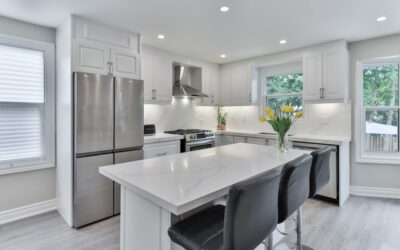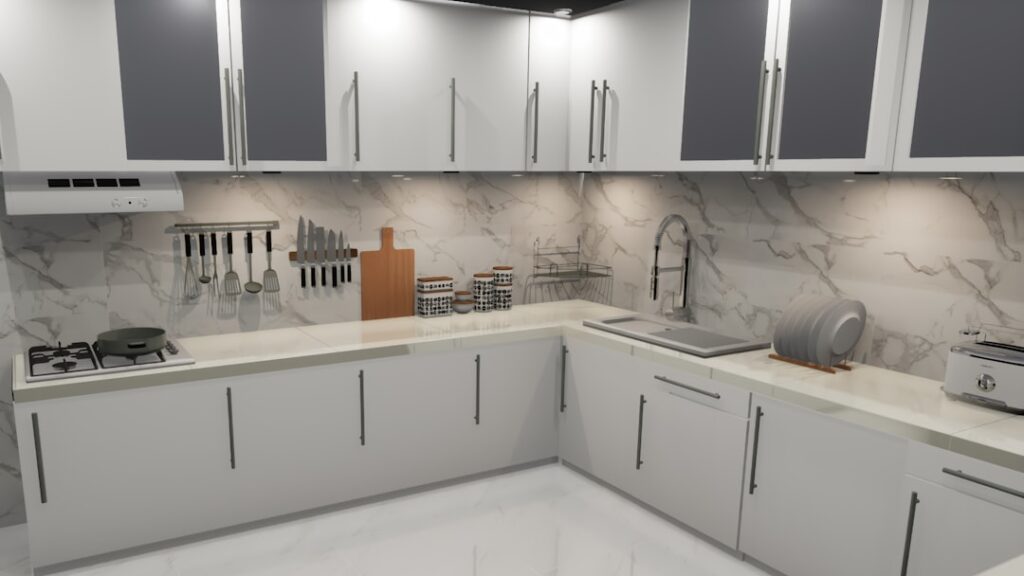
A blush pink and grey kitchen is one of the few color combinations that reads as both modern and timeless at the same time. The grey keeps things grounded and resale-friendly, while the blush brings a soft warmth that pure white-and-grey schemes often miss. I have installed flooring and cabinetry in dozens of these kitchens over the past few years, and when the proportions are right, the result feels custom rather than trendy. Get the balance wrong, though, and it can tip into looking like a child’s bedroom. This guide walks you through how to nail the palette, the materials, and the budget.
Part of our Kitchen Remodeling guide — explore the full guide →
Why This Color Pairing Works So Well
Grey is a cool, almost industrial neutral. Blush pink is a warm, muted red with a lot of white mixed in. When you put a warm tone next to a cool one, each makes the other look more intentional. That tension is what designers chase. Without the blush, an all-grey kitchen can feel cold and flat under LED lighting, especially in north-facing rooms that get little direct sun.
Blush also happens to be a forgiving color. Because it sits low on the saturation scale, it does not fight with stainless steel, brass, or matte black hardware. You can lean masculine or feminine depending on the finishes you choose, which is why couples tend to agree on it more easily than they expect.
Getting the Ratio Right
The single biggest mistake I see is splitting the room 50/50 between the two colors. That creates visual competition and no clear anchor. Instead, use a dominant-and-accent approach.
- 60% grey: Use it on the larger surfaces such as lower cabinets, the island base, or the flooring.
- 30% neutral: White or off-white walls, ceilings, and upper cabinets keep the room from feeling heavy.
- 10% blush: Reserve the pink for accents that are easy to swap such as a backsplash, bar stools, small appliances, or the island.
Keeping the blush in the 10% range protects your investment. Trends shift, and you do not want to repaint $8,000 worth of cabinets in four years because the pink dated faster than you did.
Cabinet Choices
For most homeowners, grey lower cabinets with white or light grey uppers give the safest foundation. Then introduce blush in one of two ways. The bolder move is painting the island a soft pink. The subtler move is keeping all cabinetry neutral and adding blush through open shelving styling and textiles.
Paint Sheens to Consider
Satin and semi-gloss hold up best in a working kitchen because they wipe clean. Flat blush looks beautiful in photos but shows fingerprints around handles within weeks. Expect to pay $4,000 to $12,000 for professionally painted or refaced cabinets, depending on your kitchen size and whether you are starting from raw wood.
Countertops That Complement Both Tones
Countertops are where this palette can succeed or fall apart. You want a surface that bridges warm and cool. White quartz with subtle grey veining is the workhorse choice and runs roughly $50 to $100 per square foot installed. Look for veining that carries a faint warm undertone so it does not clash with the blush.
Avoid stark, cool-white slabs with blue undertones. Next to blush pink, they make the pink look dingy. If you want drama, a honed grey marble-look quartz reads as upscale and ties the two colors together beautifully. Steer clear of busy multicolor granite, which competes with an already two-tone scheme.
Flooring Options Under a Blush and Grey Scheme
Flooring carries the whole room, so it deserves real thought. You have three strong directions:
- Light oak or blonde wood-look LVP: Adds warmth underfoot and keeps the space from leaning too cool. This is my most-recommended option, typically $3 to $7 per square foot for quality luxury vinyl plank.
- Greige tile: A grey-beige porcelain tile ties directly into the grey cabinets while bringing enough warmth to flatter the blush.
- Pale grey wide-plank: Sleek and contemporary, but use it only if your blush accents are generous, or the floor will pull the whole room cold.
One practical tip from the field: matte or low-sheen flooring hides crumbs and pet hair far better than glossy finishes, and it photographs more like real wood. In a kitchen, that matters more than almost any other room.
Backsplash and Wall Treatments
The backsplash is the perfect place to commit to blush without overcommitting. A blush zellige or subway tile across the cooking wall delivers a custom look for $15 to $30 per square foot installed. The handmade variation in zellige catches light and keeps the pink from looking flat.
If you would rather keep walls neutral, a vertical-stack white tile with blush grout offers a whisper of color that is easy to live with. For the walls themselves, warm white or the palest greige keeps everything cohesive without adding a third strong color.
Hardware, Fixtures, and Metal Finishes
Metal finish sets the mood. Here is how the common options play with a blush and grey scheme:
- Brushed brass: The most popular pairing. Warm gold against blush feels luxe and softens the grey.
- Matte black: Adds contrast and a modern edge. Use sparingly so it does not overpower the soft palette.
- Brushed nickel: The safe, budget-friendly choice that disappears into the background.
Pick one primary metal and let it lead. Mixing brass faucets with black cabinet pulls can work, but limit yourself to two finishes total, or the kitchen starts to feel chaotic.
Lighting Considerations
Blush pink is extremely sensitive to color temperature. Under cool 5000K bulbs, blush can turn grey and lifeless. Under warm 2700K to 3000K bulbs, it glows. Always specify warm-white LEDs for a blush kitchen, and test a sample bulb before buying twelve of them. Natural light direction matters too: south-facing rooms can handle a more saturated blush, while north-facing rooms do better with the palest, warmest version of the color.
Budget Snapshot
For a standard 150-square-foot kitchen, a mid-range blush pink and grey renovation typically lands between $18,000 and $35,000 with new cabinets, quartz counters, LVP flooring, and a tiled backsplash. You can cut that dramatically by keeping existing cabinet boxes and refacing or repainting them, which is often the smartest spend.
Final Thoughts
A blush pink and grey kitchen rewards restraint. Anchor the room in grey and neutral surfaces, keep the pink to accents you can change, and choose warm lighting and flooring to balance the cool tones. Do that, and you end up with a kitchen that feels personal and current without locking you into a trend you will resent in five years.