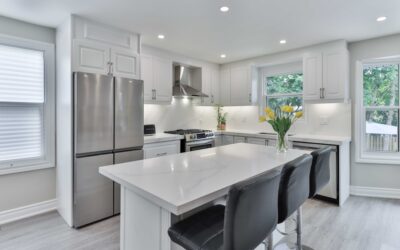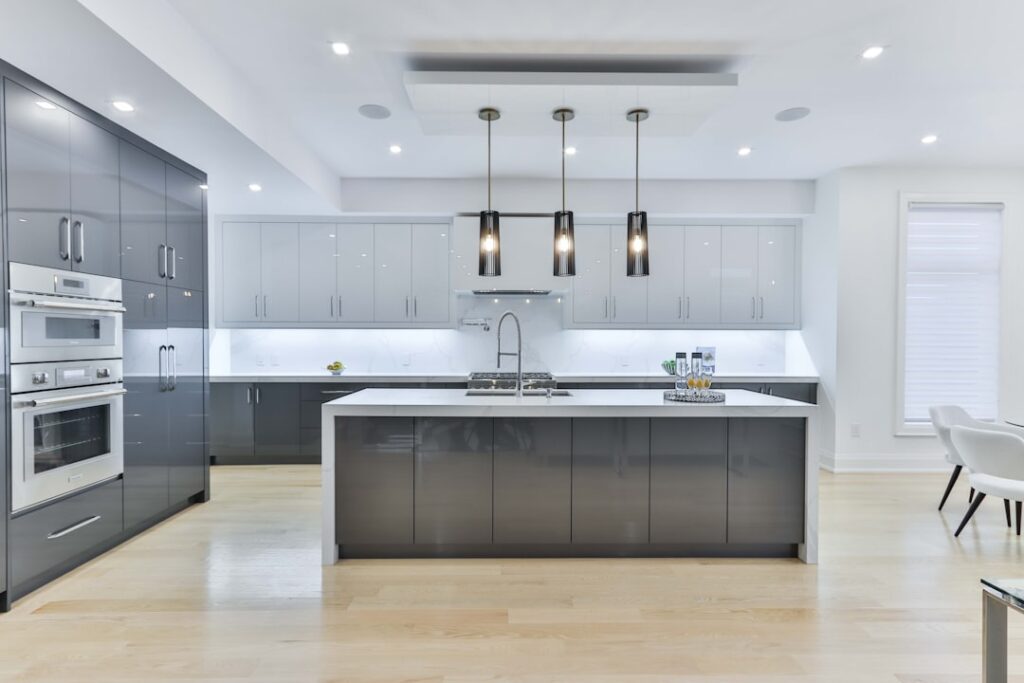
Grey has quietly become the most reliable neutral in kitchen design, and a grey backsplash kitchen is one of the safest yet most stylish choices you can make. It bridges warm and cool palettes, hides everyday grime better than stark white, and pairs with nearly any cabinet color you already have. Whether you lean toward a soft dove grey subway tile or a dramatic charcoal marble mosaic, the shade you choose and how you pair it sets the entire mood of the room. Here is how to design a grey backsplash that looks intentional rather than default.
Part of our Kitchen Remodeling guide — explore the full guide →
Why Grey Works So Well
The appeal of grey is its flexibility. Unlike a bold color that locks you into a specific look, grey acts as a sophisticated neutral that adapts to whatever surrounds it. It reads as modern in a matte charcoal, classic in a warm greige, and airy in a pale silver. Practically, grey also hides splatter, water spots, and light grime far better than white, which makes it a smart pick for hard-working kitchens. And because grey spans both warm and cool undertones, it can tie together a room that mixes wood tones, stainless steel, and painted cabinets.
Choosing the Right Shade of Grey
Not all greys behave the same, and the undertone is what makes or breaks the finished look. Before you commit, hold samples against your cabinets and countertops in the room’s actual light.
- Light dove and silver grey: Keeps a small kitchen feeling open and bright; pairs beautifully with white cabinets.
- Greige (grey-beige): A warm neutral that flatters wood tones and cream cabinets; the most forgiving choice.
- Mid-tone slate: Enough contrast to define the space without going dark; works in nearly any kitchen.
- Charcoal and graphite: Dramatic and modern, ideal as a statement against white or pale cabinets.
Watch the undertone: some greys skew blue or green, which can clash with warm-toned granite or oak. A cool grey next to a warm cream cabinet can look mismatched, so always test.
Tile Styles for a Grey Backsplash
The same grey looks completely different depending on the tile format. Grey subway tile in a classic offset pattern is the most popular and gives a clean, timeless result. A grey marble or marble-look mosaic brings veining and movement for a more luxurious feel. Large-format grey porcelain slabs create a sleek, seamless modern wall with minimal grout lines. For texture, a grey herringbone or a stacked vertical layout adds visual interest without changing the color. Handmade-look zellige tiles in soft grey lend an artisan, imperfect charm that suits transitional kitchens.
Pairing Grey With Cabinets
The cabinet-and-backsplash relationship is the biggest design decision in a grey backsplash kitchen. A few combinations are reliable winners:
White cabinets with grey backsplash is the classic, high-contrast pairing that feels fresh and crisp. It is nearly impossible to get wrong and works in both modern and traditional kitchens. Grey cabinets with a slightly different grey backsplash creates a sophisticated tonal, monochromatic look, as long as you vary the shade or texture so they do not blur together. Wood or navy cabinets with a grey backsplash add warmth and depth, with the grey acting as a calming neutral that lets the cabinet color shine. If your cabinets are dark, a lighter grey backsplash keeps the kitchen from feeling closed in.
Grout Color Matters
Grout is a small detail with an outsized effect on a grey backsplash. A matching grey grout gives a seamless, monolithic look that emphasizes the tile shape subtly. A white grout against grey tile brightens the wall and outlines each tile crisply for a fresh, graphic feel. A darker charcoal grout with mid-grey tile leans moody and modern, and it hides kitchen dirt exceptionally well. Because grey tile already sits in the neutral middle, you have freedom here; pick the grout based on whether you want the backsplash to recede quietly or stand out as a feature.
What It Costs
A grey backsplash spans a wide price range depending on material. Basic grey ceramic subway tile runs $3 to $8 per square foot, grey glass or marble mosaics $10 to $25, and large-format porcelain slabs more. For an average 30-square-foot backsplash, material lands between $90 and $750. DIY installation keeps the total low, while professional labor adds $10 to $18 per square foot. Most grey backsplash projects finish between $300 for a simple DIY subway job and $1,200 for a professionally installed mosaic or slab.
Countertop Pairings That Complete the Look
A backsplash never stands alone, and the countertop below it is what either sharpens or muddies a grey scheme. White quartz with subtle grey veining is the most reliable partner, echoing the backsplash while keeping the counter bright and clean. A darker grey or charcoal quartz creates a bold, monochromatic look when paired with a lighter grey backsplash, ideal for a modern kitchen. Warm-toned counters like butcher block or a beige-flecked granite soften a cool grey backsplash and add welcome contrast in a transitional space. The key is matching undertones: a cool blue-grey backsplash fights a warm honey-oak counter, so keep the temperatures of the two surfaces in the same family.
Hardware and fixtures are the finishing layer. Grey is a chameleon that flatters nearly every metal, so you have freedom here. Matte black hardware and faucets read modern and graphic against a grey backsplash. Brushed brass or gold adds warmth and a touch of luxury that keeps grey from feeling cold. Polished chrome and stainless keep things clean and classic. Choosing one metal and repeating it across the cabinet pulls, faucet, and light fixtures ties the whole grey kitchen together and makes the design feel deliberate rather than assembled piece by piece.
Designing Yours With Confidence
A grey backsplash kitchen succeeds when the shade, tile style, cabinet pairing, and grout all pull in the same direction. Start by choosing an undertone that flatters your existing cabinets and counters, then pick a tile format that matches your style, timeless subway, luxe mosaic, or sleek slab, and finish with a grout color that either blends or contrasts based on how much you want the backsplash to speak. Get those choices aligned and grey delivers exactly what makes it so popular: a look that feels current today and will still feel right a decade from now.