Grey has cemented itself as one of the most popular and versatile cabinet colors, offering the neutrality of white with more depth and character. Designing a grey cabinets kitchen means choosing the right undertone, pairing complementary surfaces, and layering finishes so the space feels warm rather than cold. This guide walks through every decision.
Part of our Kitchen Remodeling guide — explore the full guide →
- Why Grey Works So Well
- Warm vs. Cool Undertones
- Choosing the Right Shade
- Two-Tone Combinations
- Countertop Pairings
- Backsplash Options
- Hardware and Metal Finishes
- Flooring That Complements Grey
- Lighting Considerations
- Adding Warmth to a Grey Kitchen
- Finish Sheen Choices
- Mistakes to Avoid
- Popular Grey Paint Shades
- Grey Cabinets in Small Kitchens
- Grey Across Design Styles
- Resale and Long-Term Appeal
- Accent Colors That Work With Grey
- Final Thoughts
Why Grey Works So Well
Grey is a chameleon. It reads modern in charcoal, soft and traditional in dove, and coastal in blue-grey. Because it’s neutral, it pairs with nearly any countertop, backsplash, and metal finish, and it hides fingerprints and minor scuffs better than pure white. Grey also has strong resale appeal, sitting in the sweet spot between the safety of white and the personality of color.
Warm vs. Cool Undertones
The single most important choice is undertone. Cool greys carry blue or green hints and feel crisp, modern, and clean, but can feel sterile if overdone. Warm greys, sometimes called greige, blend in beige or taupe and feel cozy and inviting. Test large samples on your cabinets in your own light before committing, because a grey that looks perfect in the store can turn cold or muddy at home.
Choosing the Right Shade
Light greys keep a kitchen feeling airy and open, ideal for small or low-light rooms. Mid-tone greys offer balance and hide grime well. Dark charcoal and slate greys make a bold, dramatic statement and pair strikingly with light countertops, but they can shrink a small space, so reserve deep tones for larger, well-lit kitchens or use them only on an island.
Two-Tone Combinations
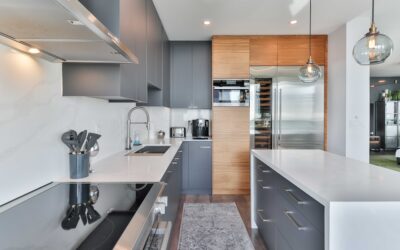
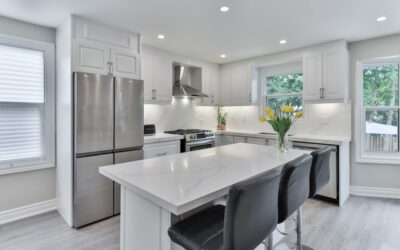
One of the most popular approaches is a two-tone kitchen: grey lower cabinets with white or lighter grey uppers, or a contrasting grey island against white perimeter cabinets. This adds visual interest, grounds the room with darker tones below, and keeps the upper space feeling open. A grey island under a white perimeter is a designer favorite that reads custom and intentional.
Countertop Pairings
Countertops make or break a grey kitchen. White quartz or marble-look surfaces provide bright contrast and keep the room fresh. Warm-toned quartz or butcher block softens cool grey cabinets and adds coziness. Black granite or soapstone creates a dramatic, sophisticated contrast with light grey. For darker grey cabinets, a light countertop prevents the space from feeling heavy. Match the countertop’s undertone to your cabinet’s undertone for harmony.
Backsplash Options
A classic white subway tile backsplash keeps a grey kitchen timeless and bright. For more personality, consider a marble mosaic, a soft blue or green glass tile, or a warm terracotta to counter cool grey. Matching a grey backsplash to grey cabinets creates a monochromatic, seamless look, while a contrasting backsplash adds a focal point. Let the backsplash either blend for calm or pop for drama, not compete halfway.
Hardware and Metal Finishes
Hardware is grey’s best accessory. Brushed brass and gold tones add warmth and a touch of luxury against grey, and this pairing has been hugely popular. Matte black delivers bold, modern contrast, especially on lighter greys. Polished or brushed nickel keeps things classic and understated. Chrome reads clean and contemporary. Choose one metal and carry it through pulls, faucet, and lighting for a cohesive look.
Flooring That Complements Grey
Warm wood floors in medium to honey tones beautifully offset cool grey cabinets, preventing the room from feeling cold. Light oak or white-washed floors keep things airy and Scandinavian. For a modern monochrome look, grey-toned luxury vinyl or tile continues the palette. Avoid matching the floor grey too precisely to the cabinets, which can blur the room; a slight contrast reads more intentional.
Lighting Considerations
Grey is highly sensitive to light. Cool greys can turn icy under bright white LEDs, while warm light softens them. Use bulbs in the 2700K to 3000K range for a warm, inviting glow that flatters grey. Layer ambient, task, and accent lighting, and add under-cabinet lighting to brighten countertops. Good natural light keeps grey lively, so maximize windows where possible.
Adding Warmth to a Grey Kitchen
Grey’s biggest risk is feeling cold. Counter that with natural materials and warm accents: wood open shelving or a butcher-block island top, brass hardware, warm-toned lighting, and greenery. Textiles like a patterned runner and warm-toned bar stools add softness. Even in an all-grey scheme, these warm touches keep the room feeling welcoming rather than clinical.
Finish Sheen Choices
The finish sheen affects both look and upkeep. Matte and satin finishes hide fingerprints and give a soft, modern feel, which suits grey well. High-gloss grey looks sleek and reflects light in contemporary kitchens but shows every smudge. For most homes, a satin or low-sheen finish balances style and practicality, keeping grey cabinets looking clean with minimal effort.
Mistakes to Avoid
Don’t skip testing large samples in your own lighting, since undertones shift dramatically. Avoid pairing a cool grey with a warm countertop undertone or vice versa, which creates dissonance. Don’t use dark charcoal in a tiny, dim kitchen where it will feel like a cave. And don’t forget to add warm elements, or the space risks feeling flat and cold.
Popular Grey Paint Shades
Certain grey tones have become go-to choices for kitchens. Soft greiges bridge grey and beige for a warm, welcoming feel that flatters most lighting. Mid-tone blue-greys add subtle color while staying neutral. Deep charcoals and slate tones make dramatic statements on islands and lower cabinets. When selecting a shade, request large sample swatches or paint a poster board and move it around the kitchen at different times of day, since the same grey shifts noticeably under morning light, evening light, and artificial bulbs.
Grey Cabinets in Small Kitchens
Grey can work beautifully in a small kitchen if you choose wisely. Light dove and pale greige greys keep a compact space feeling open and airy, while reflective satin finishes bounce light around. Reserve dark charcoal for a single accent like an island or lower cabinets, pairing it with light uppers and bright countertops to avoid a closed-in feel. Adding under-cabinet lighting and keeping the backsplash light further prevents grey from making a small kitchen feel cramped.
Grey Across Design Styles
Part of grey’s appeal is how it adapts across aesthetics. In a modern kitchen, flat-front grey slab doors with matte black or chrome hardware read sleek and minimal. In a farmhouse kitchen, greige Shaker cabinets with brass or bronze hardware and butcher block feel cozy and rustic. In a transitional space, mid-grey cabinets bridge traditional and contemporary effortlessly. This versatility means grey suits nearly any home, letting you lean warm or cool depending on the surrounding materials and fixtures.
Resale and Long-Term Appeal
Grey has proven itself more than a passing trend, holding strong appeal with buyers for years. Its neutrality means it won’t date as quickly as a bold color, and it pairs with whatever countertops and floors a future owner might prefer. For resale, stick with widely liked mid-tones and greiges rather than very trendy or unusual grey shades. A well-executed grey kitchen offers the personality buyers crave with the safety of a neutral, which supports both enjoyment and home value.
Accent Colors That Work With Grey
Grey’s neutrality makes it an excellent backdrop for accent colors. Warm woods, brass, and greenery bring life without competing. For a bolder look, navy blue pairs strikingly with grey for a rich, sophisticated scheme, while soft blush or sage accents add gentle warmth. Black accents create crisp contrast in a modern kitchen. Introduce accents through bar stools, pendant lights, a runner, or open-shelf accessories rather than permanent fixtures, so you can refresh the palette over time while keeping the grey cabinets as the enduring foundation.
Final Thoughts
A grey cabinets kitchen offers timeless versatility, blending neutral practicality with real depth and style. Nail the undertone first, pair it with complementary countertops and hardware, layer in warm woods and metals to keep it inviting, and choose warm lighting to flatter the color. Do that, and grey delivers a sophisticated, resale-friendly kitchen that feels both current and enduring for years to come.