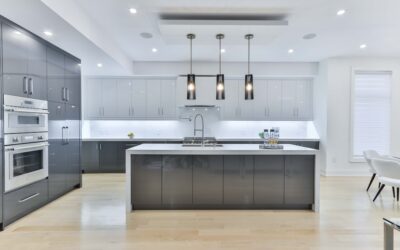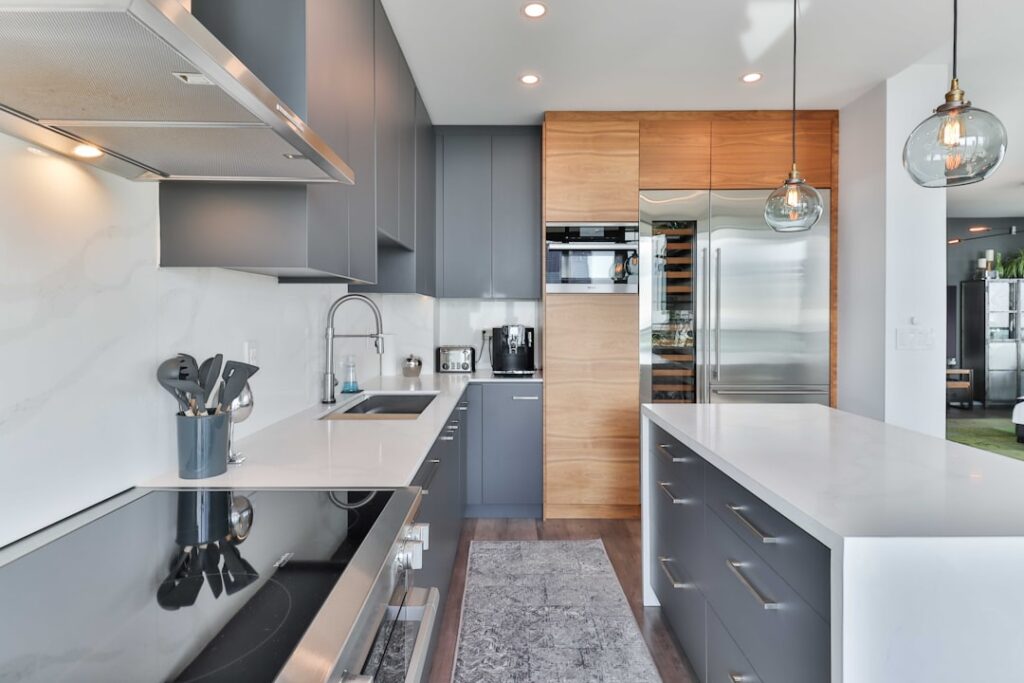
Pure white kitchens dominated the 2010s, gray took over the late 2010s, and warm neutrals quietly captured the late 2020s. If you’re asking what color cabinets are in style right now, the honest answer is more layered than a single shade — the smart money is on warm whites, soft greens, deep moody blues, and natural wood tones that work harder than the cool grays they’re replacing. After designing roughly 80 kitchen and bath remodels in the last three years, here are the colors I keep specifying and why each works.
Part of our Kitchen Remodeling guide — explore the full guide →
- The Big Shift: Warm Beats Cool
- Top Trending Cabinet Colors for 2026
- Two-Tone Cabinets Aren't a Trend Anymore
- Hardware Trends That Pair Well
- Resale Realities by Color
- Wood Cabinets Are Back (Sort Of)
- Paint Application Matters as Much as Color
- Backsplash and Counter Pairings
- Colors to Avoid Right Now
- Final Recommendation
The Big Shift: Warm Beats Cool
Cool gray cabinets felt fresh in 2018. By 2026 they read as dated faster than oak honey-stain in the late 1990s. The color story for the next several years is warm — creamy off-whites, mushroom taupes, sage greens, and earthy terracotta accents. The undertone matters more than the headline color.
If you’re hiring a designer, ask for paint chips with both north-facing and south-facing morning light tests. A warm white in the showroom can read flat-yellow in a north-facing kitchen and pristine in a south-facing one.
Top Trending Cabinet Colors for 2026
- Warm white: Benjamin Moore White Dove (OC-17), Sherwin-Williams Alabaster (SW 7008), Behr Swiss Coffee. The new safe pick.
- Sage and olive green: BM Saybrook Sage, SW Evergreen Fog (2022 Color of the Year and still going strong), Farrow & Ball Lichen.
- Deep navy and ink blue: SW Naval (SW 6244), BM Hale Navy (HC-154), F&B Hague Blue.
- Mushroom and warm taupe: BM Bleeker Beige, SW Anew Gray, SW Accessible Beige.
- Black (with discipline): BM Onyx, SW Tricorn Black, used on islands or lower cabinets only.
- Natural wood: rift-cut white oak, walnut, and reeded oak in matte clear finishes.
Two-Tone Cabinets Aren’t a Trend Anymore
Mixing colors between uppers and lowers, or adding a different island color, has shifted from “trend” to “default” in mid- to high-end kitchens. The most popular combos:
- Warm white uppers + sage or navy lowers
- Warm white perimeter + walnut island
- White oak uppers + black lowers
- Mushroom taupe perimeter + cream island
The split usually happens at the sink wall (perimeter color) and the island (accent color). Avoid splitting one cabinet run into two colors — it reads choppy.
Hardware Trends That Pair Well
Brushed brass and unlacquered brass dominate. Matte black still works on darker cabinets but feels slightly past peak. Polished nickel is the dark horse to watch — old-school but quietly returning.
Avoid mixing more than two hardware finishes in a single space. Brushed brass on cabinets plus oil-rubbed bronze on the faucet plus chrome on the lights creates visual chaos.
Resale Realities by Color
Before painting your kitchen Hague Blue, consider how long you’ll live with it. Bold colors photograph beautifully and feel custom, but they age fast in real estate listings. White, light wood, and warm neutrals consistently win in resale studies — Zillow’s 2024 paint analysis found rooms with creamy white cabinets sold for 1.7% more than comparable homes with bold cabinets.
If you’re in your forever home, paint whatever feels right. If you’re selling within 5 years, lean neutral on perimeter and let the island carry color.
Wood Cabinets Are Back (Sort Of)
Honey oak from the 1990s isn’t returning, but rift-cut white oak in matte clear finish has become the most-requested wood look in higher-end remodels. Walnut is a close second on islands and built-ins. Reeded or fluted wood doors add texture without committing to a heavy stain.
If you have existing oak cabinets in good shape, refacing with walnut or natural-finish white oak veneer doors costs $7,500-$14,000 versus $25,000-$45,000 for full replacement on an average kitchen.
Paint Application Matters as Much as Color
A factory-applied conversion varnish finish on new cabinets always looks better than a brushed-on field paint job. If you’re painting existing cabinets, the realistic options:
- Cabinet pro spraying with two-part urethane: $3,500-$7,500 per kitchen, lasts 15+ years
- Cabinet refacing with new doors: $7,500-$14,000, lasts 20+ years
- DIY brush-and-roll with Benjamin Moore Advance: $400-$800, lasts 5-8 years if done well
Skip the rattle-can spray paint and the all-in-one cabinet kits from big-box stores. They look great for 18 months and deteriorate fast.
Backsplash and Counter Pairings
Warm white cabinets pair with: cream marble or white quartz with subtle veining, terracotta or zellige tile backsplash, brushed brass hardware.
Sage green cabinets pair with: warm white quartz, cream subway tile or hand-glazed zellige, unlacquered brass.
Navy cabinets pair with: white marble or quartz, brass or polished nickel hardware, white or cream subway tile.
Walnut cabinets pair with: light quartz, brass hardware, warm white walls and zellige or natural stone backsplash.
Colors to Avoid Right Now
Cool gray cabinets read 2018, not 2026. Beige-yellow oak and golden honey stain still feel firmly in the late-1990s camp. Cherry red wood reads 2005 builder-grade. High-gloss white, especially on shaker doors, reads cheap rental — matte and satin finishes look more expensive even at the same price point.
If your existing cabinets fall into one of those buckets and the boxes are still solid, consider a refinish before assuming you need replacement. Cabinet refacing keeps the original boxes, replaces doors and drawer fronts, and lifts the look without the $25,000-$45,000 full-replacement budget.
Final Recommendation
If you want a kitchen that still looks current in 2030 and beyond, go warm white perimeter, accent island in sage or natural wood, brushed brass hardware, and warm white quartz counters. It’s not the most exciting answer to what color cabinets are in style, but it’s the answer that ages best, photographs cleanly, and lets you change accents without redoing the whole room.