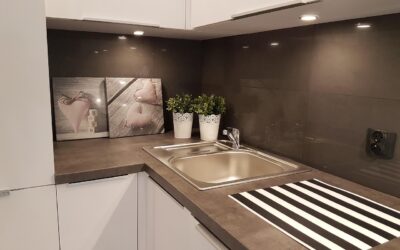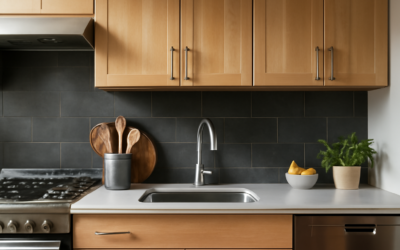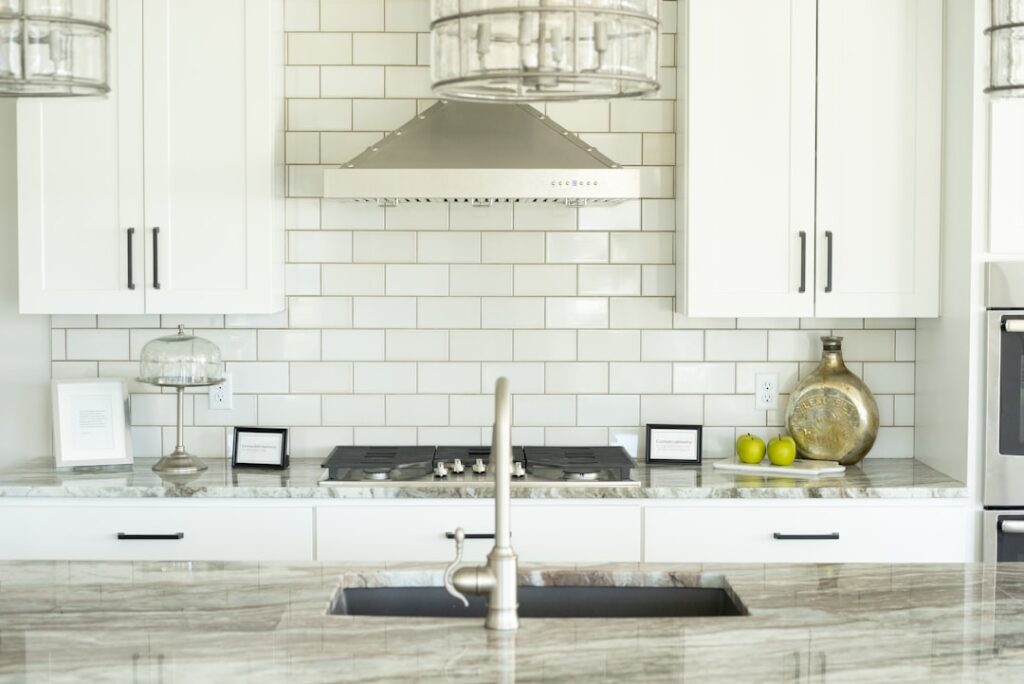
Few choices are as safely stylish as grey backsplash tile. It reads as a neutral, so it flatters nearly any cabinet color, yet it has far more depth and sophistication than plain white. Grey hides splatters better than pale tile, anchors a bright kitchen, and shifts easily between modern, transitional, and industrial looks. From glossy subway brick to honed marble-look porcelain, this is a color that works overtime. Here’s how to choose the right shade, shape, and pairing for your space.
Part of our Kitchen Remodeling guide — explore the full guide →
Warm Greys vs. Cool Greys
The single most important decision is the undertone, because it determines what the tile pairs with. Cool greys carry blue or green undertones and feel crisp, contemporary, and clean; they shine alongside white cabinets, stainless steel, and marble counters. Warm greys, often called “greige,” lean toward beige or taupe and feel cozy and inviting, pairing beautifully with wood tones, cream cabinets, and brass hardware.
Hold a physical sample against your cabinets and counters in your actual kitchen light before buying. A grey that looks perfect in the showroom can turn unexpectedly blue or muddy under your home’s lighting.
Tile Shapes and Layouts
Grey suits almost every popular shape, and the layout sets the mood.
- Subway (3×6 or 4×12): Timeless and versatile; try a vertical stack or herringbone for a fresh twist.
- Hexagon: Playful and geometric, great for a modern or eclectic kitchen.
- Herringbone: Adds movement and a tailored, upscale feel.
- Zellige: Handmade Moroccan tile with subtle color variation and a glossy, imperfect surface that catches light.
- Large-format and slab-look: Minimal grout lines for a sleek, seamless backdrop.
Marble-Look Grey Tile
One of the most popular directions is grey-veined marble-look porcelain, and it deserves its own mention. It captures the soft grey veining of Carrara or the bolder movement of a statuary marble, but in a dense, non-porous tile that never needs sealing and shrugs off kitchen grease. Large-format marble-look tile, run behind the range with minimal grout, mimics a continuous slab for a fraction of the price. It’s the smart pick for anyone who loves the elegance of stone but wants a low-maintenance surface behind a busy cooktop.
Finish: Glossy, Matte, or Textured
Finish changes how a grey reads as much as the color does. Glossy tile reflects light, brightening dim kitchens and making cool greys feel crisp and clean. Matte and honed finishes absorb light for a soft, sophisticated, contemporary look, and they hide water spots and fingerprints better. Textured options, like handmade zellige or a fluted profile, throw subtle shadows that add depth to a single-color wall. In a north-facing or windowless kitchen, a glossy or satin grey helps bounce what light you have; in a bright, sunny room, a matte finish keeps things from feeling glary.
Materials to Consider
The material affects both look and durability. Ceramic is budget-friendly and easy to clean, ideal for glossy subway styles. Porcelain is denser and more moisture-resistant, and it excels at convincing marble and concrete looks. Glass tile bounces light around and makes a small kitchen feel bigger, with an easy-wipe surface. Natural marble delivers unmatched veining and luxury, but it’s porous and needs sealing, so it demands more care behind a busy cooktop.
Pairing Grey With Cabinets
This is where grey backsplash tile really earns its keep, because it plays well with so many palettes.
- White cabinets: The classic crisp combo; grey adds contrast without the starkness of black.
- Wood cabinets: Warm greys balance oak and walnut for a natural, grounded look.
- Navy cabinets: Light grey tile softens deep navy and keeps the space from feeling heavy.
- Grey cabinets: A tonal, monochrome scheme feels serene and modern; vary the shade slightly for depth.
Choosing the Right Grout Color
Grout can make or break the finished look. Matching grey grout blends the joints and creates a smooth, continuous field, perfect for large-format tile or a calm modern vibe. White grout brightens the space but shows grime faster near the stove. A darker charcoal grout highlights each tile’s shape and lends an industrial, graphic edge, and it hides stains well. For most kitchens, a grout that’s within a shade or two of the tile keeps things sophisticated without demanding constant cleaning.
Grey With Different Countertops
The counter is the tile’s closest neighbor, so the pairing deserves thought. White quartz with subtle grey veining creates a clean, cohesive look that lets a marble-look grey tile flow right into the counter. Butcher block and warm wood counters call for a greige tile to keep the palette inviting rather than cold. Black or dark soapstone counters pair beautifully with a light grey backsplash for high contrast and a modern edge. Busy granite with lots of movement is best paired with a quiet, solid grey tile so the two surfaces don’t compete. When in doubt, pull one of the counter’s undertones into your tile choice for an effortless match.
Cost Ranges
Grey tile spans a wide price range depending on material. Basic ceramic and porcelain subway tile run about $2 to $8 per square foot, glass tile lands around $7 to $20, and natural marble or handmade zellige can reach $15 to $50 or more. Professional installation typically adds $10 to $20 per square foot in labor. For a standard 30-square-foot backsplash, a straightforward ceramic job might total $400 to $800 installed, while a premium marble or zellige feature wall climbs well beyond that.
Design Tips That Work
A few guidelines help grey shine. Let the tile’s finish do a job: glossy tile reflects light and brightens dim kitchens, while honed and matte finishes read as more upscale and hide fingerprints. If your counters are busy with movement, choose a quieter solid grey; if your counters are plain, a marble-look or zellige adds welcome texture. Carry the tile all the way to the underside of the upper cabinets, and consider running it full-height behind the range for a designer focal point. Finally, pick metal finishes, brass, black, or chrome, that echo your grey’s undertone for a pulled-together result.
Maintenance and Longevity
Grey is one of the most forgiving colors to live with day to day. It sits between white, which shows every coffee splash, and black, which reveals dust and water spots, so smudges and light grease blend in until your next wipe-down. Clean glazed ceramic, porcelain, and glass with a soft cloth and mild dish soap; steer clear of abrasive pads that can dull the finish. Seal the grout after installation and re-seal every year or two to keep the lines from darkening near the stove. Natural marble needs a stone-safe cleaner and periodic sealing, since acidic foods can etch it. With basic care, a grey tile backsplash easily lasts 15 to 20 years or more.
Why Grey Endures
Trends come and go, but grey backsplash tile has staying power because it’s genuinely flexible. It bridges cool and warm palettes, dresses up or down with the shape and finish you choose, and forgives the daily mess of a working kitchen. Whether you want a subtle backdrop that lets your cabinets star or a textured feature wall that draws the eye, there’s a grey tile to do it, and it will still look current years from now.
Grey is also one of the easiest colors to resell on. Real estate agents consistently note that neutral, well-executed kitchens photograph well and appeal to the widest pool of buyers, and a tasteful grey backsplash reads as updated without being polarizing. So even if you plan to move in a few years, the choice protects your investment. Buy an extra box of tile at installation and store it flat, because having exact-match spares on hand makes any future repair painless and keeps your backsplash looking seamless for its entire life.
Prefer to explore on your own?
See how new flooring looks in your actual room in seconds — free, no signup.
Try the free Floor Studio →