Few wall treatments deliver as much character for as little money as board and batten. Whether you want a cozy farmhouse feel, a crisp modern accent, or a classic entryway, board and batten wall designs add architectural texture that transforms a flat, forgettable wall into a focal point. The beauty of the style is its flexibility: by changing the batten spacing, height, and color, you can create looks that range from rustic to contemporary. This guide walks through popular designs, spacing, materials, cost, and installation.
- What Board and Batten Is
- Popular Board and Batten Wall Designs
- Getting the Batten Spacing Right
- Choosing Materials
- Color Ideas That Work
- What Board and Batten Costs
- Step-by-Step Installation Overview
- The Details That Make It Look Custom
- Common Mistakes to Avoid
- Room-by-Room Design Ideas
- Board and Batten Versus Other Wall Treatments
- Bringing the Look Into Your Home
What Board and Batten Is
Board and batten originated as an exterior siding technique: wide boards installed vertically with narrow strips, called battens, covering the seams between them. Indoors, the look has been adapted as a decorative wall treatment. Rather than full boards, most interior versions use the existing drywall as the flat backing and apply vertical battens (and often horizontal top and bottom rails) to create the paneled effect. The result is a grid of raised strips that adds depth and shadow lines to the wall.
Popular Board and Batten Wall Designs
The style adapts to many looks depending on how you arrange the battens.
- Traditional half-wall: Battens run from the baseboard up to a horizontal rail at about one-third of the wall height, topped with a ledge. Classic and timeless in dining rooms and hallways.
- Full-height board and batten: Battens run floor to ceiling for a dramatic, modern statement, common on accent and bedroom walls.
- Two-thirds high: Taller than a half-wall, reaching roughly two-thirds up, for an elegant, substantial look in entryways.
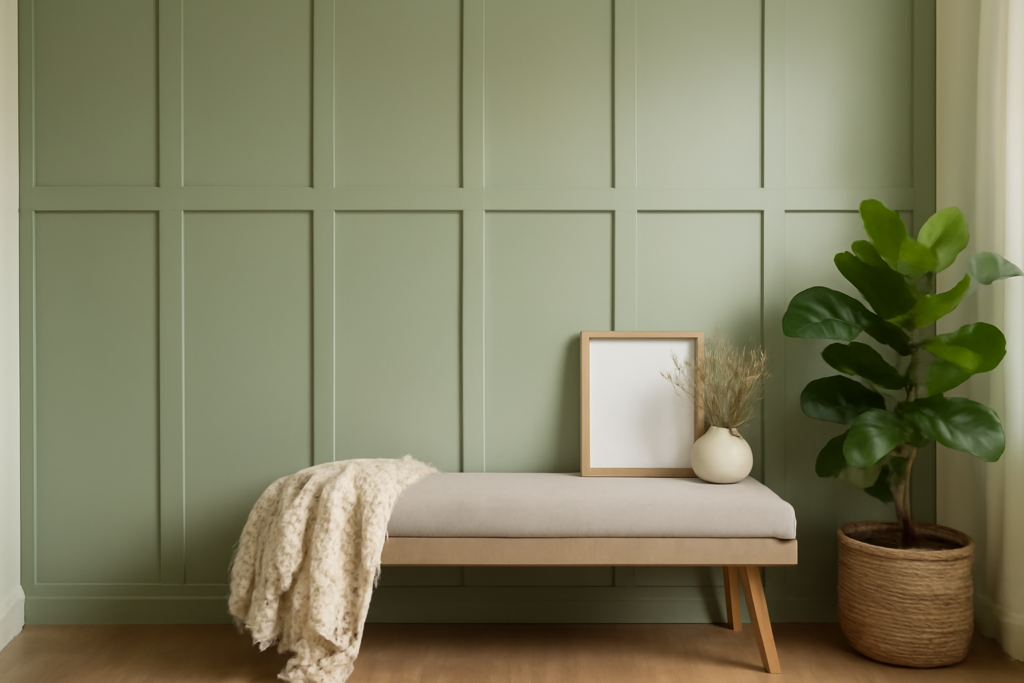
- Grid or square pattern: Vertical and horizontal battens form squares or rectangles, a modern take that adds geometry.
- Modern wide-spacing: Fewer, more widely spaced battens for a clean, minimalist feel.
- Vaulted and stair-follow designs: Battens that follow a sloped ceiling or staircase for a custom architectural effect.
Getting the Batten Spacing Right
Spacing is the design decision that most affects the final look. Battens spaced closely, around 8 to 12 inches apart, read as traditional and detailed. Wider spacing, 16 to 24 inches, feels modern and airy. The key is even spacing: measure the wall, subtract the batten widths, and divide the remaining space so the gaps are equal, with a batten landing cleanly in each corner. Uneven spacing or a partial gap at the end is the fastest way to make the wall look amateur. Many designers aim for spacing that keeps the negative spaces roughly square or slightly taller than wide for the most pleasing proportion.
Choosing Materials
Board and batten battens are typically made from one of a few materials.
- MDF: The most popular for painted designs. Smooth, stable, affordable, and paints beautifully with no grain. Avoid in wet areas.
- Pine or poplar: Solid wood for stained looks or high-durability spots.
- Pre-primed pine boards: Ready to install and paint, common at home centers.
- PVC: Moisture-proof, ideal for bathrooms, mudrooms, and laundry rooms.
Common batten dimensions are 1×2, 1×3, or 1×4 lumber, or strips of ripped MDF. Wider battens make a bolder statement; narrower ones feel more refined.
Color Ideas That Work
Color dramatically changes the mood of a board and batten wall.
- Crisp white: Timeless and bright, keeping the texture subtle and classic.
- Deep navy or charcoal: Dramatic and cozy, especially full-height in a bedroom or office.
- Sage and muted greens: On-trend, warm, and calming in dining and living rooms.
- Warm greige or taupe: Soft and versatile, blending with many palettes.
- Black: Bold and modern for a striking accent wall.
Painting the battens and the wall between them the same color gives a monochromatic, architectural look, which is the most popular modern approach.
What Board and Batten Costs
This is a famously budget-friendly upgrade, especially as a DIY project.
- DIY materials: $1.50 to $4 per square foot for MDF or pine battens, adhesive, and paint.
- A single accent wall: often $75 to $250 in materials.
- Professional installation: $7 to $18 per square foot depending on complexity.
A typical accent wall runs $100 to $300 DIY, or $700 to $2,000 professionally installed. The low material cost and high visual impact make it one of the best value-per-dollar projects in home improvement.
Step-by-Step Installation Overview
- Plan the layout. Measure the wall, choose your design and spacing, and mark stud and batten locations with a level and pencil.
- Install rails. If using a top rail or ledge and a bottom rail, attach those first, level and secure.
- Cut and attach battens. Cut each vertical batten to length and fasten with construction adhesive plus finish nails, checking each for plumb.
- Fill and caulk. Fill nail holes with wood filler, sand smooth, and caulk every seam where battens meet the wall and each other.
- Prime and paint. Prime bare MDF or wood, then paint the battens and wall, usually in satin or semi-gloss for durability.
The Details That Make It Look Custom
Two finishing steps separate a professional result from an obvious DIY job. First, caulk every joint, the edges of each batten and every seam, then smooth with a wet finger so there are no shadow gaps. Second, fill and sand all nail holes before painting. These steps make the battens look built-in rather than glued on. Also take time to plan around outlets and switches; battens should not awkwardly clip an outlet, so adjust spacing slightly or plan the layout to avoid conflicts.
Common Mistakes to Avoid
- Uneven spacing. Plan the layout mathematically so gaps are equal and corners land on a batten.
- Skipping the level. Floors and ceilings are rarely square; check plumb on every batten.
- Forgetting to caulk. Uncaulked seams reveal the gaps and ruin the built-in look.
- Ignoring outlets. Plan around switches and outlets so battens do not collide with them.
- Using MDF in wet areas. Choose PVC for bathrooms and laundry rooms to avoid swelling.
Room-by-Room Design Ideas
Because board and batten adapts to so many spaces, it helps to picture how the style plays in different rooms of the house.
- Entryway and mudroom: A durable half-wall or full board and batten with hooks doubles as function and style, standing up to bags, shoes, and daily traffic.
- Dining room: A traditional half-wall or two-thirds-height treatment adds formality and a classic backdrop for gatherings.
- Primary bedroom: A full-height accent wall behind the bed in a deep, moody color creates a cozy, hotel-like headboard effect.
- Bathroom: Moisture-resistant PVC battens bring texture and a spa feel, especially in a powder room.
- Staircase and hallway: Battens that follow the stair rake turn an ordinary passage into an architectural feature.
- Home office: A grid or square pattern behind a desk makes a polished backdrop for video calls.
Matching the height and spacing to the room’s proportions and function is the key: taller, bolder designs for statement walls, subtler half-walls for spaces where the treatment should support rather than dominate.
Board and Batten Versus Other Wall Treatments
Homeowners weighing wall treatments often compare board and batten to shiplap, beadboard, and picture-frame molding, and each has a distinct character. Understanding the differences helps you choose the right one for your look.
Shiplap uses horizontal planks with subtle gaps and reads casual and farmhouse-modern, while board and batten’s vertical lines feel taller and more architectural. Beadboard, with its narrow vertical grooves, is finer and more cottage-like, ideal for smaller-scale detail in bathrooms and porches. Picture-frame molding creates flat rectangular frames on the wall for a formal, traditional effect closer to raised-panel wainscoting. Board and batten sits comfortably in the middle, versatile enough to swing from farmhouse to modern depending on spacing and color, which is a big part of why it has become so popular. If you want vertical emphasis and adjustable formality at a low cost, board and batten is often the most flexible choice of the group.
Bringing the Look Into Your Home
Board and batten wall designs are endlessly adaptable, so start by deciding the mood you want and the room’s proportions. A half-wall suits dining rooms and hallways, full-height battens make a bold bedroom or accent wall, and a grid pattern adds modern geometry. Choose your spacing carefully, pick a color that fits your palette, and invest the extra time in caulking and filling for a crisp finish.
For a weekend of work and a modest materials budget, board and batten delivers custom-looking architectural character that instantly elevates a room. It is one of the most rewarding, beginner-friendly projects in home design, adding texture, warmth, and lasting value to nearly any wall in the house.