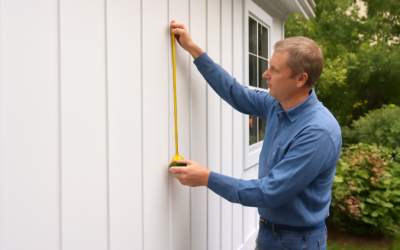
A single accent wall with vertical wood strips can change the entire mood of a room faster than any paint color. A batten wall adds depth, shadow, and texture that flat drywall never delivers, and the actual build is one of the easier weekend carpentry projects a homeowner can tackle. Material costs run $180 to $420 for a 10×10-foot wall, with most of the spend going to 1×3 or 1×4 poplar strips and a quart of paint.
Batten Styles That Work in Real Homes
Three main looks dominate Pinterest and designer portfolios. Classic board-and-batten runs 1×4 battens spaced 12 to 18 inches apart, usually on the lower third of a wall with a chair rail cap. Modern slat walls run 1×2 or 1×3 battens tight together from floor to ceiling, either all vertical or all horizontal. Grid batten mixes vertical and horizontal strips into square or rectangular boxes for a French-paneled look.
- Board-and-batten: traditional, best in dining rooms, hallways, kids’ rooms
- Modern slat: dramatic, best on full-height feature walls behind a bed or TV
- Grid: formal, best in entryways and under staircases
- Half-slat: cost-saving hybrid, battens on bottom 48 inches only
Picking the Right Lumber
Poplar is the sweet spot. It’s $3.50 per 1x3x8 at Home Depot, takes paint flawlessly, and has tight grain that won’t telegraph through primer. MDF strips cost 30 percent less but dent if you breathe on them and swell with any moisture — skip MDF anywhere near a bathroom or exterior wall. Pine knots bleed through latex paint within a year unless you hit them with BIN shellac primer first. For stained finishes, choose red oak ($5.50 per 1x3x8) or clear pine from a specialty hardwood dealer.
Pre-primed 1×3 MDF (Miratec) at $6 per 8-foot stick saves a full priming coat and resists moisture better than standard MDF. Worth the premium on anything but a budget build.
Spacing Formula That Always Looks Right
Eyeballing spacing is where most DIY batten walls go wrong. Use this formula instead: measure the wall in inches, decide how many battens you want (7 to 11 reads best on a 10-foot wall), multiply the batten count by your batten width, subtract from wall width, and divide by one more than the batten count.
Example: 120-inch wall, 9 battens at 2.5 inches wide. 9 × 2.5 = 22.5. 120 − 22.5 = 97.5. 97.5 ÷ 10 = 9.75 inches between each batten. Mark every spacing point with a pencil and laser level before nailing a single board — fixing a misaligned batten after the fact is far more work than measuring twice.
Step-by-Step Installation
- Empty the wall, patch any holes with Dap Fast N Final, and sand flush
- Locate studs with a Franklin ProSensor 710 ($42) and mark their centers floor to ceiling
- Prime the entire wall with Zinsser 123 — paint behind battens almost never gets reached later
- Rip or buy battens to length. A 10-foot ceiling needs 121-inch strips; order 10-footers and cut to exact height
- Mark spacing using your formula, plumb with a Bosch GLL2-15 laser level
- Apply a thin zig-zag bead of DAP DynaGrip Heavy Duty on the back of each batten
- Nail with 18-gauge 1-1/2-inch brad nails every 16 inches into studs or drywall
- Fill nail holes with wood filler, sand at 180 grit, prime bare wood, caulk all edges with Dap Alex Plus
- Two coats of Benjamin Moore Advance satin in your chosen color with a high-density foam roller
Total install time for a 10-foot wall: 6 to 8 hours across two days to allow caulk and paint to dry properly.
Tools Worth Buying vs Renting
A brad nailer changes everything. The Ryobi P320 Airstrike ($99 tool-only, $199 with battery) drives 18-gauge brads without a compressor or hose and pays for itself on a single accent wall. A manual miter box and handsaw ($25) works for straight cuts if you’re patient, but a DeWalt DWS715 miter saw ($279) makes clean cuts 10 times faster. Rent instead of buying if you’re only doing one wall.
- Must own: 4-foot level, 25-foot tape, pencil, caulk gun, putty knife
- Must have access to: brad nailer, miter saw or chop saw
- Game-changer: laser level ($42) for perfectly plumb layout
Color Choices That Hold Up Long-Term
Deep moody colors absolutely sing on a batten wall — Benjamin Moore Hale Navy HC-154, Sherwin-Williams Iron Ore SW 7069, and Farrow and Ball Railings No. 31 are the three most-pinned options in 2026. High-contrast white (BM Simply White OC-117) reads modern Scandinavian. Warm tones like BM Edgecomb Gray HC-173 suit traditional homes.
Always use a satin or semi-gloss sheen — flat paint shows every fingerprint and brush mark on 3D surfaces. Advance by Benjamin Moore self-levels better than any latex on trim work and dries hard enough to hold up to shoulders and suitcases bumping the wall.
Common Pitfalls to Avoid
- Skipping caulk on vertical seams where batten meets drywall: a 1/32-inch line looks like a crack after one coat of paint
- Nailing too close to batten ends: splits the strip. Always stay 1 inch in from any edge and pre-drill if using hardwood
- Forgetting to account for baseboard and ceiling trim thickness when cutting battens to length
- Using satin paint over flat wall paint without priming: the sheen change telegraphs every imperfection
- Installing on a wavy wall without checking: battens amplify lumps. Skim-coat first if the wall is cupped more than 1/8 inch across 4 feet
Budget Summary
A professionally installed batten wall runs $12 to $22 per square foot through a contractor — meaning a 10×10 wall costs $1,200 to $2,200. The same wall, done DIY, lands at $180 to $420 for materials and one decent weekend. Rent the miter saw for $35 a day, borrow the brad nailer from a neighbor, and the savings easily cover a new pendant light or rug to finish the room.