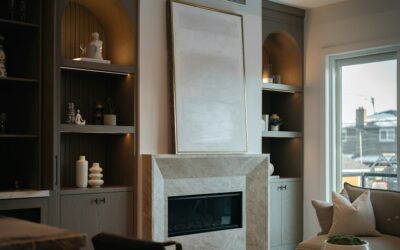
Few navy paints have stayed popular as long as this one. Benjamin Moore Hale Navy (HC-154) is a deep, classic navy from the brand’s Historical Colors collection, described by the manufacturer as a “use-anywhere shade of navy with a classic maritime feel.” It shows up on kitchen islands, front doors, accent walls and whole-house exteriors, mostly because it reads as dark and rich without tipping into purple, teal or near black.
The key numbers: the color code is HC-154 and the light reflectance value (LRV) listed on the manufacturer’s page is 8.36, which places it firmly in the dark range. Hale Navy is a true navy blue that most designers and color reviewers describe as having a slight gray undertone, which keeps it muted and sophisticated rather than bright. Benjamin Moore does not publish an official undertone, so sample it in your own light before committing.
The sections that follow cover the full spec sheet, how Hale Navy behaves in different rooms and light, exterior uses, coordinating trim colors and how it compares with other popular navies.
Benjamin Moore Hale Navy at a Glance
| Spec | Value | What It Means |
|---|---|---|
| Color name and code | Hale Navy, HC-154 | Use the code when ordering to avoid mix-ups with similar names |
| Collection | Historical Colors | A collection of traditional, time-tested shades |
| LRV | 8.36 | Reflects little light; reads dark in almost every room |
| Color family | Neutral (as filed by the maker) | Reads as a classic deep navy, not a teal or indigo |
| Undertone | Slightly gray (not officially stated) | Looks muted and calm rather than vivid |
| Manufacturer-listed coordinating colors | Coventry Gray HC-169, White Dove OC-17, Lenox Tan HC-44, Glacier White OC-37 | Tested pairings for trim, walls and accents |
| Interior or exterior | Both | Can be tinted in interior and exterior product lines |
An LRV of 8.36 means the color reflects only around 8 percent of the light that hits it, on a scale where 0 is pure black and 100 is pure white. For comparison, most “dark” accent colors fall under about 15. Expect Hale Navy to make a room feel more enclosed and cozy, which can be a feature or a drawback depending on the space.
Undertones and How the Light Changes It
Navy blues are tricky because their undertones shift with light. Hale Navy is widely described as balanced, with a hint of gray that keeps it from looking electric. In practice, the color behaves differently depending on which way the windows face.
- North-facing rooms: Cool, indirect light emphasizes the gray and can make Hale Navy look deeper and moodier, sometimes close to charcoal in the evening.
- South-facing rooms: Warm, bright light brings out more of the blue. The color reads as a clear, classic navy.
- East and west light: Expect the color to shift through the day, bluer in direct sun and grayer in shadow.
- Artificial light: Warm white bulbs soften it; cool white bulbs push it grayer. Bulbs in the 2700K to 3000K range generally flatter deep navies in living spaces.
Some viewers notice a faint green cast in very low light, but most sources place Hale Navy in the blue-gray family rather than a green-leaning navy. Because published hex values differ slightly between color databases and screens vary, a real paint sample is the only reliable way to judge it.
Best Rooms for Hale Navy
Kitchens and Islands
Hale Navy is a common choice for kitchen islands and lower cabinets. Paired with white upper cabinets and a light countertop, it adds weight and contrast without overwhelming the room. Use a durable cabinet-grade enamel in a satin or semi-gloss sheen for wipeable surfaces.
Living Rooms and Dens
On all four walls, it creates a cozy, library-like feel, especially with warm wood floors, brass light fixtures and cream upholstery. In small rooms, consider it on one feature wall or on built-in shelving instead.
Bedrooms
Dark colors can make bedrooms feel restful. Pair Hale Navy with crisp white trim and natural textiles. Keep plenty of lighting in the room so it does not feel cave-like on winter evenings.
Bathrooms and Powder Rooms
Small powder rooms suit dramatic color. Hale Navy works well with white tile, marble-look surfaces and polished nickel or brass. Choose a moisture-resistant bath paint in a full bathroom.
Doors, Trim and Built-Ins
Interior doors and built-ins painted Hale Navy add a tailored, classic accent while leaving the walls light.
Benjamin Moore Hale Navy Exterior Uses
Hale Navy is just as popular outside, on siding, shutters and front doors. Outdoors, sunlight usually makes it look a little lighter and bluer than it does indoors, so test a sample on the north and south sides of the house.
- Siding: Hale Navy siding with bright white trim gives a classic coastal or colonial look. Pair it with a white or light gray roof edge and natural stone or brick accents.
- Front doors: On a white, gray or cream house, a Hale Navy door is a reliable focal point. Use a door and trim enamel with a semi-gloss or gloss sheen for durability.
- Shutters: Navy shutters suit white, light gray and warm beige siding.
Dark exterior colors absorb more heat and can fade faster in strong sun. Use a premium exterior line from the brand, such as Aura Exterior or Regal Select Exterior, which can be tinted to Hale Navy. Check whether your vinyl siding manufacturer approves dark colors, since heat buildup can warp some vinyl products unless a heat-reflective formula is used.
Coordinating Trim and Accent Colors
The manufacturer lists four coordinating colors for Hale Navy, each useful in a different role:
- White Dove (OC-17): A soft white that works as trim, ceilings or upper cabinets. It keeps contrast gentle rather than stark.
- Glacier White (OC-37): A versatile off-white with hushed cream undertones (LRV 80.18), a touch softer and warmer than White Dove.
- Coventry Gray (HC-169): A steady medium gray with relatively neutral undertones for adjoining walls when you want a blue-gray flow between rooms.
- Lenox Tan (HC-44): A warm tan that softens the navy and brings out its classic, traditional side.
Other pairings that commonly work: warm wood tones, brass or gold hardware, rust or terracotta accents, and soft blush or camel textiles. Avoid pairing it with another saturated blue at a similar depth, which can make both look muddy.
Hale Navy Compared With Other Navy Shades
If Hale Navy feels slightly too gray or too deep in your space, these near-navy alternatives are worth sampling side by side. Listed LRVs: Naval 4.458, Newburyport Blue 10.31, Van Deusen Blue 11.97, Winding Waterway 5.13.
- Sherwin-Williams Naval (SW 6244): The most common cross-brand comparison. Naval is generally seen as a bit deeper and slightly warmer, with a stronger blue presence in some light.
- Benjamin Moore Newburyport Blue (HC-155): Another Historical Colors navy with a listed LRV of 10.31, so it reads a little lighter and more clearly blue.
- Benjamin Moore Van Deusen Blue (HC-156): A Historical Colors blue with a listed LRV of 11.97 and a richer blue character, often chosen when Hale Navy feels too subdued.
- Benjamin Moore Winding Waterway (2063-10): Formerly sold as Old Navy, this color was recently renamed, so older chips may still carry the old name. With a listed LRV of 5.13 it is noticeably deeper than Hale Navy and leans closer to near black in dim light.
Paint two or three large samples next to each other on the same wall and look at them morning, afternoon and evening for a couple of days. Peel-and-stick paint sample swatches make it easy to move each color between rooms without painting test patches.
Painting Tips and Troubleshooting
Use a tinted primer. Deep colors cover best over a gray-tinted primer, especially over white or light walls. Ask the store which primer shade suits HC-154.
Plan for two coats or more. Even premium paint usually needs two full coats to look even. Patchy areas typically mean a coat was rolled too thin.
Watch the sheen. Matte and eggshell hide wall flaws but show scuffs more on dark colors. Satin is a common compromise for walls in busy rooms.
Touch-ups flash. Dark colors show touch-up spots as shiny or dull patches. Repaint wall to wall or corner to corner rather than spot-touching.
Cost range. Hale Navy is tinted into the brand’s standard product lines, so it costs the same as any other color in that line. Premium interior paints from major brands generally run about $50 to $100 or more per gallon at retail.
When to Call a Pro
Dark colors are less forgiving than light ones: lap marks, uneven cut-in lines and roller texture all show up. Hire a painter for cabinets, tall stairwell walls and full exteriors, especially on two-story homes where ladder work becomes a fall hazard. If the existing paint dates from before 1978, test for lead before sanding or scraping, and use lead-safe practices or a certified contractor.
Frequently Asked Questions
What is the LRV of Benjamin Moore Hale Navy?
The manufacturer lists an LRV of 8.36, which places it in the dark color range. It reflects very little light, so it reads deep in most rooms.
Does Hale Navy have green or gray undertones?
Most sources describe it as a true navy with a slight gray undertone. It can look grayer in north light and bluer in warm sun, so test a sample in your space.
Is Hale Navy good for exterior siding?
Yes, it is a popular exterior color for siding, shutters and doors. Use a premium exterior paint, and check vinyl siding approvals for dark colors.
What white trim goes with Hale Navy?
The manufacturer suggests White Dove (OC-17) and Glacier White (OC-37). Both are soft, slightly warm whites; Glacier White carries a little more cream. For crisper contrast, Chantilly Lace (OC-65) is a brighter option.
Is Hale Navy darker than Naval?
They are close. Naval is usually seen as a touch deeper and warmer, while Hale Navy reads slightly grayer. Compare large samples side by side.