A boho room that looks collected rather than cluttered almost always follows a few quiet rules. Good boho interior design is relaxed on the surface, but underneath it runs on a consistent palette, a deliberate mix of textures, and enough breathing room that every pattern has a place to land. Skip those rules and the look slides from easygoing to messy within a weekend of thrift-store shopping.
The quick answer: start with a warm, earthy base (cream, sand, terracotta, rust, olive), layer natural materials like rattan, jute, wood and linen, add two or three patterns that share at least one color, and finish with living plants. Repeat those same ingredients in every room at different volumes so the whole house reads as one home, not a series of themed sets.
- What Boho Interior Design Actually Means
- Building a Whole-Home Boho Palette
- Materials, Textiles and Furniture That Define the Look
- Layering Rules That Keep Boho From Looking Cluttered
- Applying Boho Style Room by Room
- Plants: The Living Layer
- Budget, Sourcing and Cost Ranges
- Common Boho Mistakes and How to Fix Them
- When to Bring in a Pro
- Frequently Asked Questions
From there, each room gets its own emphasis. A living room leans on rugs and floor seating, a bedroom on bedding and soft light, a kitchen on open shelving and woven baskets. The palette, materials and plant life stay constant throughout.
What Boho Interior Design Actually Means
Bohemian style grew out of artists and travelers who decorated with what they collected: textiles from markets, secondhand furniture, handmade pottery, books stacked on the floor. Modern boho interior design keeps that spirit but edits it. The goal is a home that feels personal, layered and lived in, with nothing that looks bought as a matching set.
Several offshoots fall under the same umbrella. Bohemian chic decor is the more polished version, with cleaner lines, a lighter palette and fewer, larger statement pieces. Boho farmhouse decor blends shiplap, distressed wood and galvanized metal with macrame and patterned rugs. A modern boho look pares the clutter back hard, keeping white walls and letting two or three textural pieces carry the room. All of them share the same core: natural materials, global pattern, warmth and plants.
What boho is not: a room with every surface covered. The best bohemian style interior leaves negative space on walls and floors so the eye can rest between the busy spots.
Building a Whole-Home Boho Palette
Color is the thread that holds a bohemian home together. Choose a base neutral for walls and large furniture, then two or three accent colors that will show up in textiles, pottery and art in every room.
- Base neutrals: warm white, cream, oatmeal, pale sand or a soft greige. Avoid stark blue-white paint, which makes natural materials look dull.
- Earthy accents: terracotta, rust, mustard, ochre, clay pink and burnt orange.
- Cool balancers: sage, olive, deep teal or indigo. One cool accent keeps the warm tones from feeling heavy.
- Grounding darks: charcoal, chocolate brown or black in small doses, such as picture frames, iron hardware or a single leather chair.
A useful rule is 60/30/10: about 60 percent base neutral, 30 percent natural material tones (wood, rattan, jute), and 10 percent saturated accent color. That ratio scales from a small bathroom to an open-plan main floor.
Materials, Textiles and Furniture That Define the Look
Texture does more work in a boho room than color does. When a space feels flat, the fix is usually another material, not another pattern.
Natural Fibers and Woods
Rattan, wicker, cane, seagrass, bamboo and jute are the backbone. A rattan accent chair, a cane-front cabinet or a seagrass storage basket instantly signals the style. Pair them with wood in mid to warm tones: reclaimed pine, mango wood, teak-look finishes or simple oak. Mixing two or three wood tones is fine as long as they share a warm undertone.
Textiles
Layer flat-weave and kilim-style rugs, linen and cotton throws, chunky knit blankets, mudcloth-pattern pillows and macrame wall hangings. Vary scale: one large pattern (a rug), one medium (pillows), one small (a throw or curtain trim). That keeps patterns from fighting.
Furniture Style
Bohemian furniture style favors low, comfortable pieces: a deep sofa, floor cushions, poufs, a vintage trunk as a coffee table, a carved side table. Mix eras on purpose. A mid-century credenza beside a rattan chair and a secondhand Persian-style rug is classic boho. Secondhand and vintage pieces add the collected character that new furniture lacks.
Layering Rules That Keep Boho From Looking Cluttered
Most failed boho rooms break the same few guidelines. Use these as a checklist before buying anything new.
- Limit pattern families. Pick two or three pattern types (geometric, floral, stripe) and repeat them, rather than introducing a new style on every pillow.
- Repeat each accent color at least three times in a room so it looks intentional.
- Group objects in odd numbers on shelves and tables: three vases, five books stacked, one plant.
- Leave one quiet wall per room with nothing on it, or a single large piece.
- Anchor every seating area with a rug. Layer a patterned rug over a larger plain one if the pattern piece is too small.
- Keep surfaces 30 to 40 percent clear. Clutter on every flat surface reads as disorder, not personality.
- Edit seasonally. Rotate textiles and objects in and out of storage instead of adding forever.
Applying Boho Style Room by Room
The same palette and materials should appear in every space, but each room has a different lead feature. Here is how a boho style home decor plan translates from one room to the next.
Living Room
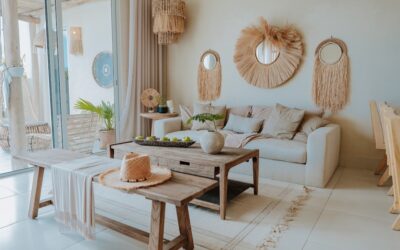
Start with the floor. A large jute area rug in a natural tone grounds the room and handles foot traffic well; layer a smaller patterned rug on top in front of the sofa. Add a low sofa in linen or a warm velvet, a rattan or leather accent chair, two or three poufs, and a mix of pillows in your accent colors. Hang a macrame piece or a woven wall basket arrangement over the sofa instead of a gallery of framed prints. Floor plants such as a fiddle leaf fig or bird of paradise belong in the corners.
Bedroom
A boho decor room for sleeping relies on bedding. Use a linen duvet in a neutral, then layer a patterned quilt folded at the foot and a mix of pillow shapes. A rattan or cane headboard works well, as does a simple wood frame with a textile hung behind it. Keep lighting soft: a woven pendant, a ceramic table lamp and warm 2700K bulbs. A hanging planter by the window adds life without taking floor space.
Kitchen and Dining
Open shelving shows off handmade pottery, glass jars and cookbooks. Woven baskets hold produce and linens. Mix dining chairs (two cane, two wood) around a solid wood table, and hang a large rattan or seagrass pendant overhead. A washable flat-weave runner in front of the sink brings pattern to a hard-surfaced room. Herbs on the windowsill count as both decor and plants.
Bathroom
Bathrooms get the lightest touch because humidity is hard on natural fibers. Choose a cotton or washable runner, a teak-look bath mat, and baskets for towels. Ferns, pothos and snake plants tolerate the moisture. A patterned shower curtain or patterned floor tile can carry the whole style if everything else stays simple.
Entry and Home Office
An entry needs a durable runner, a bench with a cushion, hooks and a basket for shoes. In a home office, a rattan desk chair cushion, a woven storage cabinet and a trailing plant on a bookshelf bring the look into a work space without adding distraction.
Plants: The Living Layer
Plants are not optional in a bohemian style interior; they soften hard lines and add the cool green that balances warm palettes. Match plants to light before style.
- Bright indirect light: fiddle leaf fig, monstera, bird of paradise, rubber plant.
- Medium light: pothos, philodendron, peace lily, ferns.
- Low light: snake plant, ZZ plant, cast iron plant.
Use terracotta pots, woven basket covers and macrame hangers so the containers become part of the decor. Group plants at three heights: floor, tabletop and hanging. If you have pets, check that each plant is non-toxic before bringing it home, and choose faux plants for spots that get almost no light.
Budget, Sourcing and Cost Ranges
Boho is one of the most budget-friendly styles because secondhand pieces fit perfectly. General ranges for a single living room refresh:
- Low budget (a few hundred dollars): paint, thrifted textiles, plant cuttings, a used rattan chair, pillow covers.
- Mid budget (roughly $1,000 to $3,000): a new jute rug, accent chair, pendant light, several large plants, new curtains.
- Higher budget: a quality sofa, vintage hand-knotted rugs and custom built-in shelving.
Thrift stores, estate sales, flea markets and online resale listings are the best sources for character pieces. Spend more on items you touch every day (sofa, mattress, main rug) and less on decor you will rotate.
Common Boho Mistakes and How to Fix Them
- Too much pattern: remove pillows and throws until only two or three pattern types remain, then repeat them.
- Everything beige: add one saturated accent (rust or teal) in three places and a dark element for contrast.
- Rug too small: the front legs of every seat should sit on the rug. Layer a larger plain jute rug underneath if needed.
- Cold lighting: swap cool bulbs for warm white and add at least three light sources per room.
- Dust and upkeep: vacuum natural fiber rugs weekly, shake out flat-weaves, and wipe rattan with a damp cloth. Keep jute away from spills and damp floors.
When to Bring in a Pro
Most boho decorating is easy DIY. Call a pro when the plan involves hanging heavy pendants or new light fixtures (an electrician), installing built-in shelving or a reclaimed wood accent wall (a carpenter), or refinishing floors before the rugs go down. An interior designer can also be worth a few hours of consultation if you are furnishing an entire home and want the palette locked in before you shop.
Frequently Asked Questions
What colors work best for boho interior design?
Warm neutrals like cream and sand form the base, with terracotta, rust, mustard and olive as accents. One cool color such as teal or sage keeps the palette balanced.
Can boho style work in a small apartment?
Yes. Keep walls light, use one large rug instead of several small ones, hang plants to save floor space and limit decor to a few meaningful pieces per surface.
What is the difference between boho and bohemian chic decor?
Bohemian chic decor is a more polished, edited version with fewer objects, cleaner furniture lines and a lighter palette. Traditional boho is more layered and collected.
Is a jute rug good for high-traffic areas?
Jute holds up well to foot traffic in living rooms and entries but stains easily and does not like moisture. Avoid it in bathrooms and directly by kitchen sinks.
How do I mix boho with farmhouse style?
Keep farmhouse elements like shiplap, wood tables and metal accents, then add woven textures, macrame, patterned rugs and plenty of plants to warm the look.