Bona built its reputation on hardwood, but the product that quietly ended up in a lot of kitchens and bathrooms is the version made for everything else. This roundup of Bona hard-surface floor cleaner reviews looks at how the tile, laminate, and vinyl formula actually performs, what real homeowners praise and complain about, and whether it earns a spot in your cleaning closet over a bucket of soapy water or a competitor spray. The short version: it is a well-regarded, streak-light cleaner that works best when you match the right formula to your floor.
Bona sells several floor cleaners that look similar on the shelf, and picking the wrong bottle is the most common mistake. The Hard-Surface Floor Cleaner is formulated for tile, laminate, luxury vinyl, and other non-wood surfaces. It is a separate product from the Hardwood Floor Cleaner and the Stone, Tile and Laminate line, so read the label rather than grabbing whatever Bona bottle is nearest. Using the hardwood formula on tile, or vice versa, is behind a lot of the negative reviews you will read.
How the Cleaner Works
Bona’s hard-surface cleaner is a water-based, ready-to-use spray that dries fast and is designed to leave no dulling residue. That residue point is the heart of its appeal. Many homeowners come to Bona after years of using dish soap or an oily “mopping liquid” that left floors sticky or hazy, attracting dirt and needing rinsing. Because Bona is pH-balanced and residue-free, you spray, mop, and walk away without a second rinse pass, and the floor dries in a couple of minutes without streaks on most surfaces.
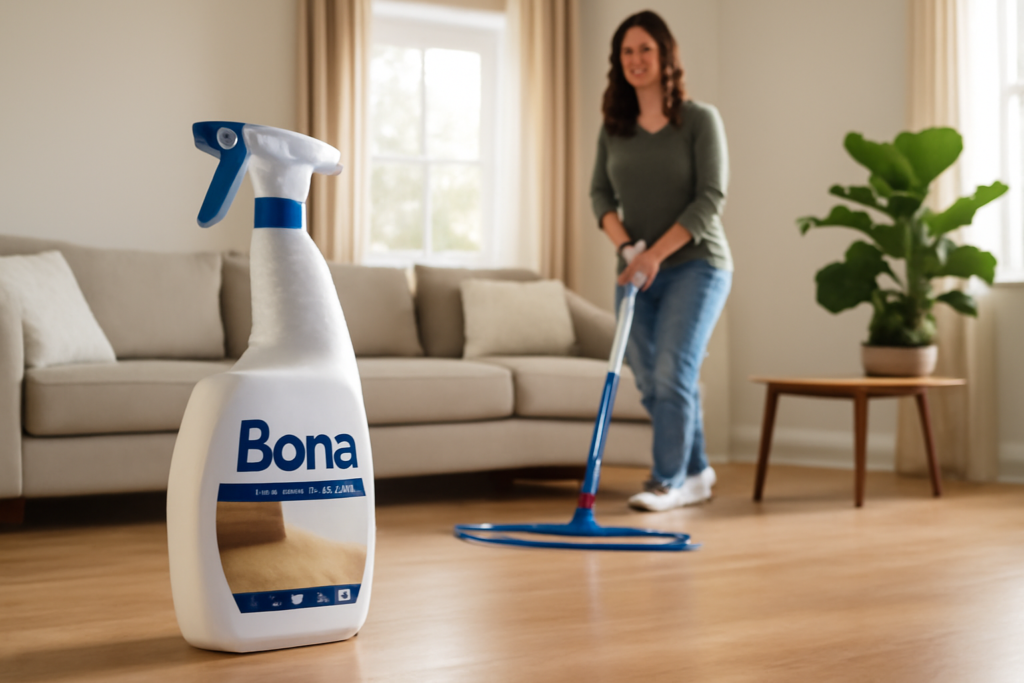
It is sold both as a ready-to-use spray bottle and in a cartridge for Bona’s spray mop system, where a trigger on the handle mists cleaner ahead of a washable microfiber pad. That mop-and-cartridge combo is what most reviewers are actually rating, and the convenience of an all-in-one tool is a big part of the brand’s high satisfaction scores.


What Reviewers Consistently Like
Across retailer and independent reviews, a few themes come up again and again. The most common praise:
- Streak-free finish. On sealed tile, luxury vinyl plank, and laminate, most users report a clean, matte, residue-free result without a hazy film.
- Fast drying. The thin water-based mist evaporates quickly, so floors are walkable within minutes and there is little risk of water sitting in laminate seams.
- Convenience of the spray mop. No bucket, no wringing, and a washable microfiber pad that goes in the laundry instead of a filthy mop head.
- Light, mild scent. Reviewers who dislike heavy chemical smells appreciate that the cleaner is subtle and low-odor.
- Safe on delicate finishes. Being pH-neutral, it is gentle on sealed floors that harsh cleaners can etch or strip.
Common Complaints and Limitations
No product satisfies everyone, and the criticisms are worth knowing before you buy. The most frequent negative in Bona hard-surface floor cleaner reviews is that it is a light-duty cleaner. For everyday dust, footprints, and light spills it excels, but on caked-on grease, dried food, or heavily soiled entryway tile it may need a second pass or a spot scrub. It is a maintenance cleaner, not a degreaser.
Grout is the other sticking point. Because the spray sits on the surface and dries fast, it does little for dingy grout lines, which need a dedicated grout cleaner and a brush. Some users also find the ready-to-use bottles expensive per ounce compared to diluting a concentrate or mixing their own solution, though the convenience offsets that for many. A smaller group reports a faint residue on very dark or high-gloss tile, which usually traces back to using too much product or the wrong formula for the surface.
Which Floors It Suits
Match the cleaner to your floor and it performs well. It is a strong pick for sealed ceramic and porcelain tile, luxury vinyl plank and tile, laminate, and other sealed hard surfaces. It is not intended for unsealed natural stone like marble or slate, where a stone-specific cleaner is safer, and it is emphatically not the right bottle for hardwood, which has its own Bona formula. If you have a mix of floors, the simplest approach is to keep the hardwood cleaner for wood rooms and the hard-surface cleaner for tile and vinyl areas.
How to Get the Best Results
A few habits separate a streak-free floor from a disappointing one. Vacuum or dry dust-mop first, because spraying cleaner over grit just grinds it around and can scratch vinyl and laminate. Work in small sections, misting lightly rather than soaking, and mop with a clean, damp microfiber pad. Flip or swap the pad as it loads with dirt, since a saturated pad smears rather than lifts.
- Dry dust-mop or vacuum the whole floor to remove grit and hair.
- Spray a light mist over a few square feet at a time.
- Mop with a clean microfiber pad, overlapping strokes.
- Rinse or replace the pad when it looks dirty, and let the floor air dry.
How It Compares to Alternatives
Against competitors like Method, Zep, and generic store-brand floor sprays, Bona’s edge is the residue-free finish and the polished spray-mop ecosystem. Cheaper sprays clean adequately but more often leave a film, while heavy-duty cleaners cut grease better but can dull sealed finishes and demand rinsing. For a homeowner who wants a low-fuss weekly cleaner for tile, vinyl, and laminate and is willing to pay a bit more for convenience and a reliably streak-free result, the reviews land firmly positive. For deep grease, grimy grout, or unsealed stone, you will still want a stronger, purpose-built product alongside it.
Weighing the full picture, Bona hard-surface floor cleaner reviews point to a dependable, gentle, everyday cleaner that does exactly what it promises on the right surfaces. Set your expectations at routine maintenance rather than deep restoration, use the correct formula for your floor, and it is easy to see why it has become a repeat purchase for so many households.
Prefer to explore on your own?
See how new flooring looks in your actual room in seconds — free, no signup.
Try the free Floor Studio →