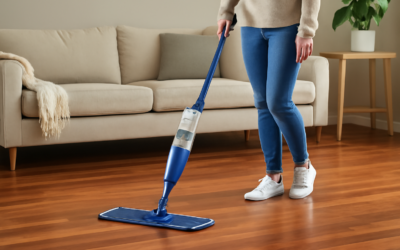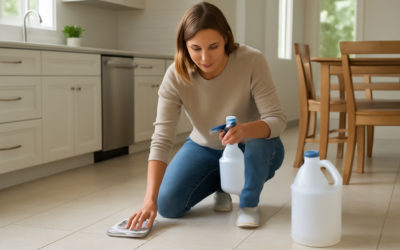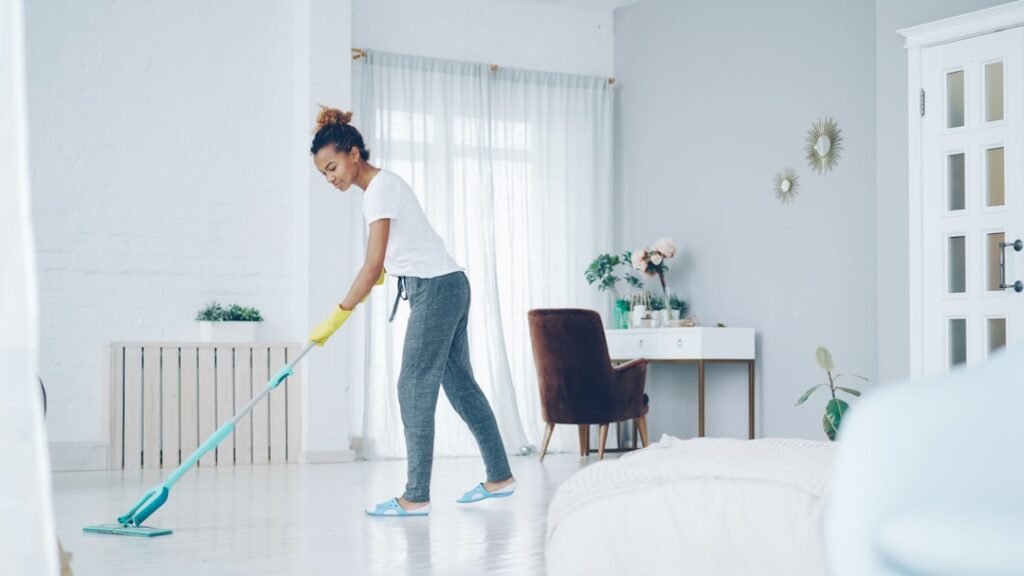
Ask hardwood installers what they use to clean their own floors, and a surprising number will name the same tool. The Bona Premium Microfiber Floor Mop has earned a loyal following because it does the fundamentals right: it lifts dust and grime without soaking your floors, and it does it with a reusable pad instead of a stream of disposable wipes. I recommend Bona’s system to clients constantly, and here is an honest look at what it does well, what comes in the box, and how to keep it working like new.
What Makes This Mop Different
Plenty of mops promise a clean floor, but many either use too much water or rely on disposable pads that add up in cost and waste. Bona’s design centers on a large, flat microfiber pad that traps dust, hair, and grit through static and fine fibers, then wipes up spills and sticky residue when used damp. The oversized rectangular head covers more floor per pass than a typical string or sponge mop.
The Premium version steps up from Bona’s basic mops with a sturdier build, a comfortable secure-grip handle, and a swivel head that maneuvers around furniture legs and into corners. Crucially, it is designed to be used with only a light mist of cleaner, never a flooded floor, which is exactly what hardwood and other water-sensitive surfaces need.


What Comes in the Box
Bona sells the mop in a few configurations, so check what you are buying. A typical Premium Microfiber Floor Mop package includes:
- The mop with a telescoping or fixed secure-grip handle and swivel head.
- A reusable microfiber cleaning pad that attaches with hook-and-loop.
- Often a microfiber dusting pad for dry pickup of dust and pet hair.
- In some bundles, a bottle of Bona’s floor cleaner.
The dual-pad approach is the smart part of the system. Use the dusting pad dry to grab everyday dust and hair, then switch to the damp cleaning pad with a spritz of cleaner for a deeper wash. Because both pads are machine washable, ongoing costs stay low compared to disposable-pad systems.
Which Floors It Works On
Bona builds its lineup around specific floor types, and matching the cleaner to your surface matters. The mop itself works on nearly any hard floor, but pair it with the correct Bona formula:
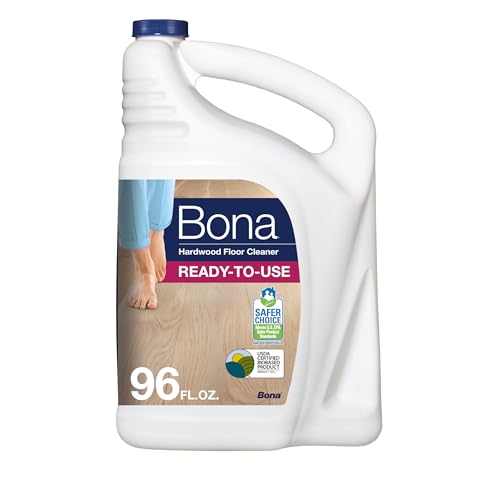
- Hardwood — Use Bona Hardwood Floor Cleaner, a pH-neutral, residue-free formula safe for polyurethane finishes.
- Laminate, tile, and vinyl — Use Bona’s Hard-Surface or Stone/Tile/Laminate cleaner.
- Luxury vinyl plank — The hard-surface formula works well for a streak-free finish.
The unifying principle is a pH-neutral, no-residue clean. Bona’s formulas are designed to evaporate without leaving the dull film that dish soap, vinegar, and oil-based cleaners can build up on a finished floor. Avoid those DIY concoctions on hardwood; they cause more problems than they solve.
How to Use It for Best Results
Getting a streak-free floor comes down to technique. Start dry, finish damp, and never over-wet. Here is my routine:
- Attach the dry dusting pad and go over the whole floor to collect loose dust, hair, and grit that would otherwise smear when wet.
- Swap to the microfiber cleaning pad and lightly mist a small section of floor with the appropriate Bona cleaner, or spray Bona’s cartridge models directly.
- Mop in the direction of the wood grain using smooth, overlapping strokes.
- Work in manageable sections so the cleaner does not dry before you wipe it.
- Flip or rinse the pad as it loads up with dirt to avoid pushing grime around.
Never leave standing water on hardwood or laminate. The whole point of a microfiber system is a barely-damp clean that dries within a minute or two, protecting seams and finishes from moisture damage.
Caring for the Microfiber Pads
The reusable pads are the heart of the value proposition, and treating them right keeps them effective for a long time. Wash them in the machine on warm, but skip fabric softener and bleach, which coat and clog the microfiber fibers and destroy their grabbing power.
Air dry the pads or tumble on low heat; high heat can damage the fibers and the hook-and-loop backing. Keep separate pads for dusting and wet cleaning, and wash them after each deep-clean session so trapped grit does not scratch your floor next time. A well-cared-for pad survives dozens of wash cycles, which is where the long-term savings over disposables come from.
How It Compares and What It Costs
The Bona Premium Microfiber Floor Mop typically retails in the $30 to $50 range, with cleaner refills running about $6 to $10 per bottle and replacement microfiber pads around $10 to $15 each. Compared to disposable-pad systems where you pay continuously for refill wipes, the reusable pads pay for themselves quickly.
Against a basic sponge or string mop, Bona’s advantages are the residue-free cleaner, the light-moisture design that protects wood, and the larger coverage per pass. Its main limitation is that it is a flat mop, not a scrubber, so heavy caked-on messes may need a targeted scrub first. For routine maintenance cleaning of sealed hard floors, though, it is hard to beat.
Troubleshooting Streaks and Residue
Even a good mop can leave streaks if the technique or the cleaner is off, and homeowners bring me this complaint often. Nine times out of ten the culprit is skipping the dry-dust pass. When you go straight to wet mopping over a dusty floor, the microfiber pad smears that dust into thin gray streaks that show badly on dark wood and high-gloss finishes. Always dry-dust first, then wet-clean. The second frequent cause is too much moisture; a floor that stays wet too long dries unevenly and leaves cloudy patches. A light mist that dries within a minute is all you need.
Residue buildup is the other issue. If your floor looks progressively dull or feels tacky, the problem usually predates the Bona mop. Old wax, oil soap, or vinegar cleaning has likely left a film that no amount of good mopping fully removes, and the fresh cleaner sits on top of it. In that case, a deep-clean product designed to strip built-up residue, followed by a return to a pH-neutral routine, resets the surface. Also check your pad; a microfiber pad washed with fabric softener loses its grabbing power and pushes dirt around instead of lifting it, so launder pads with detergent only. Finally, replace the cleaning pad when it stops looking bright white even after washing, because a worn pad no longer holds enough dirt to leave a truly clean floor. Small adjustments to technique and pad care usually eliminate streaks entirely.
Is It Worth Buying?
For anyone with hardwood, laminate, luxury vinyl, or tile, the Bona Premium Microfiber Floor Mop is a smart, low-cost investment that makes regular cleaning faster and safer for your floors. The reusable pads cut waste and ongoing cost, the pH-neutral cleaners protect finishes, and the light-moisture design avoids the water damage that ruins so many wood floors. Buy the right cleaner for your surface, keep the pads free of softener and bleach, and you will have a cleaning system that keeps your floors looking their best for years.
Prefer to explore on your own?
See how new flooring looks in your actual room in seconds — free, no signup.
Try the free Floor Studio →