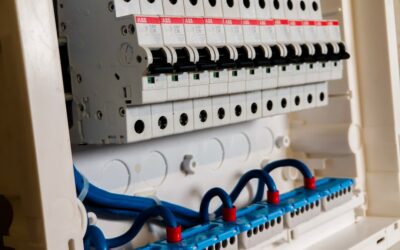
Most tripped breakers have an easy explanation: too many things running on one circuit. Unplug the space heater, reset the breaker, and life goes on. But when a breaker trips with nothing plugged in, the overload explanation falls apart. With no load on the circuit, the breaker is reacting to something else, usually a short circuit, a ground fault somewhere in the wiring or a fixed device, or a breaker that has worn out and is tripping on its own.
Each of those causes lives inside the walls, a fixture, or the panel. That makes this a short troubleshooting job for a homeowner: unplug everything, turn off wall switches, reset once, and watch what happens. If it trips again, especially immediately, the circuit needs a licensed electrician. Resetting it repeatedly forces current into a fault and raises the risk of fire.
- Why a Breaker Trips With Nothing Plugged In
- Safe Homeowner Checks (No Tools Required)
- How Electricians Track Down the Fault
- AFCI and GFCI Breakers: A Special Case
- Risks of Ignoring It
- Tripping That Started After a Recent Project
- Typical Costs
- When to Call a Licensed Professional
- Frequently Asked Questions
Why a Breaker Trips With Nothing Plugged In
A standard breaker trips for two reasons. A slow thermal trip responds to sustained overload, like a heater and a vacuum on one 15-amp circuit. A fast magnetic trip responds to the huge current spike of a short circuit. Newer breakers add electronic protection: GFCI breakers trip on current leaking to ground, and AFCI (arc-fault) breakers trip when they detect the electrical signature of arcing.
When you have unplugged every cord and the breaker still trips, overload is off the table. That leaves:
- A short circuit in the wiring. A nail or screw through a cable, insulation chewed by rodents, a wire nut that worked loose, or a pinched cable can let a hot conductor touch the neutral or ground.
- A ground fault. Moisture in an outdoor box, a damaged cable in a damp basement or crawlspace, or a failing fixture can leak current to ground, tripping GFCI-type protection.
- An arc fault. Loose connections at outlets, switches or splices can arc, and AFCI breakers are designed to catch exactly that.
- A hardwired device you forgot about. Ceiling fans, light fixtures, bath exhaust fans, garbage disposals, smoke alarms, under-cabinet lights and doorbell transformers all stay connected even when nothing is plugged in.
- A worn or defective breaker. Breakers age. One that has tripped many times or has a weak internal mechanism can trip at currents well under its rating.
That last list item is why searches like “circuit breaker tripping without load” often end with a breaker replacement, but an electrician needs to confirm it is the breaker and not the wiring before swapping anything.
Safe Homeowner Checks (No Tools Required)
Keep the steps simple and hands-off. Do not remove cover plates, open the panel cover, or use testing instruments of any kind.
- Confirm nothing is plugged in. Walk every room on that circuit. Check behind furniture, inside cabinets, in the garage and outdoors. A forgotten freezer, aquarium heater or outdoor light timer counts as a load.
- Turn off wall switches. Switch off every light, fan and disposal switch on the circuit so hardwired fixtures are disconnected as much as possible.
- Look and sniff. Check outlets and switch plates for scorch marks or melted plastic, and notice any burning smell. If you find either, do not reset the breaker. Call an electrician.
- Reset the breaker once. Push the handle firmly to OFF, then to ON. If your breaker has a TEST button (GFCI or AFCI type), note whether it has an indicator showing why it tripped; some newer models do.
- Watch what happens. If it trips instantly with switches off and nothing plugged in, that strongly suggests a short in the wiring or a failed breaker. Stop here and call a pro. If it holds, turn wall switches back on one at a time with a few minutes between each. If flipping a particular switch trips it, that fixture or its wiring is the likely culprit.
- Check for moisture clues. Did it start after heavy rain, a plumbing leak, or snowmelt? Exterior outlets, basement circuits and anything near a leak are prime ground-fault suspects. Mention this to the electrician.
Whatever the result, do not keep resetting. One reset is a diagnostic step; repeated resets push fault current through damaged wiring.
How Electricians Track Down the Fault
An electrician will shut off the breaker, confirm the circuit is dead with a tester, and then work through the circuit methodically. Typical steps include checking the breaker and its connection at the panel, isolating sections of the run by disconnecting at outlets and junction boxes, and using insulation-resistance testing with the power off to find where a conductor is touching ground. They will inspect hardwired fixtures, look for recent nail or screw penetrations near the run, and check boxes in damp locations.
If the breaker itself is bad, replacement is quick. If the fault is a damaged cable inside a finished wall, the repair may involve opening drywall or running a new cable. Either way, an accurate diagnosis keeps you from replacing a perfectly good breaker while a damaged wire keeps heating up.
AFCI and GFCI Breakers: A Special Case
Many newer homes use AFCI or combination AFCI/GFCI breakers on bedroom, living area, kitchen and laundry circuits. These are more sensitive than standard breakers by design. They can trip on loose connections, shared neutrals between circuits, or certain fixtures, even when nothing is plugged in. Nuisance trips on these breakers still deserve an electrician visit, because the “nuisance” is often a real arcing connection. Never replace a protective breaker with a standard one to stop the tripping.
Risks of Ignoring It
A breaker trips with nothing plugged in because it is doing its job, which is protecting the wiring from overheating. The danger comes from defeating that protection: holding the handle on, taping it, swapping in a larger breaker, or resetting it dozens of times. A short or arc that is allowed to continue can char insulation inside the wall where you will not see it until there is smoke. If you notice a burning smell, hear buzzing or crackling, or feel heat at a plate, leave the breaker off and call an electrician right away. If there is smoke, get out and call 911.
Tripping That Started After a Recent Project
Timing is one of the most useful details you can give an electrician. If the tripping began right after you hung pictures, mounted a television, installed shelving, or had drywall, siding or flooring work done, a fastener may have nicked a cable inside the wall. Note where the work happened, because a damaged cable near that spot is a strong lead. The same goes for new fixtures: a ceiling fan or light installed recently may have a pinched wire or loose splice in its box.
Outdoor work matters too. Landscaping, fence posts or a new deck can damage buried cable feeding outdoor lights or outlets, and that kind of fault often shows up after the next rain. Pest activity in an attic or crawlspace is another clue, since chewed insulation can expose conductors. Share all of this up front; it can save an hour or more of searching.
Typical Costs
Diagnosis is usually billed as a service call plus labor, often totaling around $150 to $350 for a straightforward fault. Replacing a standard breaker is typically an inexpensive part plus labor, while AFCI and GFCI breakers cost more per unit. Repairing a damaged cable can range from a couple hundred dollars to more if drywall must be opened and patched. Fixing a wet exterior outlet or adding a weather-resistant in-use cover is generally on the low end. Costs vary by region and how easy the fault is to locate.
When to Call a Licensed Professional
- The breaker trips again after one reset, especially instantly, with nothing plugged in
- Any outlet, switch or fixture shows scorching, melting, heat, buzzing or a burning smell (fire hazard)
- Tripping started after construction, a nail or screw going into a wall, or water exposure
- An AFCI or GFCI breaker trips repeatedly without an obvious cause
- You suspect the breaker itself has failed (only a licensed electrician should replace breakers or work inside the panel)
Frequently Asked Questions
Why does my breaker keep tripping with nothing plugged in?
With no load, the trip is caused by a short circuit, ground fault, arc fault, a hardwired fixture, or a worn breaker. Reset it once with all switches off; if it trips again, call a licensed electrician.
Can a circuit breaker go bad and trip on its own?
Yes. Breakers wear out with age and repeated trips and can begin tripping under their rating. An electrician should confirm the breaker is faulty, and not the wiring, before replacing it.
Is it dangerous if a breaker trips without load?
It can be. The breaker is protecting you from a fault that could overheat wiring. Do not keep resetting it, and call an electrician promptly, especially if you notice heat or a burning smell.
Could a light fixture make a breaker trip with nothing plugged in?
Yes. Hardwired fixtures, fans and appliances stay connected when you unplug cords. If the breaker holds with switches off but trips when one switch is turned on, that fixture or its wiring is likely the cause.
Should I replace the breaker with a bigger one?
Never. Breaker size is matched to the wire gauge. A larger breaker lets the wire overheat before tripping, which is a fire hazard. The fault needs to be found and fixed instead.