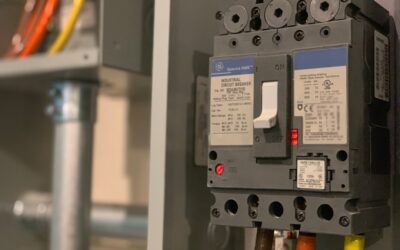
A tripped circuit breaker is your electrical system doing its job: sensing too much current and shutting the circuit off before wires overheat and start a fire. The breaker isn’t the problem, it’s the messenger. The real question is why it tripped, because there are three distinct causes, overload, short circuit, and ground fault, and each one means something different. Reset a breaker without understanding which you’re dealing with and you might be resetting your way toward a house fire.
Here’s how to read the situation like an electrician, fix the simple cases yourself, and recognize the ones that mean stop and call a pro.
- What a Breaker Actually Does
- The Three Causes of a Tripped Breaker
- How to Tell Which One You Have
- Fixing an Overload (The Easy Case)
- Handling a Short Circuit or Ground Fault
- When Repeated Tripping Means Call a Pro
- The Correct Way to Reset a Breaker
- Preventing Nuisance Trips
- Bottom Line
- AFCI and GFCI Breakers Trip Differently
- Reading Your Panel’s Clues
What a Breaker Actually Does
A circuit breaker protects the wire behind it. A 15-amp breaker feeding 14-gauge wire trips at 15 amps because that’s the safe carrying capacity of that wire. When current exceeds the rating, an internal mechanism, a thermal strip that bends with heat and a magnetic element that reacts to sudden surges, snaps the breaker to the OFF (or middle) position and cuts power. Everything downstream goes dark. That’s a normal, healthy response to an abnormal condition.
The Three Causes of a Tripped Breaker
Diagnosing correctly starts with knowing the three fault types:
- Overload — too many devices pulling too much current on one circuit. The most common cause and the least dangerous. The thermal element heats up gradually and trips after a short delay. Classic example: a space heater and a microwave on the same 15-amp kitchen circuit.
- Short circuit — a hot wire touching a neutral wire directly, letting current bypass the load and spike almost instantly. Far more dangerous; the magnetic element trips immediately, often with a pop, a spark, or a scorch smell. Caused by damaged wiring, a failed appliance, or a bad connection.
- Ground fault — a hot wire touching a grounded surface (a metal box, a ground wire, or through water). Also an instant, high-current fault, and a shock hazard. GFCI breakers and outlets are designed specifically to catch these.
How to Tell Which One You Have
The behavior of the trip tells you a lot:
- Tripped when you plugged in or turned on one more thing? Almost certainly an overload. The circuit was near capacity and you pushed it over.
- Trips the instant you reset it, with nothing plugged in? That’s a short circuit or ground fault in the wiring itself. Do not keep resetting it.
- Trips only when a specific appliance is plugged in or turned on? That appliance has an internal short or ground fault. Unplug it and leave it unplugged.
- A GFCI outlet or GFCI breaker tripped near water (bathroom, kitchen, outdoors)? That’s a ground fault, exactly what the GFCI is built to catch, and sometimes just moisture.
- Trips after running fine for a while under heavy load? Overload from cumulative draw or a slightly overloaded circuit.
Smell scorching, see a spark, or notice a warm or discolored breaker or outlet? Stop right there. That points to a short, a ground fault, or a failing connection, and it’s a fire risk. This is the “call an electrician now” territory.
Fixing an Overload (The Easy Case)
Most tripped breakers are overloads, and you can handle them:
- Unplug or turn off some of the devices on the dead circuit, especially high-draw ones: space heaters, hair dryers, microwaves, toasters, window AC units. These pull 1,000 to 1,500 watts each.
- Reset the breaker. Push it fully to OFF first, then firmly back to ON. (Full reset steps below.)
- Redistribute the load. Move high-draw appliances to different circuits so you’re not running two heaters on one 15-amp line.
- If it holds, you’re done. The circuit was simply asked to carry more than its rating.
A 15-amp/120V circuit safely carries about 1,440 watts continuous (80 percent of 1,800); a 20-amp circuit about 1,920 watts. Add up what’s on the circuit and you’ll usually see why it tripped.
Handling a Short Circuit or Ground Fault
These are not “reset and hope” situations. If the breaker trips immediately with the circuit’s loads unplugged, or trips the moment a specific device is connected:
- Unplug everything on the circuit and try the reset. If it holds with nothing connected, the fault is in an appliance, plug them back one at a time until the culprit trips it. Retire that appliance.
- If it trips with everything unplugged, the fault is in the wiring, a damaged cable, a bad outlet or switch, a pinched wire in a box. Leave the breaker OFF and call a licensed electrician. This is not a DIY diagnosis unless you’re trained; live short circuits and ground faults are shock and fire hazards.
- For a tripped GFCI near water, dry the area, unplug loads, and press the GFCI reset. Persistent GFCI tripping with nothing plugged in means a genuine ground fault that needs professional attention.
When Repeated Tripping Means Call a Pro
A breaker that trips once and holds after you shed load is normal. A breaker that trips repeatedly is telling you something is wrong. Call a licensed electrician when:
- The breaker trips again immediately after every reset.
- It trips with no obvious load, or the same circuit trips over and over.
- You smell burning, see scorch marks, or the breaker or outlet feels warm.
- You hear buzzing or crackling from the panel.
- The breaker won’t reset at all, or feels loose or mushy (a failed breaker).
- You’re seeing flickering lights or repeated trips across multiple circuits, which can point to a loose neutral or panel problem.
Never “fix” persistent tripping by installing a larger breaker. Putting a 20-amp breaker on a circuit wired with 14-gauge wire removes the protection and lets the wire overheat undetected, a genuine fire cause. The breaker size must match the wire: 15A with 14 AWG, 20A with 12 AWG.
The Correct Way to Reset a Breaker
Resetting isn’t just flipping the switch back:
- Reduce the load first if it was an overload.
- Find the tripped breaker, it sits in the middle or OFF position, not lined up with the others.
- Push it firmly all the way to OFF. Many breakers won’t reset unless you fully cycle them off first.
- Then push it firmly to ON. You should feel it click and stay.
- If it snaps back to tripped immediately, stop and diagnose the fault, don’t keep forcing it.
Preventing Nuisance Trips
- Spread high-wattage appliances across different circuits.
- Don’t run space heaters, hair dryers, and microwaves on the same circuit.
- Have overloaded circuits split or a dedicated circuit added for heavy loads like a window AC or a home office.
- Replace failing appliances that trip breakers, they have internal faults.
- If your panel trips constantly across many circuits, an electrician can assess whether the panel is undersized for your home.
Bottom Line
A tripped circuit breaker is a safety device working correctly. If it tripped because you overloaded a circuit, shed some load, reset it properly, and spread things out, that’s a five-minute fix. If it trips instantly with nothing plugged in, trips repeatedly, or comes with heat, smell, or sparks, that’s a short circuit or ground fault, and the right move is to leave it off and call a licensed electrician. The breaker is protecting your house; the goal is to fix what it’s warning you about, not to defeat it.
AFCI and GFCI Breakers Trip Differently
If your home has arc-fault (AFCI) or ground-fault (GFCI) breakers, understand that they trip for reasons a standard breaker ignores, which can make troubleshooting confusing. An AFCI breaker senses the erratic current signature of an arcing fault, a loose connection, a damaged cord, a stapled-through cable, and trips even when the total current is well below the breaker’s rating. A GFCI breaker trips when it detects current leaking to ground, even a tiny amount. So an AFCI or GFCI can trip with a light load or seemingly nothing wrong, because it’s watching for fault patterns, not just overcurrent. Some AFCI trips are nuisance trips from motor noise or a specific appliance; persistent ones usually point to a real wiring problem worth a professional’s attention.
Reading Your Panel’s Clues
Your panel offers hints beyond just which breaker tripped. A breaker that feels warm to the touch, shows discoloration, or has a slightly melted look is failing and should be replaced. Scorch marks or a plastic-burning smell at the panel are urgent, kill the main and call an electrician. If several breakers trip during the same event, or lights across the house dim and flicker together, that points past any single circuit toward a shared problem like a loose neutral or an overloaded panel. Learning to read these signs turns a mysterious outage into a clear next step: reset the simple overload yourself, and treat heat, smell, or panel-wide symptoms as a call to a licensed pro.