When a circuit breaker keeps tripping, it’s easy to blame the breaker and want to just force it back on. Don’t. A breaker that trips is doing exactly what it was designed to do — cutting power before wiring overheats or a fault starts a fire. The trip is a symptom, and the real work is figuring out which of four underlying problems is triggering it. Here’s how I diagnose these on service calls, from the most common cause to the rarest.
- First, Understand What the Breaker Is Telling You
- Cause #1: Circuit Overload (The Most Common)
- Cause #2: Short Circuit
- Cause #3: Ground Fault
- Cause #4: A Failing AFCI or GFCI Breaker (or a Bad Breaker)
- A Practical Diagnostic Sequence
- Reading the Trip: Timing and Pattern Clues
- Safety Rules and When to Call a Pro
First, Understand What the Breaker Is Telling You
A standard breaker trips for one of three electrical reasons: too much current draw (overload), a hot wire touching neutral or ground (short circuit), or current leaking to ground (ground fault). Specialty breakers — AFCI, required by NEC 210.12 in most living areas of newer homes — also trip on arc faults, the tiny sparking from damaged wiring. Knowing which type you have narrows things down fast.
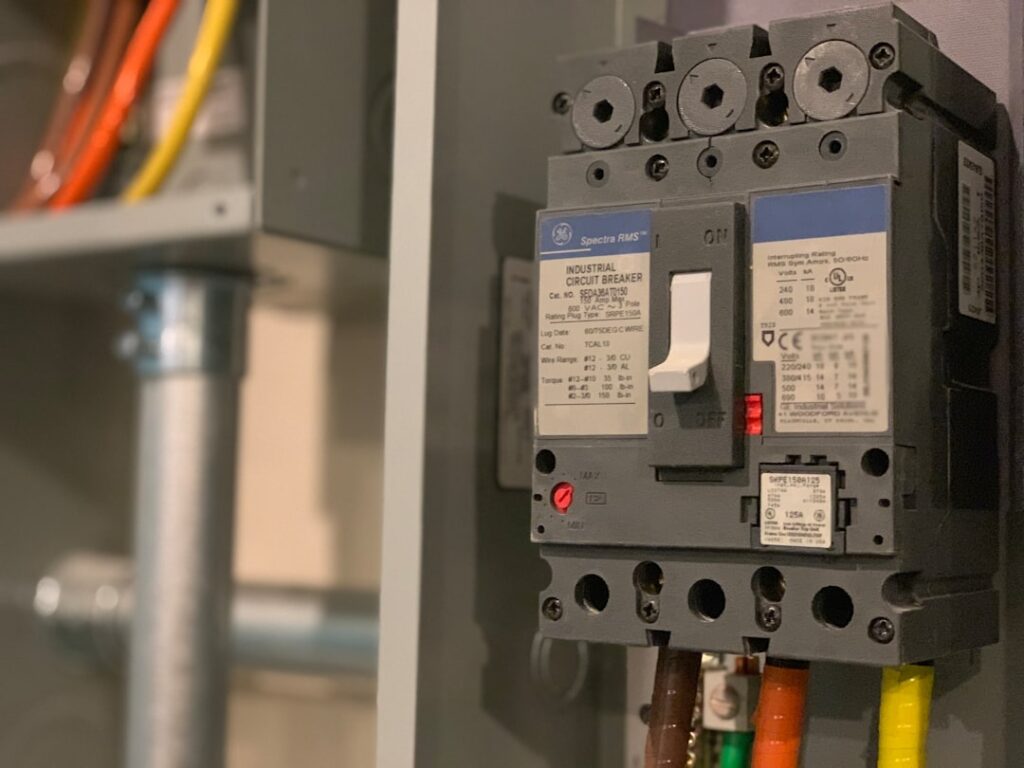
Look at the breaker’s amperage rating, printed on the handle: 15 or 20 amps for most general circuits, 20-30 for kitchens and laundry, 30-50 for dryers, ranges, and HVAC. That number is your budget. Exceed it and the breaker trips.
Cause #1: Circuit Overload (The Most Common)
Overload accounts for the majority of nuisance trips. It happens when the total draw of everything running on that circuit exceeds its amp rating. A 15-amp circuit handles about 1,440 watts of continuous load (80% of 1,800 watts); a 20-amp circuit handles about 1,920 watts. Plug a 1,500-watt space heater into a bathroom that’s already running a hair dryer and you’ll blow past that instantly.
Diagnose it this way: note what was running when it tripped. If the breaker holds for a while then trips when a specific appliance kicks on — a microwave, space heater, window AC, vacuum — you’re overloaded. The fix is to redistribute the load: move high-draw appliances to different circuits, or don’t run them simultaneously. Space heaters and hair dryers are the two biggest offenders I see. If a circuit is chronically overloaded, an electrician can add a dedicated circuit.
Cause #2: Short Circuit
A short circuit is more serious. It happens when a hot wire directly contacts a neutral or ground wire, letting a huge surge of current flow with almost no resistance. The breaker trips instantly and hard — often with a pop, sometimes a scorch mark or a whiff of burnt plastic.
Shorts usually live in a specific appliance or cord, or in the wiring/receptacle itself. To isolate it: unplug everything on the dead circuit, reset the breaker. If it holds, plug items back one at a time. The device that trips it immediately has an internal short — retire it. If the breaker trips with nothing plugged in, the short is in the wiring or a device (outlet, switch, fixture), and that’s a job for an electrician with a meter. Never keep resetting a breaker onto a short; you’re feeding a potential fire.
Cause #3: Ground Fault
A ground fault is electricity escaping to ground where it shouldn’t — often through moisture. On circuits protected by GFCI outlets or breakers, this trips the GFCI first. But it can also trip the main breaker, especially outdoors or in damp basements and garages.
Signs point to moisture or a damaged cable: trips that follow rain, appear near sinks, pools, or exterior outlets, or start after a nail or screw was driven into a wall. Let damp areas dry fully and re-test. If trips persist and you can’t tie them to obvious water, the ground fault is likely in the wiring, and you’ll need a pro to trace it.
Cause #4: A Failing AFCI or GFCI Breaker (or a Bad Breaker)
AFCI breakers, now required in bedrooms, living rooms, and most habitable spaces, are sensitive by design and can nuisance-trip on certain motors and electronics — treadmills, some vacuums, older power tools. If an AFCI trips only when one specific device runs and no overload or short is present, that device may be the trigger, and sometimes a compatible replacement breaker or a filtered device solves it.
Breakers themselves also wear out. A breaker that trips at well below its rated load, feels loose in the panel, or trips randomly with no consistent cause may have a weakened internal mechanism. This is less common than people assume — blame the breaker last, not first — but a 20-30 year old breaker that’s tripped thousands of times can fatigue. Replacement is electrician work; the panel bus bars are live even with the breaker off.
A Practical Diagnostic Sequence
Work it in this order and you’ll pinpoint most problems:
- Identify the circuit and what it feeds. The panel should be labeled; if not, map it.
- Unplug everything on that circuit and reset. Holds? You have an overload or a bad appliance. Still trips? The fault is in the wiring.
- Reintroduce loads one at a time, noting exactly when it trips.
- Watch the timing. Instant, violent trip = short. Trip after minutes under load = overload. Trip after rain or near water = ground fault. Trip only with one electronic device = possible AFCI sensitivity.
Keep a simple log — date, time, what was running. Patterns emerge fast, and that log is gold if you do end up calling an electrician.
Reading the Trip: Timing and Pattern Clues
The single most useful diagnostic skill is paying attention to when and how a breaker trips, because the pattern points straight at the cause. Train yourself to notice these signatures:
- Trips the instant you flip it back on, with nothing running: a hard short circuit or a ground fault in the wiring. Stop resetting and investigate — this is the most urgent pattern.
- Holds fine, then trips minutes later when a big appliance kicks on: classic overload. The circuit was fine until the space heater, microwave, or AC compressor pushed it over its amp limit.
- Trips only after rain or in a damp area: ground fault from moisture. Let it dry and re-test.
- Trips randomly, no consistent trigger, breaker feels loose or warm: possible failing breaker or a loose connection at the panel — pro territory.
- Trips only when one electronic device runs (treadmill, vacuum) on an AFCI: arc-fault sensitivity to that device.
Keep a small notebook by the panel and jot the date, time, and what was running each time it trips. Within a few events a pattern almost always emerges, and that pattern is worth more than any guesswork.
Whole-House vs. Single-Circuit Tripping
Where the trip happens narrows the search. If one specific branch breaker trips repeatedly, the problem lives on that circuit — the appliances plugged into it, its outlets, or its wiring. That’s the situation this guide mostly addresses, and it’s the one you can often diagnose yourself.
If the main breaker trips, or several circuits go dead at once, that’s a different and more serious animal. It can mean the whole panel is overloaded (rare in modern homes but possible with major simultaneous loads), a problem at the main feed, or a failing main breaker. Main-breaker and panel-level trips are not DIY diagnostics — the incoming service lugs are live even with the main off, and this is squarely a licensed electrician’s job. Likewise, if you notice lights dimming across the house, a burning smell near the panel, or the panel itself feeling warm or buzzing, treat it as urgent and call a pro immediately rather than continuing to reset.
Safety Rules and When to Call a Pro
A few hard rules. Never wedge, tape, or repeatedly force a breaker that won’t stay set — you’re defeating the one device standing between you and an electrical fire. Never replace a tripping breaker with a higher-amp one to “stop the tripping”; that lets the wiring overheat and is genuinely dangerous. The breaker size is matched to the wire gauge, and changing it without changing the wire is a code violation.
Call a licensed electrician when: the breaker trips with everything unplugged, you find scorch marks or smell burning, the panel feels warm or buzzes, you have aluminum wiring or an older panel (some brands have known hazards), or you simply can’t isolate the cause. Panel work often requires a permit, and the incoming service is live even with the main off.
The takeaway: when a circuit breaker keeps tripping, it’s not the enemy — it’s the smoke detector of your electrical system. Work through overload, short, ground fault, and hardware in order, respect the breaker’s warning, and bring in a professional the moment the fault lives inside your walls.