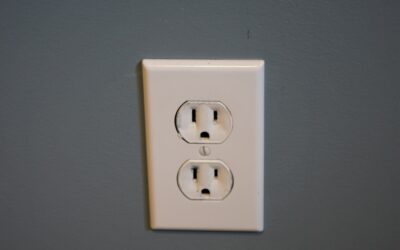
When a GFCI outlet won’t reset, the button clicks but pops right back out — or won’t stay pushed in at all — and everything plugged into it stays dead. Frustrating, yes, but that outlet is doing its job. A ground-fault circuit interrupter is designed to refuse to reset when it senses a problem, and that refusal is a safety feature, not a malfunction. Below is the exact diagnostic path I follow, from the two-second fixes to the point where you need to stop and call a pro.
How a GFCI Works and Why It Trips
A GFCI constantly compares the current flowing out on the hot wire against the current returning on the neutral. If those two differ by as little as 4-6 milliamps, it assumes electricity is escaping somewhere it shouldn’t — through water, through a frayed cord, or through a person — and it cuts power in under a tenth of a second. NEC 210.8 requires GFCI protection in bathrooms, kitchens, garages, outdoors, basements, and near sinks precisely because those are the shock-risk zones.
So when it won’t reset, the device is telling you either that a fault still exists on the circuit or that the GFCI itself has failed. Your job is to figure out which.
Start With the Simple Stuff
Before you assume the worst, rule out the easy causes. I catch these constantly.
- No power to the outlet at all. A GFCI needs power to reset. If the breaker feeding it has tripped, the reset button will feel dead and won’t click. Check your panel first.
- You’re pressing the wrong button. Some outlets have TEST and RESET side by side. Press RESET firmly until you hear and feel a solid click.
- Something faulty is plugged in. Unplug everything on the circuit — including devices in other outlets downstream — then try to reset. A single failing hair dryer or leaky old freezer can hold the whole circuit down.
If the outlet resets with everything unplugged, plug items back in one at a time until it trips again. The last thing you plugged in is your culprit. Replace or repair that appliance.
The Downstream Outlet Trap
One GFCI often protects several regular outlets wired after it. This is the single most common reason people think a GFCI is broken when it isn’t. A dead outlet in your garage might be controlled by a GFCI in the bathroom on the other side of the wall, or vice versa.
Walk the whole area and press every GFCI reset button you can find — bathrooms, garage, exterior walls, basement. Also check for GFCI breakers in the panel itself, which have their own test/reset buttons. Reset those before you conclude a dead outlet is faulty. A moisture-triggered trip at an outdoor outlet after rain frequently kills indoor outlets you’d never connect to it.
Moisture: The Usual Suspect Outdoors
Water intrusion is the number-one reason outdoor and garage GFCIs won’t reset. If it rained recently or you pressure-washed nearby, moisture may have wicked into the receptacle box or into an outdoor cord end. Water inside the box creates exactly the leakage current a GFCI is built to catch.
The fix is patience. Kill the breaker to that circuit, remove the cover, and let the box dry — a day of dry weather, or a few minutes with a hair dryer on low. Confirm the weatherproof “in-use” bubble cover is intact; a cracked cover lets water in every storm. Once genuinely dry, restore power and reset. If it holds, moisture was your answer.
When the GFCI Itself Has Failed
GFCIs wear out. The internal solenoid and sensing electronics have a finite lifespan — typically 10 to 15 years, less in hot or humid locations. A unit installed in the 2000s that suddenly won’t reset with nothing plugged in and no moisture present is very likely just old.
Every GFCI has a monthly test built in: press TEST, it should trip; press RESET, it should restore. A GFCI that won’t trip on TEST, or won’t reset after a legitimate test, has failed its own self-check and must be replaced. These are around $15 to $25 at any hardware store. The failure rate climbs sharply past the 10-year mark, so age alone is often the diagnosis.
Replacing a Failed GFCI Yourself
If you’ve confirmed the device is dead — no moisture, nothing plugged in, fails the TEST button — swapping it is a reasonable DIY job.
- Turn off the breaker feeding the circuit. Not just the outlet — the breaker.
- Verify it’s de-energized with a non-contact voltage tester on both slots. Test the tester on a known-live outlet first.
- Note the LINE and LOAD terminals. This matters enormously. LINE is the incoming power from the panel; LOAD feeds the downstream outlets. Reversing them is the top wiring mistake and leaves the GFCI unable to protect or reset properly. Photograph the old wiring and tape over the terminals you won’t reuse.
- Match wire to terminal, tighten firmly, tuck the wires neatly, and mount the new device. Restore power and press TEST then RESET to confirm.
If you find the wires reversed on the old device, or you’re unsure which pair is LINE, use a voltage tester with the breaker back on momentarily — or, honestly, call an electrician. Miswired GFCIs are a common failure I get called out to fix.
Nuisance Trips vs. Real Faults
Not every trip means danger, but you have to tell the two apart. A genuine ground fault — a failing appliance, water intrusion, damaged wiring — is the GFCI doing its job, and forcing it to reset would defeat the protection you’re required to have under NEC 210.8. A nuisance trip, by contrast, is the device reacting to something benign: an older GFCI that’s grown oversensitive with age, a long circuit with several appliances whose combined tiny leakage currents add up past the trip threshold, or electrical noise from a motor.
Here’s how I sort them out. If unplugging everything lets the GFCI reset and hold, and it only trips when a specific device runs, that device is your fault — real, not nuisance. If it trips randomly with a light, consistent load and the device is 10-plus years old, you’re likely looking at an oversensitive, aging GFCI that needs replacing. The distinction matters because the fix differs: repair or replace the appliance for a real fault, replace the GFCI for age-related nuisance tripping. What you never do is assume “it’s just being sensitive” and keep resetting onto an unknown fault.
Preventing Future Reset Problems
A few habits cut down on the frustration. Test each GFCI monthly using its own TEST button — press it, confirm power cuts, press RESET, confirm it restores. This catches a failing device before it strands you. Keep outdoor and garage receptacles under intact weatherproof “in-use” bubble covers so rain can’t reach the contacts, and caulk any gaps where water sneaks into exterior boxes.
Don’t overload a single GFCI-protected circuit with a string of high-draw or old appliances, since cumulative leakage current makes nuisance trips more likely. And replace GFCIs proactively once they pass the 10-to-15-year mark, especially in humid bathrooms and hot garages where they age fastest. A $20 replacement on a schedule beats a dead freezer’s worth of spoiled food discovered a week too late.
When to Stop and Call a Licensed Electrician
Some symptoms point past a simple swap. Bring in a pro if any of these apply:
- A new GFCI still won’t reset even with the entire circuit unplugged — that suggests a genuine ground fault in the wiring inside the walls.
- You smell burning, see scorch marks, or the outlet is warm to the touch. That’s a real hazard; kill the breaker and don’t use it.
- The breaker trips every time you try to reset the GFCI, which points to a hard short circuit.
- You have aluminum wiring, a crowded or damaged box, or wiring that doesn’t match the device instructions.
A ground fault buried in the wiring needs a meter and some troubleshooting to trace, and that’s electrician territory. Most jurisdictions don’t require a permit to swap a like-for-like receptacle, but they do for new circuits — check locally.
The bottom line: a GFCI outlet won’t reset for a reason, and nine times out of ten that reason is a faulty appliance, hidden moisture, a downstream trip, or an old worn-out device. Work through those in order and you’ll solve most of these without ever touching a wire — and you’ll know exactly when the problem is bigger than a reset button.