You flip the light switch and nothing happens. The lamp is dead, the TV is dark, and every outlet in the room is silent, yet the rest of the house is humming along and the panel shows every breaker in the ON position. Having the power out in one room but breaker not tripped is confusing, but it usually comes down to one of three things: a tripped GFCI outlet in a different room that protects this one, a breaker that tripped only partway and needs a full off-on reset, or a failed connection at the first outlet in the run.
The first two you can handle yourself in a few minutes without tools. The third lives inside a wall box and belongs to a licensed electrician. Work through the checks in order, reset any device only once, and stop immediately if you notice heat, buzzing, scorch marks or a burning smell anywhere along the way.
- Power Out in One Room but Breaker Not Tripped: Why It Happens
- Before You Start: Safety Ground Rules
- Step-by-Step Checks
- When You Reset the Circuit Breaker and Still Have No Power
- One Room vs Several Rooms vs Half the House
- Preventing a Repeat
- Typical Costs
- When to Call a Licensed Professional
- Frequently Asked Questions
Power Out in One Room but Breaker Not Tripped: Why It Happens
A typical bedroom or living room is fed by one or two branch circuits, and those circuits often wander. The same breaker might power the bedroom outlets, part of the hallway and a bathroom receptacle. Builders frequently put a GFCI outlet at the start of a run in a bathroom, garage or basement, and every outlet after it is protected by that one device. When it trips, the whole downstream chain goes dark, including rooms that do not have a GFCI of their own. From the room you are standing in, it looks exactly like a mystery outage.
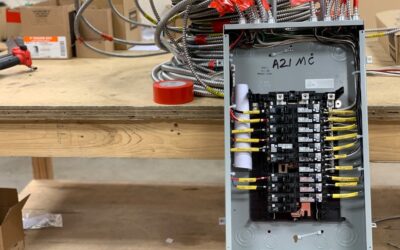
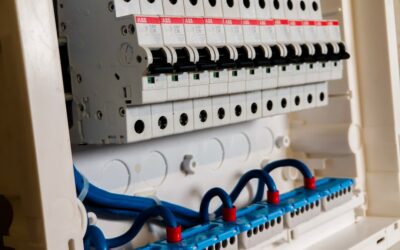
Breakers can also mislead you. A tripped breaker does not always snap fully to OFF. Many rest in a middle position that looks almost identical to ON, especially in a dim basement. Until you push it fully off and back on, it stays open and the room stays dead.
Finally, every receptacle in a chain passes power to the next one. If the connection at the first outlet loosens or burns open, everything after it loses power while the breaker stays happily on. That is why “multiple outlets not working but breaker not tripped” is such a common search: the fault is a connection, not an overload.
Before You Start: Safety Ground Rules
- Do not remove cover plates, pull outlets or open the panel cover. Opening the breaker box door to look at handles is fine; taking the cover off is electrician work.
- Do not use testing instruments of any kind on outlets or the panel. You will not need them.
- Reset any breaker or GFCI one time only. If it trips again immediately, stop.
- If any outlet or switch plate feels warm, looks discolored or smells hot, leave the circuit off and call an electrician. That is a fire hazard.
Grab a flashlight and a lamp or phone charger you know works. That lamp is your only testing tool.
Step-by-Step Checks
- Unplug the big loads in the room. Space heaters, window air conditioners, vacuum cleaners and similar high-draw devices should come out of the wall. If something on the circuit caused the trip, you do not want it reconnecting the moment power returns.
- Hunt for GFCI outlets everywhere. Check all bathrooms, the kitchen, laundry area, garage, unfinished basement, and outdoor receptacles on decks, patios and porches. Look behind furniture and appliances too. Press RESET firmly on each one. After every reset, go back and test the dead room with your lamp. If one GFCI refuses to reset, note its location for the electrician.
- Give the breaker a full off-on reset. Even if every handle looks ON, find the breaker labeled for that room, or any handle that looks slightly out of line. Push it firmly all the way to OFF until you feel it seat, then back to ON. If the directory is blank or wrong, you can do the same to each single-pole breaker one at a time, but avoid cycling the main and large double-pole breakers for the furnace, range, dryer and water heater unless you are certain.
- Test again and map the outage. With your lamp, check every outlet in the room and the rooms on either side, and flip the light switches. Write down what works and what does not. The dividing line between working and dead outlets often points straight at the failed connection.
- Look for warning signs. Without touching anything inside the boxes, look at the outlets at the edge of the dead zone. Scorching, melted plastic, cracking or a faint burnt odor means a connection failed by overheating. Leave it off and call a pro.
If the room comes back after a GFCI or breaker reset and stays on, you are done, though it is worth thinking about what tripped it. A hair dryer, a wet outdoor outlet after rain, or a heater plus a vacuum on one circuit are classic triggers.
When You Reset the Circuit Breaker and Still Have No Power
This is the scenario behind searches like “reset circuit breaker still no power” and “no plug sockets working.” Once you have reset every GFCI and fully cycled the breaker, an outage confined to one room almost always means a broken path somewhere in the wiring run. The usual suspects:
- A loose or burned connection at the first dead outlet, or at the last working one. Push-in (backstab) connections are notorious for loosening over the years.
- A failed splice in a junction box or behind a light fixture.
- A faulty GFCI that will not pass power even after a reset.
- A breaker that has failed internally and no longer conducts even in the ON position.
Every one of those requires opening live boxes or the panel, so this is where homeowner troubleshooting ends. An electrician will turn off the breaker and confirm power is off with a tester before opening anything, then locate and repair the fault.
One Room vs Several Rooms vs Half the House
The size of the outage helps you decide who to call. Power out in one room but breaker not tripped is a branch-circuit problem. A single room or a few neighboring outlets points to one branch circuit, which means an electrician. If lights are dim or dead across half the home, and large appliances act strangely, the problem may be on the utility side or at the main service, and the right first call is your power company. If the whole house is out, look out the window and check whether neighbors have power, then report the outage to the utility.
Lights flickering or dimming in many rooms at once deserve special attention. That can signal a loose neutral at the service, which is a serious hazard. Do not wait it out: call the utility or an electrician the same day.
Preventing a Repeat
Rooms that lose power repeatedly are often overloaded. A bedroom running a space heater, a gaming computer and a window unit on one 15-amp circuit is a setup for nuisance trips and overheated connections. Spread big loads across different circuits, plug heaters and air conditioners directly into a wall outlet (never a power strip or extension cord), and replace any outlet that no longer grips plugs firmly. Labeling your panel accurately the next time an electrician visits saves a lot of guesswork later.
In homes with older push-in connections, an electrician can move the wires to the screw terminals during a service visit, which makes the whole run more reliable.
Typical Costs
When you find the power out in one room but breaker not tripped, a GFCI or breaker reset costs nothing. A service call to find and fix a loose connection usually lands somewhere around $150 to $400, depending on how many boxes the electrician has to open and where you live. Replacing a failed breaker or a GFCI outlet adds the cost of the part. Heat-damaged boxes or old wiring found during the repair can raise the bill, so it pays to call early rather than living with a dead room and a tangle of extension cords.
When to Call a Licensed Professional
- The room stays dead after every GFCI is reset and the breaker is fully cycled
- A breaker or GFCI trips again immediately after a single reset
- Any outlet, switch or plate is hot, buzzing, discolored or smells burnt (fire hazard)
- Lights flicker in several rooms, or half the house has lost power (call the utility first)
- You need new outlets, a new circuit or GFCI protection added, which requires a licensed electrician and often a permit
Frequently Asked Questions
Why are multiple outlets not working when the breaker is not tripped?
Usually a GFCI outlet in another room has tripped and is cutting power to every outlet downstream of it. If resetting every GFCI does not help, a loose connection at the first dead outlet is the next most likely cause, and an electrician should fix it.
Can a breaker be tripped without looking tripped?
Yes. Many breakers trip to a middle position that looks almost like ON. Push the handle firmly to OFF and then back to ON to reset it fully. Do this once; if it trips again, call an electrician.
Where are GFCI outlets usually hidden?
Check bathrooms, kitchens, garages, laundry rooms, unfinished basements and exterior walls. They can hide behind refrigerators, freezers, workbenches and outdoor furniture, and one bathroom GFCI sometimes protects outlets in another bathroom or outside.
Is a dead room an emergency?
Not by itself. It becomes urgent if you smell burning, see scorch marks, hear buzzing, or feel heat at an outlet or switch. In that case leave the breaker off and call an electrician right away.
Should I run extension cords until it is fixed?
A short-term cord for a lamp is fine, but avoid powering heaters or other high-draw appliances through extension cords, and do not leave cords running under rugs or through doorways. Get the circuit repaired promptly.