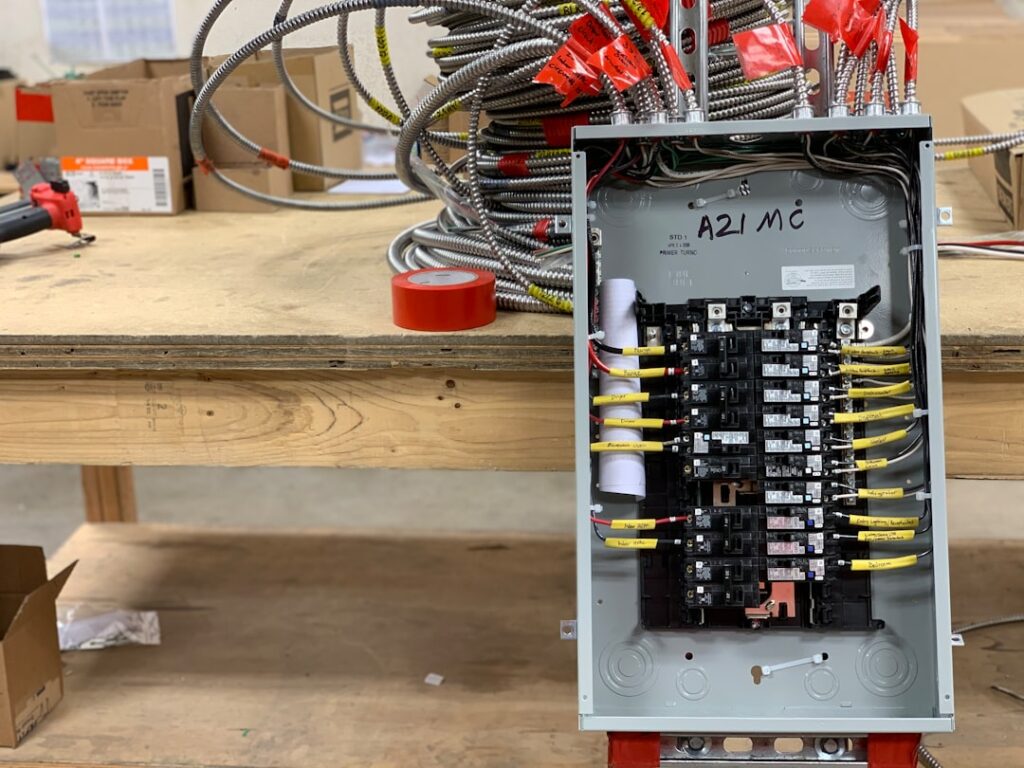
Knowing how to reset circuit breaker switches is basic homeowner knowledge, but doing it correctly, and knowing when not to, is what keeps a minor outage from becoming a hazard. Resetting a breaker isn’t just flipping a switch back on. You have to find the tripped breaker, cycle it fully off before on, and, most importantly, understand why it tripped so you’re not repeatedly resetting your way toward an overheated wire. This guide walks you through the safe procedure and the diagnosis behind it.
- First, Understand What Tripped and Why
- Step 1: Turn Off or Unplug the Load
- Step 2: Find the Tripped Breaker
- Step 3: Cycle the Breaker Fully Off, Then On
- Step 4: What If It Trips Again Immediately?
- Resetting a GFCI Instead of a Breaker
- When to Stop and Call an Electrician
- Safety While at the Panel
- Preventing Repeat Trips
- Bottom Line
- Label Your Panel Now So Next Time Is Easy
- Keep a Flashlight and These Basics Handy
First, Understand What Tripped and Why
A breaker trips to protect the wiring from too much current. Before you reset anything, ask what happened, because a breaker trips for one of three reasons:
- Overload — too many devices drawing power on one circuit. The most common cause and the safest. Example: a space heater plus a microwave on the same 15-amp circuit.
- Short circuit — a hot wire touching a neutral, causing a sudden current spike. Dangerous; often trips instantly, sometimes with a pop, spark, or burning smell.
- Ground fault — a hot wire contacting a grounded surface or water. Also instant and a shock hazard; what GFCI devices catch.
If the trip happened right when you turned on one more appliance, it’s almost certainly an overload, and safe to reset after shedding load. If it tripped with nothing obvious happening, or with a smell or spark, treat it as a possible short or ground fault and read the diagnosis section before resetting.
Step 1: Turn Off or Unplug the Load
If the cause was an overload, don’t reset into the same overloaded condition. First, go to the affected area and turn off or unplug the high-draw items that were running, space heaters, hair dryers, microwaves, toasters, window AC units. Each of these pulls 1,000 to 1,500 watts, and two on one circuit is what overloads it. Shedding the load first means the breaker will actually hold when you reset it.
Step 2: Find the Tripped Breaker
Open your electrical panel (the gray metal box in a garage, basement, utility room, or hallway). Inside is a row of breaker switches. A tripped breaker looks different from the others:
- Its handle sits in the middle position or fully at OFF, not lined up with the neighboring ON breakers.
- Some breakers show a small orange or red indicator window when tripped.
Scan the row and find the one that’s out of line. If your panel is labeled, match it to the dead room or circuit. If nothing looks obviously tripped but you still have no power, check whether a GFCI outlet (with TEST/RESET buttons) has tripped instead, common in bathrooms, kitchens, garages, and outdoors, since one tripped GFCI outlet can kill several others downstream.
Step 3: Cycle the Breaker Fully Off, Then On
This is the step people get wrong. You can’t reset a tripped breaker by nudging it toward ON, it’s mechanically latched in the middle and won’t re-engage. You have to reset it in two motions:
- Push the handle firmly all the way to OFF. You’ll often feel a distinct click as the mechanism resets. This is required, jiggling it toward ON does nothing.
- Then push it firmly all the way to ON. It should click and stay put, lined up with the other ON breakers.
Power to the circuit should return. If the breaker holds, you’re done. Go turn your appliances back on, but spread the high-draw ones across different circuits so you don’t trip it again.
Step 4: What If It Trips Again Immediately?
This is the critical decision point. If the breaker snaps right back to tripped, or won’t stay in the ON position, stop resetting it. Repeatedly forcing a breaker that keeps tripping is exactly the wrong move, the breaker is telling you there’s a fault, and overriding it defeats the protection that prevents fires. Instead, diagnose:
- Unplug everything on that circuit, then reset. If it now holds, the fault was in a device. Plug items back one at a time until the breaker trips, that appliance is faulty. Retire it.
- If it trips with everything unplugged, the fault is in the wiring itself, a short circuit or ground fault in a cable, outlet, or switch. Leave the breaker OFF and call a licensed electrician.
Resetting a GFCI Instead of a Breaker
Sometimes the “breaker” you need to reset is actually a GFCI outlet. If power is out in a bathroom, kitchen counter, garage, or outdoor area but no panel breaker looks tripped:
- Find the GFCI outlet, it has TEST and RESET buttons on its face.
- Press RESET firmly. You should feel and hear a click.
- If it won’t reset, dry the area (moisture is a common trigger), unplug loads, and try again.
- If it still won’t hold, there’s a genuine ground fault, call an electrician.
Remember one GFCI can protect several downstream outlets, so resetting the first one often restores a whole string of dead receptacles.
When to Stop and Call an Electrician
Resetting is a homeowner task; diagnosing a persistent fault is not. Call a licensed electrician when:
- The breaker trips again immediately, every time you reset it.
- It trips with all devices unplugged.
- You smell burning, see scorch marks, or the breaker or panel feels warm.
- You hear buzzing, crackling, or arcing from the panel.
- The breaker won’t reset, feels loose, or won’t stay on (a failed breaker).
- Multiple circuits trip or lights flicker across the house, which can signal a loose neutral or panel issue.
And never solve chronic tripping by swapping in a bigger breaker. A 20-amp breaker on a circuit wired with 14-gauge wire removes the protection and lets the wire overheat, a real fire cause. The breaker must match the wire: 15A with 14 AWG, 20A with 12 AWG.
Safety While at the Panel
- Stand on a dry surface and keep one hand at your side when operating breakers; never work at the panel with wet hands or standing in water.
- Only touch the breaker handles, never remove the panel cover or touch the bus bars, which stay live even with a breaker off.
- Use a flashlight rather than reaching around blindly.
- If the panel itself is damaged, wet, or hot, don’t touch it, call a professional.
Preventing Repeat Trips
- Distribute high-wattage appliances across different circuits.
- Avoid running two heat-producing devices (heater, dryer, microwave) on one circuit.
- Have an electrician add a dedicated circuit for a heavy load like a window AC, space heater, or home office.
- Replace appliances that repeatedly trip the breaker, they have internal faults.
Bottom Line
Learning how to reset a circuit breaker comes down to a simple, safe routine: figure out why it tripped, shed the load if it was an overload, find the out-of-line breaker, and cycle it fully OFF then firmly ON. The judgment part matters just as much, if it trips again immediately, comes with heat or smell, or trips with nothing plugged in, that’s a short circuit or ground fault, and the right move is to leave it off and call a licensed electrician. Reset when it’s an overload; diagnose and defer to a pro when it’s a fault.
Label Your Panel Now So Next Time Is Easy
The best time to map your panel is before an outage, not during one in the dark. Spend an afternoon labeling each breaker: have one person flip a breaker off while another checks which lights and outlets go dead, then write the room and circuit on the panel’s directory card. Next time a breaker trips, you’ll know instantly which one feeds the dead area instead of guessing. While you’re at it, note which outlets are GFCI-protected and where the controlling GFCI outlet lives, since a dead bathroom or garage outlet is often a tripped GFCI, not a panel breaker at all. A well-labeled panel turns a stressful outage into a thirty-second fix.
Keep a Flashlight and These Basics Handy
Because breakers most often trip when you’re running heavy loads, sometimes taking out the lights in the process, a little preparation pays off. Keep a working flashlight or headlamp near the panel so you’re never operating breakers by phone light with one hand full. It’s also worth knowing where your main breaker is, the big double-pole breaker at the top that cuts power to the whole panel, in case you ever need to kill everything fast. You don’t need tools to reset a breaker, but a flashlight, a labeled panel, and knowing where the main is are the three things that make resetting quick and safe every single time.