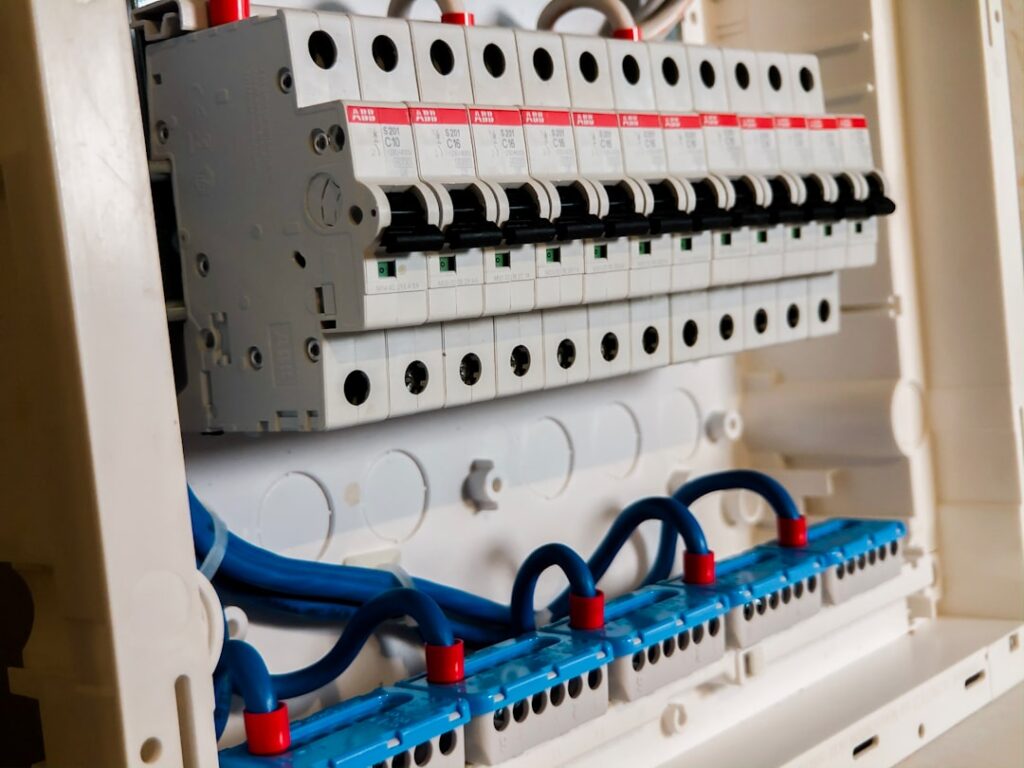
If you’ve been researching solar, home batteries, or EV charging, you’ve almost certainly run into one name that keeps coming up. The Span electrical panel reimagines the humble breaker box as a phone-controlled energy hub — one that meters every circuit, manages backup power automatically, and makes adding solar or an EV charger dramatically simpler. It’s an impressive piece of hardware, and also an expensive one. Here’s an honest look at what you get, what it costs, and whether it fits your home.
What the Span Panel Is
Span makes a full replacement main service panel. It swaps out your existing gray breaker box entirely and takes over as the home’s main load center. Where a traditional panel has physical breaker handles, the Span panel uses solid-state controllable circuits — 32 of them — each individually meterable and switchable from the Span app. There’s a physical touch interface on the panel too, and it still contains conventional overcurrent protection, so your circuits are protected whether or not the smart features are online.
The company was founded by former Tesla Energy engineers, which shows in both the industrial design and the tight integration with Tesla Powerwall. The panel is a sleek matte-white unit that people actually mount where they can see it, rather than hiding in a closet.
Headline Features
- Circuit-level monitoring — real-time watts on all 32 circuits, with history. You see exactly what every appliance draws.
- Remote control — turn any circuit on or off from the app, anywhere.
- Backup prioritization — during an outage, group circuits into “must have,” “nice to have,” and “non-essential” tiers. The panel sheds low-priority loads to stretch battery runtime automatically, no manual load center needed.
- Solar and storage integration — designed to work as the interconnection point for solar and batteries, eliminating extra combiner and transfer equipment.
- Span Drive — Span’s own 48-amp EV charger that coordinates with the panel to avoid overloading your service, enabling EV charging on smaller services without a costly upgrade.
The Backup Story Is the Real Draw
Traditional battery backup forces a choice: back up the whole house with a big, expensive battery bank, or wire a small critical-loads subpanel and permanently decide which circuits get power during an outage. The Span panel dissolves that tradeoff. Every circuit can be backed up, and the panel intelligently sheds loads in real time based on your priorities and remaining battery capacity.
In practice that means a single Powerwall can keep your fridge, lights, internet, and a few outlets running for a long time, automatically dropping the water heater and EV charger when the battery gets low, then restoring them when the sun comes back. For anyone in an area with frequent outages or planned power shutoffs, that dynamic management is the feature worth paying for.
What It Costs
Be ready for the number. The Span panel itself runs roughly $3,500 to $4,000. Professional installation — because this is a main service panel swap requiring a licensed electrician, permit, and utility coordination — typically adds $1,500 to $3,500 depending on your region and the complexity of your existing service. All in, most homeowners land between $5,500 and $8,000 for the panel installed, before any solar or battery.
The Span Drive EV charger is a separate purchase, around $1,400 plus installation. The one meaningful offset: when the Span panel is installed as part of a qualifying solar or battery system, it can be eligible for the 30% federal residential clean energy tax credit, which materially changes the math. Installed standalone, it generally isn’t eligible, so confirm with your tax advisor.
Installation Realities
This is not a DIY product, full stop. Replacing a main panel means working at the service entrance where the utility feed lands — conductors that stay energized even with the main off — and every jurisdiction requires a permit and inspection under the National Electrical Code. Span sells and installs through a network of certified electricians, and using one of them is the right move because they know the panel’s commissioning process and app setup.
A typical install takes most of a day and includes a power interruption while the panel is swapped, coordination with your utility to pull the meter, and an inspection before the system is energized. Grounding, bonding, and surge protection all get addressed as part of the code-compliant install.
Pros and Cons
Where it shines
- Best-in-class dynamic backup management — the standout reason to buy.
- Clean integration with solar, batteries, and EV charging, reducing extra equipment.
- Genuinely useful circuit-level energy data.
- Can avoid a service upgrade when adding an EV charger, thanks to smart load management.
- Excellent industrial design and a polished app.
Where to be cautious
- High upfront cost versus a conventional panel.
- Advanced features depend on the app and Span’s cloud service; the company is relatively young.
- Overkill if you have no plans for solar, batteries, or an EV.
- Repairs and service depend on a single manufacturer’s ecosystem.
Alternatives Worth Comparing
The Span panel isn’t the only path. If you want smart features without a full panel swap, Leviton and Eaton sell smart breakers that drop into their standard panels, letting you instrument circuits selectively for far less money. Schneider’s Square D Energy Center (Wiser) competes directly with Span on whole-home backup and pairs with Schneider’s own battery. And if all you want is energy data, a $200 Emporia Vue monitor clamps onto your existing panel and reports per-circuit usage without replacing anything.
Living With the Span Panel
Day-to-day ownership runs through the Span app, which is genuinely one of the better-designed pieces of home-energy software out there. The home screen shows a live view of every circuit’s draw, your solar production, and battery state of charge if you have one, in a clean flow diagram. You assign each circuit a friendly name and a backup priority tier during setup, and from then on the panel manages outages automatically.
The features people actually use most: checking what’s drawing power when the bill looks high, remotely killing a circuit they forgot about (the garage space heater, the pool pump), and watching backup runtime tick during an outage while the panel quietly sheds non-essentials. Firmware updates arrive over the air and have added capability over time. The main ongoing consideration is that the smart layer depends on the app and Span’s servers staying online — the breakers still protect your circuits if that connection drops, but you lose remote control and monitoring until it’s restored.
Does It Handle EV Charging Without a Service Upgrade?
This is one of the strongest practical arguments for the panel. Adding a 48-amp Level 2 EV charger to a 100- or 125-amp service often triggers an expensive service upgrade because the math says the total load could exceed the service rating. The Span panel, paired with the Span Drive charger, uses dynamic load management to throttle the car’s charging rate in real time so the whole-home draw never exceeds your service capacity. The car simply charges a bit slower when the oven and dryer are running, then speeds back up when they’re off. For many homeowners that turns a $3,000-plus service upgrade into a non-issue, and it’s a big part of how the panel pays for itself.
Who Should Buy One
The Span electrical panel earns its price when it’s the hub of a larger energy project — solar plus a battery, an EV charger on a service that can’t easily be upsized, or a home in an outage-prone area where intelligent backup is worth real money. Bundle it into that work, capture the tax credit where eligible, and it’s a compelling, forward-looking piece of infrastructure. Buy it purely for the app and monitoring, though, and you’ll spend thousands for what a $200 monitor and a good conventional panel deliver at a fraction of the cost. Match the panel to your actual plans, hire a certified electrician, and it will anchor your home’s energy system for years to come.