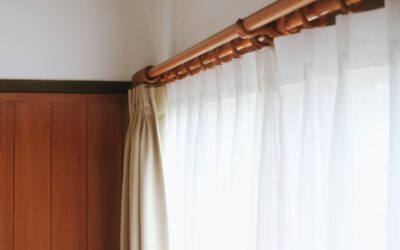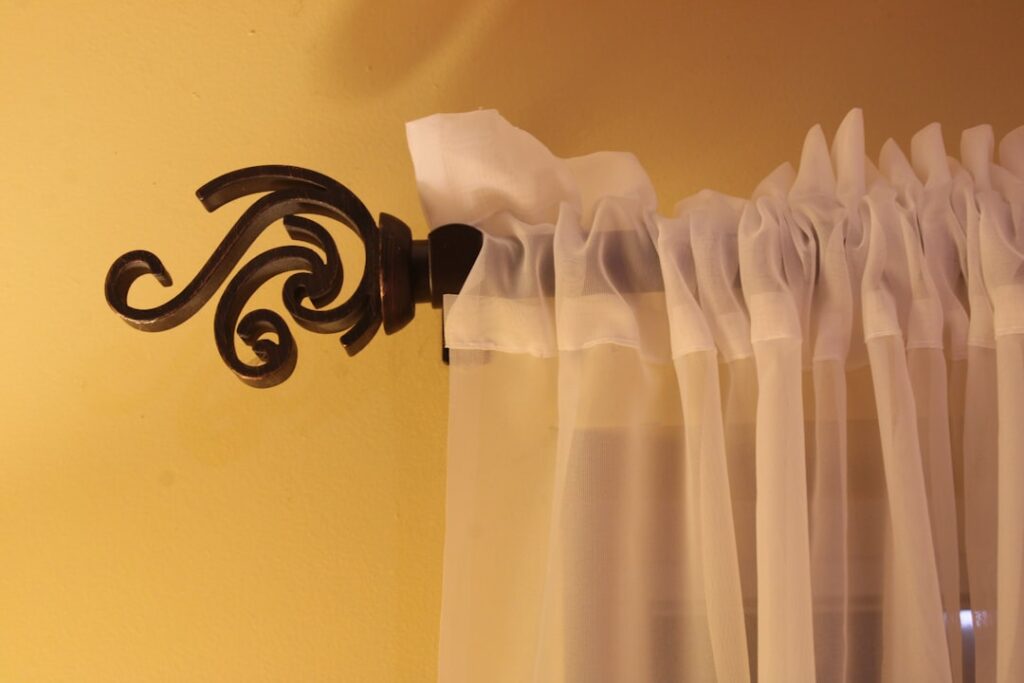
Large curtain rods solve a problem standard hardware simply cannot: covering wide windows, sliding patio doors, and open-concept walls that stretch anywhere from 8 feet to 28 feet. The physics are unforgiving here. A rod that looks stout in the store will bow like a fishing pole once you hang lined drapes across a 14-foot run, and the fix is rarely a bigger rod alone.
Having outfitted plenty of great rooms and patio walls, I can tell you the two decisions that make or break the job are diameter and center support placement. Get those right and even 28 feet of drapery hangs arrow-straight.
- When You Actually Need a Large Rod
- Diameter: The First Structural Choice
- Sag Prevention with Center Support Brackets
- Splitting Panels vs One Continuous Traverse
- Telescoping vs Fixed Rods
- Accounting for Drapery Weight
- Height, Width, and the Return
- Mounting Into Studs, and Real Prices
- Tools and a Two-Person Install
When You Actually Need a Large Rod
Standard telescoping rods top out around 120 to 144 inches, roughly 10 to 12 feet, and even those sag badly near the middle under real fabric weight. Once a window or door assembly passes about 8 feet, you are in large-rod territory and should plan for either a heavier diameter, added center supports, or both.
Common jobs that call for large curtain rods include triple sliding patio doors, banks of windows ganged together, and the wide feature walls in modern open floor plans. Wall-to-wall coverage on a 20-foot run is entirely doable, but it is an engineering exercise, not an impulse buy.
Diameter: The First Structural Choice
Rod diameter is your primary defense against sag. Thicker rods resist bending, but they also demand larger, stronger brackets. Match diameter to span:
- 1-1/8 inch: Fine up to about 8 feet with one center support, or lighter fabrics on shorter runs.
- 1-1/4 to 1-3/8 inch: A solid middle ground for spans of 8 to 14 feet with proper supports.
- 2 inch: The workhorse for wide patio doors and heavy lined drapery, 12 to 20 feet.
- 3 inch: Statement-scale hardware for very long walls, high ceilings, and heavy velvet or blackout panels across 16 to 28 feet.
Material matters as much as diameter. A hollow 1-inch aluminum rod sags more than a 1-inch solid steel rod. For anything over 12 feet with heavy fabric, choose steel or a wrought-iron rod over lightweight aluminum, even if it costs more and weighs a ton to lift into place.
Sag Prevention with Center Support Brackets
Here is the rule most homeowners miss: no single rod material fully resists sag past about 6 to 8 feet on its own. The real solution is center support brackets that carry the rod’s weight between the two ends.
Plan supports by span:
- Up to 8 feet: two end brackets plus one center support.
- 8 to 16 feet: two end brackets plus two evenly spaced center supports.
- 16 to 28 feet: two end brackets plus three or more supports, spaced no more than roughly 6 to 8 feet apart.
The trick with drapery is that rings must pass the center supports. Look for pass-through or C-ring center brackets that let rings glide by, or split the drapery into panels that meet at each support so nothing has to cross it. On a traversing patio door, plan the panels so the stack lands where a support hides the seam.
Splitting Panels vs One Continuous Traverse
On a truly wide opening you have two ways to hang fabric, and the choice shapes both the hardware and the daily use. The simplest is a pair of stationary side panels that frame the window and never move, letting a separate roller or cellular shade handle actual light control. Because the panels stay put, they can hover over center supports without ever needing to pass them, which makes a 20-foot run painless.
The alternative is a functioning traverse where drapery actually slides open and closed across the span. That is where a baton-draw or cord-and-pulley system, or a motorized track, earns its cost. For heavy drapery on a patio door, a dedicated traverse rod or ripple-fold track often outperforms a decorative round rod because it is engineered to carry the load and glide smoothly. Decide how the drapery will be used before you buy, because retrofitting a traverse system later means new hardware.
Telescoping vs Fixed Rods
Large rods come two ways, and the choice affects both strength and looks.
- Telescoping (adjustable): Two or three tubes that slide to fit a range, such as 120 to 170 inches. Convenient and forgiving of measurement error, but the overlapping section adds a visible seam and a weak point that can sag. Reserve these for lighter loads.
- Fixed (cut-to-length or splined): A single continuous rod, sometimes joined with internal splines and hidden under a center support. Stronger, cleaner-looking, and the right call for heavy drapery and the widest spans. You give up adjustability, so measure carefully.
Accounting for Drapery Weight
Fabric weight is the load your whole system carries, and homeowners routinely underestimate it. A pair of lined, floor-length blackout panels for a patio door can weigh 12 to 20 pounds together. Wide velvet drapery across a 20-foot wall can top 40 pounds. Every pound multiplies the sag force at the rod’s midpoint, which is exactly why diameter and center supports both scale with weight, not just width.
If you are unsure, weigh a single finished panel on a bathroom scale and multiply. Then size the rod one step heavier than you think you need. Overbuilding here is cheap insurance.
Height, Width, and the Return
Where you place a large rod changes how the whole wall reads. Mount the rod 4 to 6 inches above the window frame, or take it all the way to a few inches below the ceiling on tall walls, to make the window feel grander. Extend the brackets 8 to 12 inches past each side of the glass so open panels stack off the window and let in full daylight rather than blocking the view.
Do not forget the return, the short bend at each end that carries the rod back to the wall. On patio doors especially, a proper return wraps the drapery against the wall and seals the light gap along the sides, which matters if you are trying to darken a room. Many large-rod kits include return brackets or elbow adapters; confirm they are in the box before installation day so you are not improvising.
Mounting Into Studs, and Real Prices
Drywall anchors alone will not hold a loaded large rod. The brackets, and especially the center supports, must hit framing.
- Find the studs with a magnetic or electronic stud finder and mark centers. Standard framing sits 16 inches on center.
- Position end brackets over studs where possible, or use heavy-duty toggle anchors rated for the load if a stud is unavailable.
- Land every center support on a stud, without exception. This is the highest-stress point.
- Drive at least 2-1/2 to 3-inch screws into framing so they bite deep past the drywall.
Tools and a Two-Person Install
Hanging a large rod is not a solo job past about 10 feet. The rod is long, awkward, and often heavy enough that one person cannot hold it level while driving screws. Line up a helper and gather your tools before you start:
- Stud finder, a good bubble level or laser level, and a tape measure.
- A drill with the correct bits, plus a driver for the mounting screws.
- Heavy-duty toggle anchors for any bracket that cannot land on a stud.
- A pencil and painter’s tape to mark bracket heights without marring the wall.
Level is everything on a wide run because a rod that is off by even a quarter inch over 16 feet shows badly against the ceiling line. Snap a level reference line first, mount all brackets to that line, then set the rod. Dry-fit the rod in the brackets before final tightening so you can confirm the center supports carry it without a bow, and only then hang the drapery.
On price, expect adjustable large rods in the 120 to 170-inch range to run $40 to $120. Heavy 2 to 3-inch steel or wrought-iron fixed rods with multiple supports and finials commonly land at $120 to $350 or more, and custom cut-to-length systems for a 20-plus-foot wall can exceed $400. Weighed against the cost of the drapery itself, spending a little more on robust large curtain rods and the right supports is the smartest money in the whole project.