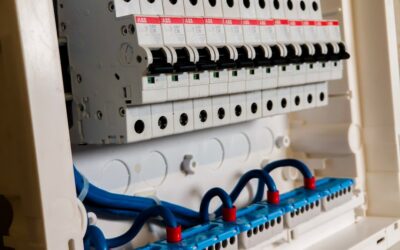
Open the cover on a lot of American homes and you will find a Square D electrical panel — the load center that takes the incoming service and splits it into the branch circuits that feed your outlets, lights, and appliances. Square D (made by Schneider Electric) is one of the most trusted names in residential panels, and for good reason: their breakers are widely available, their build quality is consistent, and electricians know the product cold.
This guide explains the two main Square D lines, how panels are sized, breaker compatibility, and — importantly — where the line is between homeowner-safe work and work that belongs to a licensed electrician. Panel work carries real risk, and some of it must be done to code with a permit.
- QO vs. Homeline — the Two Square D Lines
- Panel Sizing — Amps and Spaces
- Common Breaker Types in a Square D Panel
- Costs
- What You Can Safely Do Yourself
- What You Must Leave to an Electrician
- Reading the Panel Label and Directory
- Choosing Between a New Panel and a Subpanel
- Grounding, Bonding, and the Neutral Bar
- Signs Your Panel Needs Attention
- Why Electricians Like Square D
- Labeling and Maintenance
QO vs. Homeline — the Two Square D Lines
Square D sells two residential families, and mixing them up causes a lot of failed installs:
- QO (Qwik-Open): The premium line. Faster trip response (Square D advertises its “visual trip indicator” that shows a window when a breaker has tripped), tighter build, and a plug-on-neutral option. QO breakers are narrower, so a QO panel fits more circuits in the same footprint. Costs more.
- Homeline: The value line. Fully code-compliant and reliable, aimed at budget builds and standard residential loads. Homeline breakers are wider and cost less.
Critical: QO breakers fit only QO panels, and Homeline breakers fit only Homeline panels. They are not interchangeable. Buy the breaker that matches your panel’s line, printed on the panel label and the deadfront.
Panel Sizing — Amps and Spaces
Two numbers define a panel:
- Service amperage: The main breaker rating. Common residential sizes are 100A, 150A, and 200A. Older homes often have 100A; most new construction and any home adding EV charging, electric heat, or a large HVAC system wants 200A.
- Circuit capacity (spaces/circuits): How many breaker slots the panel holds, often listed as something like “40-space, 40-circuit.” Tandem breakers can double up certain slots where the panel allows it.
If you are routinely tripping breakers or have no open slots left for a new circuit, you are either overloaded or out of capacity — both are signs to have an electrician evaluate an upgrade.
Common Breaker Types in a Square D Panel
- Single-pole 15A/20A: Standard 120V circuits — lights, receptacles.
- Double-pole 30A–50A: 240V loads — dryer, range, water heater, EV charger, HVAC.
- AFCI breakers: Arc-fault protection required by NEC 210.12 for most living-area circuits.
- GFCI breakers: Ground-fault protection per NEC 210.8 for wet locations.
- Dual-function (CAFCI/GFCI): One breaker providing both arc-fault and ground-fault protection — common in modern panels.
- Tandem breakers: Two circuits in one slot, only where the panel is rated for them.
Costs
- QO single-pole breaker: $6–$12.
- Homeline single-pole breaker: $5–$9.
- AFCI/GFCI breaker: $40–$60.
- New 200A QO load center (panel only): $150–$350.
- Full panel replacement/upgrade, installed: $1,500–$4,000+ depending on service size, utility coordination, and code upgrades.
What You Can Safely Do Yourself
With the right precautions, many homeowners handle a straightforward breaker swap in a panel they understand:
- Replacing a known-bad breaker with the exact same Square D type and amperage.
- Adding a single 15A/20A circuit if local code allows homeowner work and you pull a permit.
Even then, follow this sequence:
- Turn off the main breaker to de-energize the branch circuits (the bus goes dead, but the service lugs above the main stay live).
- Verify de-energized with a tested non-contact voltage tester on the breaker and wires before touching anything.
- Work on one breaker at a time; never let a tool bridge the bus.
- Match the breaker line and amperage exactly.
What You Must Leave to an Electrician
This is the part to take seriously. Even with the main off, the service lugs and the meter side stay energized at full service voltage. That energy can kill. Call a licensed electrician — and expect a permit and inspection — for:
- Panel replacement or a service upgrade (100A to 200A). This involves the utility disconnect and the live service conductors.
- Any work near the service lugs, main lugs, or the meter.
- Adding a subpanel or a 240V appliance circuit if you are not fully confident.
- Diagnosing a panel that buzzes, smells hot, shows scorching, or has corroded bus bars.
Never touch the service lugs. That single rule keeps homeowners alive.
Reading the Panel Label and Directory
Every Square D panel carries a printed label — usually on the inside of the door or the deadfront — that tells you what you are working with before you buy a single breaker. Look for the line (it will say QO or Homeline), the main breaker rating (100A, 150A, 200A), and the maximum number of circuits and spaces the panel accepts. The label also states whether tandem (twin) breakers are permitted and in which positions, because not every slot accepts one. Match any replacement breaker to that label exactly. Alongside it, keep the circuit directory filled in and current so you can de-energize the right circuit fast — a QO panel’s visible trip indicator helps you spot which breaker went, but only a good directory tells you what that breaker feeds.
Choosing Between a New Panel and a Subpanel
When you are out of breaker spaces, you have two paths. If the service size (say 100A) still comfortably covers your total load and you just need more circuit positions, adding a subpanel fed from the main can be the cheaper fix — it gives you room for new circuits without touching the utility service. If the whole home is pushing past what the service can deliver — you are adding an EV charger, electric heat, a heat pump, or a large shop — you need a service upgrade to a larger main panel, typically 200A, which involves the utility and a permit. An electrician performs a load calculation to tell you which side of that line you are on; guessing risks a chronically overloaded, tripping system.
Grounding, Bonding, and the Neutral Bar
Two details inside a Square D panel matter for safety and for passing inspection. In a main panel, the neutral and ground are bonded together and tie to the grounding electrode system; the neutral bar and ground bar function as one. In a subpanel, they must be separated — the neutrals isolated on an insulated bar and the grounds on a bonded bar, with the bonding screw removed — or you create parallel current paths on the ground that are both a code violation and a shock hazard. This is a frequent DIY mistake and one of the strongest reasons to have subpanel and service work done by a licensed electrician who understands the bonding rules. And regardless of the work, never treat the neutral bar as safe to grab with the main off — verify everything dead first.
Signs Your Panel Needs Attention
- Breakers that trip repeatedly or won’t reset.
- A burning smell, scorch marks, or discoloration on the deadfront.
- Warm breakers or a warm panel cover.
- Buzzing, crackling, or flickering lights across the whole house.
- An old fuse box or a panel from a recalled brand — a common reason to upgrade to a modern Square D.
Any of these warrant a professional inspection rather than DIY poking.
Why Electricians Like Square D
Two things: availability and consistency. QO and Homeline breakers are stocked at every home center and supply house, so a replacement is never a special order. The QO line’s visible trip indicator makes troubleshooting faster — you can see at a glance which breaker tripped. And the copper bus and build tolerances are dependable across production, which matters when a panel is expected to run for 30-plus years.
Labeling and Maintenance
- Keep the circuit directory inside the door filled in and current — it saves time and prevents mistakes during an emergency.
- Once a year, glance at the panel for corrosion, moisture, or heat discoloration.
- Keep the panel accessible — code requires clear working space in front of it (generally 30 inches wide and 36 inches deep).
- Do not store items leaning against or blocking the panel.
A Square D electrical panel is a solid, serviceable backbone for a home’s wiring, with two clear product lines and breakers you can find anywhere. Match QO to QO and Homeline to Homeline, size the service to your real loads, and know the boundary: routine breaker swaps can be DIY with the main off and a verified-dead test, but anything touching the service lugs or a full panel upgrade is licensed-electrician, permit-required work. Respect that line and the panel will serve you safely for decades.