
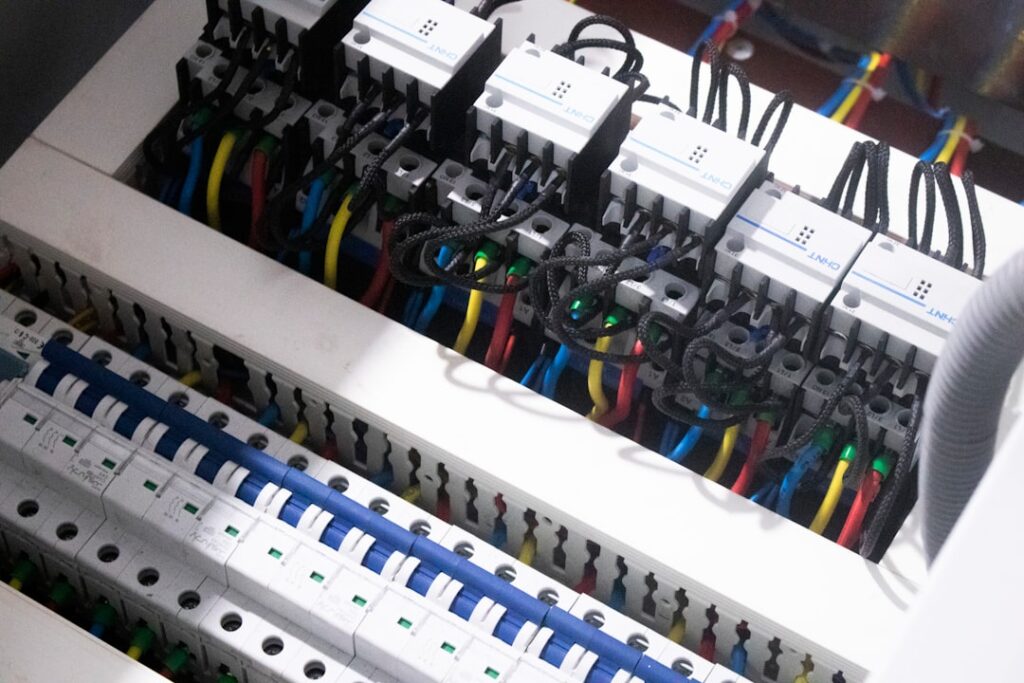
The cost to upgrade electrical panel to 200 amps typically runs $1,800 to $4,500, with most homeowners paying around $2,500 to $3,500 for a licensed electrician to swap a 100- or 150-amp panel for a modern 200-amp service. The final number depends on how much of your service equipment changes, whether the utility has to get involved, and how easy the panel is to reach. Here’s the full breakdown so you can budget accurately.
The Cost Breakdown
A 200-amp panel upgrade is really several tasks bundled together. A typical job breaks down like this:
- New 200-amp panel / load center: $200 to $600 for the box and breakers
- Electrician labor (6-12 hours): $1,000 to $2,500
- Permit and inspection: $100 to $500
- New meter base / service entrance cable: $200 to $800
- Grounding and bonding upgrades: $100 to $400
- Utility coordination / disconnect and reconnect: $0 to $600 (often free from the utility, sometimes charged)
Add those up and a standard panel-only swap lands in the $1,800 to $3,000 range, while a full service upgrade — new meter, mast, and cable to the utility — pushes toward $3,500 to $4,500 or more.
What Drives the Price
Two homes can differ by thousands based on these factors:
- Panel-only vs. full service upgrade: Just replacing the breaker box is cheapest. If the meter base, service mast, and entrance cable also need upsizing to carry 200 amps, the cost climbs significantly.
- Overhead vs. underground service: Overhead drops are simpler; underground service that must be re-pulled or re-trenched adds labor and cost.
- Panel location and accessibility: A panel in an open basement wall is quick; one buried in a finished closet, behind drywall, or on a tight exterior wall takes longer.
- Grounding to modern code: Older homes often need new ground rods, water-pipe bonding, and a proper grounding electrode system, which the inspector will require.
- Circuit and wiring condition: If old circuits need new breakers (like arc-fault or ground-fault types) or aluminum branch wiring needs remediation, that adds up.
- Permit and utility fees: Vary widely by municipality and utility.
- Region and labor rates: Electrician rates in high-cost metros run well above rural areas.
Panel Swap vs. Full Service Upgrade
It’s important to know which job you’re actually buying. A panel swap replaces the breaker box while keeping the existing meter and service cable — appropriate when your incoming service is already sized for 200 amps but the panel is old, full, or a recalled brand. A full service upgrade replaces everything from the utility connection in: meter base, service mast or lateral, entrance cable, panel, and grounding. Homes with genuinely undersized 100-amp service usually need the full upgrade, which is why quotes vary so much.
Cost by Current Service Size
What you’re upgrading from affects the price. Moving from a higher existing service is usually cheaper because more of the infrastructure is already sized for the load:
- 100 amps to 200 amps: the most common upgrade, typically $1,800 to $4,000 — often needs a new meter base and service cable.
- 150 amps to 200 amps: frequently cheaper, around $1,500 to $3,000, since the service entrance may already be adequate.
- 60-amp fuse box to 200 amps: the priciest jump, often $3,000 to $5,000+, because everything from the utility connection in usually needs replacing.
An old 60-amp fuse panel is both the most expensive to upgrade and the most important — these are outdated, often unsafe, and flagged by home inspectors and insurers.
Additional Costs to Anticipate
The base quote rarely covers everything a real-world job turns up. Budget for these possible extras:
- Drywall repair and patching: $100 to $500 if the panel is recessed in a finished wall.
- Sub-panel installation: $500 to $1,500 if you need to feed a garage, addition, or workshop.
- Whole-house surge protector: $150 to $500, often added during the upgrade.
- Arc-fault / ground-fault breakers: code may require these on new or replaced circuits, at $30 to $60 each.
- Wiring or connection repairs: corroded or undersized conductors discovered during the swap.
- Temporary generator or hotel: rarely needed, but the power is off for hours during the work.
Ask your electrician to inspect and quote these upfront so the final bill doesn’t surprise you.
Signs You Need the Upgrade
A 200-amp service isn’t always necessary, but these situations usually call for it:
- Frequently tripping breakers or a panel that’s completely full with no room to add circuits.
- Adding a major load — EV charger, heat pump, central AC, hot tub, electric range, or a workshop.
- A whole-house renovation or addition that increases electrical demand.
- An old fuse box or an unsafe/recalled panel brand (Federal Pacific, Zinsco).
- Frequent flickering lights or signs of an overloaded 100-amp service.
If you’re electrifying — adding an EV charger and a heat pump, for example — 200 amps is often the practical minimum, and it’s cheaper to upsize once than to do it twice.
Permits, Inspection, and the Utility
This is not a DIY job in most jurisdictions, and it shouldn’t be. A panel upgrade requires a permit, a licensed electrician, and an inspection, and it involves disconnecting and reconnecting the utility’s service — work that touches live service-entrance conductors. The electrician coordinates with the power company to cut power for the swap and to reconnect and reseal the meter afterward. Expect the panel to be de-energized for several hours during the work.
Skipping the permit can void your insurance and create problems at resale, so factor the permit and inspection into the budget from the start. An unpermitted panel upgrade is exactly the kind of thing a buyer’s home inspector flags, and unwinding it after the fact — getting a retroactive permit and inspection on work already sealed up — is far more expensive and stressful than doing it right the first time.
How to Save Without Cutting Corners
- Get three itemized quotes so you can see whether each includes a full service upgrade or just the panel.
- Bundle it with other electrical work — adding an EV circuit or generator interlock at the same visit spreads the trip and setup cost.
- Clear access to the panel before the electrician arrives to reduce labor hours.
- Confirm what the utility charges for disconnect/reconnect; some do it free, others bill for it.
- Don’t chase the lowest bid — a quote far below the others may skip grounding upgrades or the meter base you actually need.
How Long the Upgrade Takes
A straightforward panel-only swap usually takes a licensed electrician 6 to 10 hours — a single working day. A full service upgrade involving the meter, mast, and utility coordination can stretch to a day and a half or two days, partly because it depends on the utility’s schedule for disconnecting and reconnecting power. Plan for the electricity to be off for a good chunk of the day, so empty the refrigerator of anything critical and plan around it.
After the electrician finishes, the work has to pass a municipal inspection before the utility permanently reconnects and reseals the meter. That inspection can add a day or more to the overall timeline depending on your local building department’s availability, so don’t expect the whole process to wrap in a single afternoon even when the physical work is quick.
Is It Worth It?
Beyond capacity, a 200-amp upgrade improves safety (especially replacing an old fuse box or recalled panel), supports modern high-draw appliances, and adds resale appeal — buyers and inspectors flag undersized service. For most homeowners planning to stay put or electrify, the cost to upgrade electrical panel to 200 amps pays back in reliability and headroom. Budget $2,500 to $3,500 for a typical job, get itemized bids, and use a licensed electrician who pulls the permit and coordinates the utility — that’s how you get a safe upgrade that passes inspection and lasts for decades.


