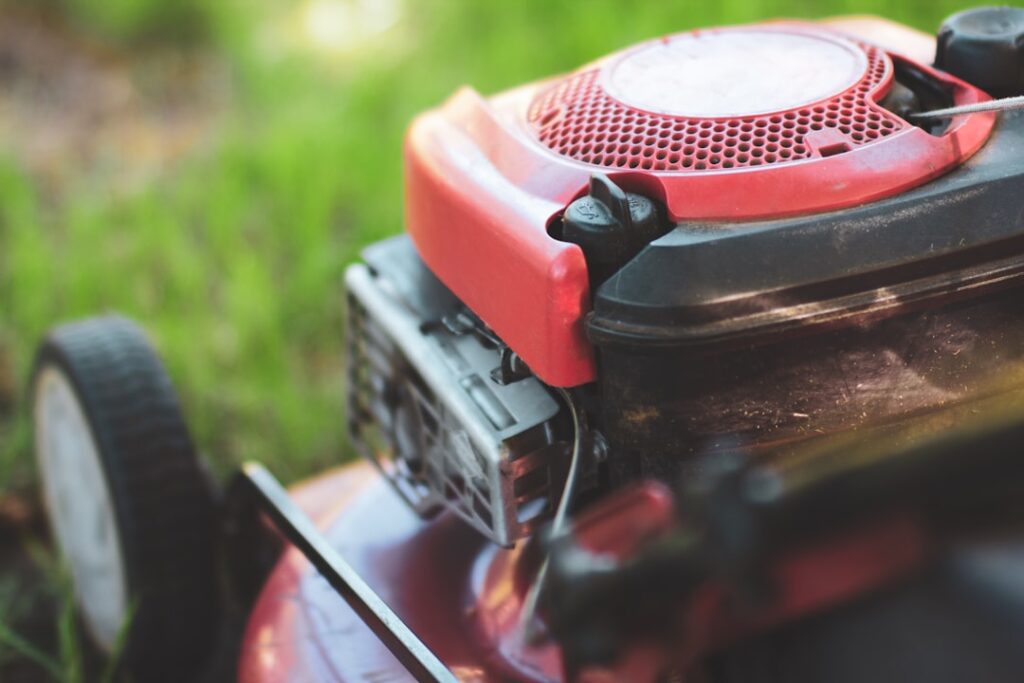
Chances are the engine on your walk-behind mower carries a familiar name, even if the mower body says something else. A Briggs and Stratton lawn mower engine powers a huge share of push and self-propelled mowers sold in the United States, and understanding it helps you maintain and repair your machine. This guide explains the engine series, upkeep, common problems, and where to find parts.
- Briggs & Stratton Makes Engines, Not Mowers
- Finding Your Engine Numbers
- Common Engine Series
- Oil Type and Changes
- Spark Plug and Air Filter
- Common No-Start Problems
- Carburetor Care
- Where to Buy Parts
- Choosing the Right Fuel
- Self-Propelled Drive Systems
- Winter Storage
- Safety Notes
- Understanding Torque vs Horsepower Ratings
- Priming, Choke, and Starting Technique
- Checking for Spark and Compression
- Governor and Surging Issues
- Final Takeaway
Briggs & Stratton Makes Engines, Not Mowers
An important distinction: Briggs & Stratton primarily manufactures the engine, while companies like Troy-Bilt, Craftsman, Murray, and Snapper build the mower around it. So when people say “Briggs and Stratton lawn mower,” they usually mean a mower powered by a Briggs engine. Engine parts are ordered by the engine’s own model number stamped on the block, separate from the mower’s model number.
Finding Your Engine Numbers
The engine model, type, and code are stamped or printed on the engine, often on the valve cover, blower housing, or a metal tag near the muffler. These numbers let you look up the exact air filter, spark plug, and carburetor. Write them down before ordering parts, because Briggs has made hundreds of engine variations and the wrong number leads to the wrong part.
Common Engine Series
- Briggs & Stratton 550, 625, and 675 series: Entry-level push-mower engines rated by gross torque rather than horsepower.
- EXi and InStart series: Easier-starting engines; EXi requires no oil changes on some models, just oil top-ups, and InStart offers electric push-button starting.
- Professional Series and EXi 725/850: More power and durability for larger walk-behind mowers.
- Intek and Vanguard: Larger single and V-twin engines used on riders and commercial equipment.
Oil Type and Changes
Most small Briggs engines use SAE 30 oil in warm weather or 5W-30 synthetic for cold starts and year-round use. A typical push-mower engine holds about 15 to 18 ounces. Change the oil after the first 5 hours on a new engine, then every 50 hours or once per season. Many small engines have no oil filter, so you drain and refill; check the dipstick before every use since these engines can burn a little oil.
Spark Plug and Air Filter
Two cheap parts solve many running problems.
- Spark plug: Replace annually. A fouled or worn plug causes hard starting and rough running. Set the gap to the manual spec, usually around 0.030 inch.
- Air filter: A clogged foam or paper filter starves the engine of air, causing black smoke and power loss. Clean foam filters with soapy water and replace paper filters each season.
Common No-Start Problems
When a Briggs mower will not start, work through likely causes in order:
- Stale fuel: The most common culprit. Gas older than 30 days gums up the carburetor. Drain it and add fresh fuel with stabilizer.
- Dirty carburetor: Varnish from old fuel clogs the tiny jets; clean or replace the carb.
- Bad spark plug: Replace and confirm you have spark.
- Clogged air filter: Clean or replace it.
- Low oil safety shutoff: Some engines will not start with low oil; check the dipstick.
Carburetor Care
The carburetor causes more headaches than any other part, almost always from old fuel. Prevent problems by running the tank dry or adding fuel stabilizer before storage. A clogged carb often just needs cleaning with carburetor spray, though a replacement carb for a small Briggs engine runs only $15 to $40 and can be quicker than rebuilding.
Where to Buy Parts
Order engine parts by the engine model number from authorized Briggs dealers, the official Briggs & Stratton website, home improvement stores for common filters and plugs, or reputable online small-engine retailers. Match the part to your exact engine series, as air filters and carburetors differ between the 550, 625, and 675 families despite looking similar.
Choosing the Right Fuel
Fuel choice quietly affects how well a small Briggs engine runs. Use fresh regular unleaded gasoline with no more than 10 percent ethanol (E10); higher ethanol blends like E15 or E85 can damage seals and carburetor components in small engines and are not approved. Ethanol attracts moisture and degrades quickly, which is why stale fuel causes so many problems. For equipment used infrequently, ethanol-free gasoline or a canned fuel formulated for small engines stores far longer and prevents varnish. Always add a fuel stabilizer if the gas will sit more than a few weeks, and buy fuel in quantities you will use within a month.
Self-Propelled Drive Systems
Many Briggs-powered mowers are self-propelled, and that drive system has its own upkeep separate from the engine. A drive belt transfers power from the engine to the wheels, and a control cable engages it; both stretch and wear over time. If the mower stops pulling itself, check the drive cable adjustment first, then inspect the belt for glazing or cracks. Front-wheel-drive units maneuver easily around obstacles, while rear-wheel-drive models grip better on hills and with a full bag. Keep the drive wheels and gears clean of packed grass, which can bind the mechanism.
Winter Storage
Improper storage causes most spring no-starts. Before storing for the season:
- Add fuel stabilizer and run the engine a few minutes, or drain the fuel completely
- Change the oil so acidic old oil does not sit in the crankcase
- Remove the spark plug, add a little oil to the cylinder, and pull the cord to coat it
- Clean grass off the deck and store in a dry place
Safety Notes
Always disconnect the spark plug wire before working near the blade or turning the engine over by hand. Let the muffler cool before touching it. Handle fuel outdoors away from ignition sources, and never run the engine in an enclosed space because it produces carbon monoxide. When tipping the mower to service the blade, keep the carburetor and air filter side up to prevent oil and fuel leaks.
Understanding Torque vs Horsepower Ratings
Older Briggs push-mower engines were rated in horsepower, but most walk-behind engines are now rated in gross torque (foot-pounds) instead. This changed because torque better reflects the low-speed pulling power a mower needs to spin a blade through thick grass. A typical push-mower engine ranges from about 4.5 to 8.75 foot-pounds of gross torque. Higher torque helps in tall, wet, or dense grass. Do not compare a torque number to an old horsepower number directly; they measure different things, so match the rating to the mower it came on rather than chasing bigger figures.
Priming, Choke, and Starting Technique
Many hard-start complaints are really technique problems. Engines with a rubber primer bulb need three firm presses before pulling; over-priming floods the engine, and under-priming starves it. ReadyStart and EXi engines have no primer or choke and are designed to start with a single steady pull once fuel is fresh. In cold weather, pull the cord smoothly and fully rather than jerking it. If the engine floods, wait a few minutes and pull several times without priming to clear excess fuel before trying again.
Checking for Spark and Compression
When basic fixes fail, two deeper checks help. To test for spark, remove the plug, reconnect the wire, ground the plug against the metal cylinder head, and pull the cord; a strong blue spark means the ignition is fine. Weak or no spark points to the plug, the ignition coil, or the flywheel key. Low compression, felt as an easy pull with no resistance, suggests worn rings or a valve problem and usually means the engine is near the end of its economical life on an inexpensive mower.
Governor and Surging Issues
If the engine revs up and down rhythmically, called surging or hunting, the cause is almost always a partially clogged carburetor from old fuel, occasionally a vacuum leak or a misadjusted governor. Clean or replace the carburetor first, since the tiny idle and main jets clog easily with varnish. A replacement carburetor for a common small Briggs engine costs only $15 to $40 and often cures surging faster than a rebuild. Prevent recurrence by using fresh fuel and stabilizer.
Final Takeaway
A Briggs and Stratton lawn mower engine is reliable and repairable once you know its model number and basic upkeep. Use the right oil, change it seasonally, keep the air filter and spark plug fresh, and above all avoid stale fuel that clogs the carburetor. Follow safe service practices and proper winter storage, and your Briggs-powered mower will start on the first pull for many seasons.