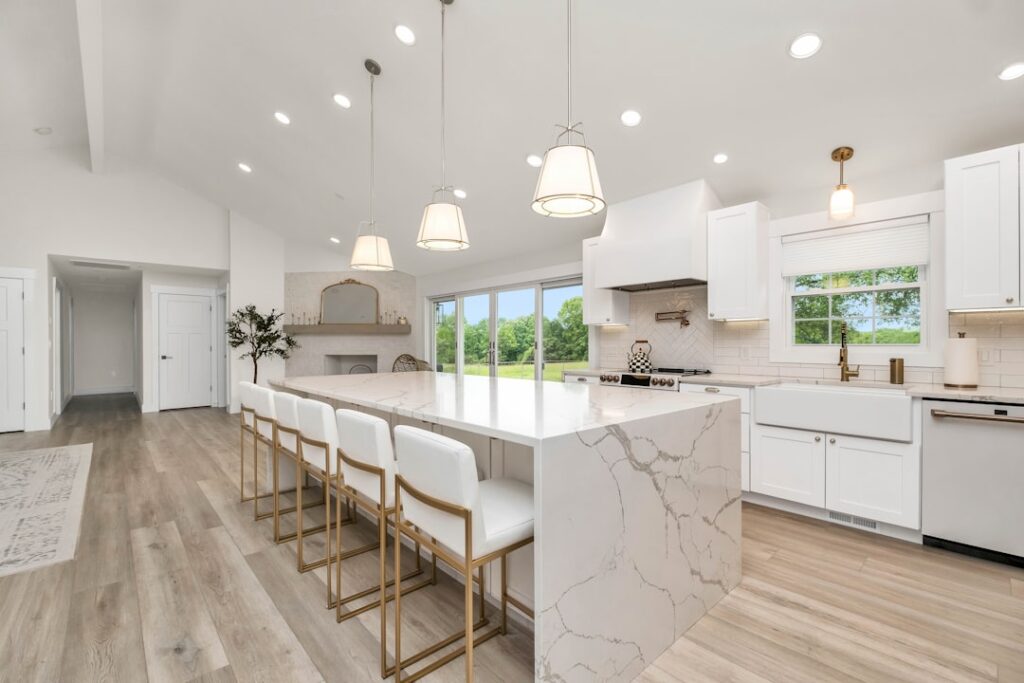
Putting a microwave in a kitchen island has become the second-most-requested upgrade in remodels behind beverage refrigerators, and the reason is simple: it frees up valuable upper cabinet space and keeps the appliance off the counter where it used to sit looking ugly. A built in microwave in island is more involved than swapping out an over-the-range model, but the design payoff is significant when the project is executed well. Costs run from $400 for a drawer microwave plus DIY install up to $2,800 for a premium model with electrical work and cabinet modifications by professionals.
Drawer Microwave Versus Trim Kit Build-In
Two design approaches dominate the island microwave category. Drawer microwaves like the Sharp SMD2470AS ($1,200) slide out horizontally from a 24-inch or 30-inch wide opening, which makes the controls accessible without bending awkwardly into a recessed cavity. The drawer style is the most ergonomic option and pairs especially well with island heights of 36 inches.
The trim kit approach uses a standard countertop microwave inside a matching kit that gives the unit a built-in look. A Whirlpool WMC30516HZ countertop unit ($230) plus trim kit ($120) runs about $350 versus $1,200 for the drawer style. The trim kit approach saves money but requires reaching forward and possibly down, which is less comfortable for daily use. Choose drawer if budget allows, choose trim kit if it does not.
Cabinet Modification Requirements
Drawer microwaves need a precise rough opening. The Sharp SMD2470AS requires a 24-inch wide by 15-inch tall opening with 23 inches of depth behind it. Cabinet manufacturers like KraftMaid, Wellborn, and Schrock offer pre-built microwave drawer cabinets in their semi-custom lines for an upcharge of $250 to $400 over a standard 24-inch base. The cabinet ships with a face frame matched to the appliance dimensions, which avoids the trial-and-error of modifying a stock base cabinet on site.
Trim kit installations need a slightly larger opening to accommodate the trim flange. Measure twice. Each trim kit specifies its own dimensions on the spec sheet, and the difference between a 1/8-inch tight fit and a 1/4-inch installable fit can mean cutting and patching after the fact if the cabinet was framed wrong.
Electrical Requirements and NEC Code
Standard residential microwaves draw 1,000 to 1,800 watts at 120 volts, which translates to 8 to 15 amps under load. NEC 210.23 requires the microwave on a dedicated 20-amp circuit when permanently installed, even though the same model might run from a shared circuit when used as a countertop unit. A dedicated 20-amp circuit needs 12 AWG wire and a 20-amp single-pole breaker.
Most kitchens have wiring that runs through the perimeter walls but not through the island. Running a new dedicated circuit to the island typically means routing 12/2 Romex through the floor system, which works fine in a basement or crawl space and gets complicated on a slab foundation. Slab installs often require trenching the concrete and pulling conduit, which adds $400 to $1,500 to the job. Budget for a licensed electrician at $400 to $800 for the circuit work alone.
Ventilation Concerns Most People Miss
Built-in microwaves vent through the bottom or front rather than the back. The rear of the appliance sits tight against finished cabinet panels, which means heat and cooking moisture have to escape through engineered vents. Drawer microwaves vent forward through the toe-kick area, while trim-kit installations vent through the trim slots above and below the appliance.
Blocking those vents with shelf paper, custom panels, or accumulated dust shortens appliance life dramatically. Most microwave failures attributed to “lemon units” trace back to obstructed ventilation in the install. Vacuum the vent slots quarterly with a soft brush attachment, and check that any custom panel fabrication leaves the manufacturer-specified clearance intact.
Plumbing and HVAC Considerations
Some islands include a prep sink, dishwasher, or beverage cooler in addition to the microwave. Coordinate plumbing and electrical rough-ins before any cabinets land. Water supply lines, drain lines, and the dedicated 20-amp microwave circuit all need to be routed through the floor system or stub up through the island floor at specified locations.
Air gap, P-trap clearance, and IPC code minimums apply just like a sink against a wall. Hire a licensed plumber if you are adding a sink to the island, especially on a slab foundation where chases need to be cut. Combined microwave-plus-sink island plumbing and electrical work typically runs $1,500 to $4,000 depending on access.
Step-by-Step Installation Outline
Once the rough-in is complete, the appliance itself installs in 60 to 90 minutes for a skilled DIYer with two helpers. Slide the microwave into the rough opening following manufacturer brackets. Most drawer models include leveling feet that adjust the unit to sit flush with adjacent cabinet faces. Connect the plug to the dedicated GFCI outlet (some jurisdictions require GFCI for island microwaves under NEC 210.8 even though the appliance is hardwired-like in placement).
Secure the unit to the cabinet using the manufacturer brackets. Sharp drawer units use four hex bolts that anchor into the cabinet sides through pre-drilled holes. Test operation with a cup of water heated for 1 minute, listening for unusual noises that would indicate a misaligned door or stressed wiring. Microwave drawers should glide open and closed with one hand and stop firmly at full extension.
Resale Value and Design Longevity
A drawer microwave in an island adds roughly $1,500 to $2,500 to resale value in markets where remodeled kitchens command premium pricing, according to data from Remodeling Magazine’s annual Cost vs Value report. The trim kit approach adds less, maybe $500 to $1,000, because buyers can tell the difference between a purpose-built solution and a workaround. Either approach beats keeping a microwave on the counter for resale purposes.
Design longevity is worth considering too. Drawer microwaves have been standard since the early 2010s in higher-end kitchens, and the design is mature enough that it does not read as a fad. Trim kit installations look slightly more dated as the surrounding kitchen ages because the proportions never integrate as cleanly. If you plan to stay in the home 10 years or more, the drawer microwave usually justifies its higher cost.