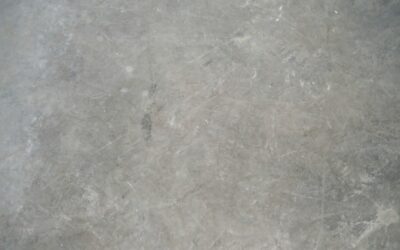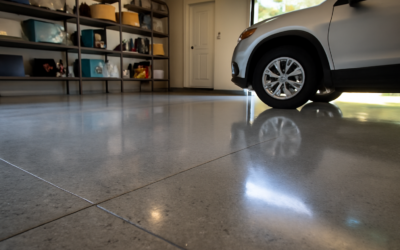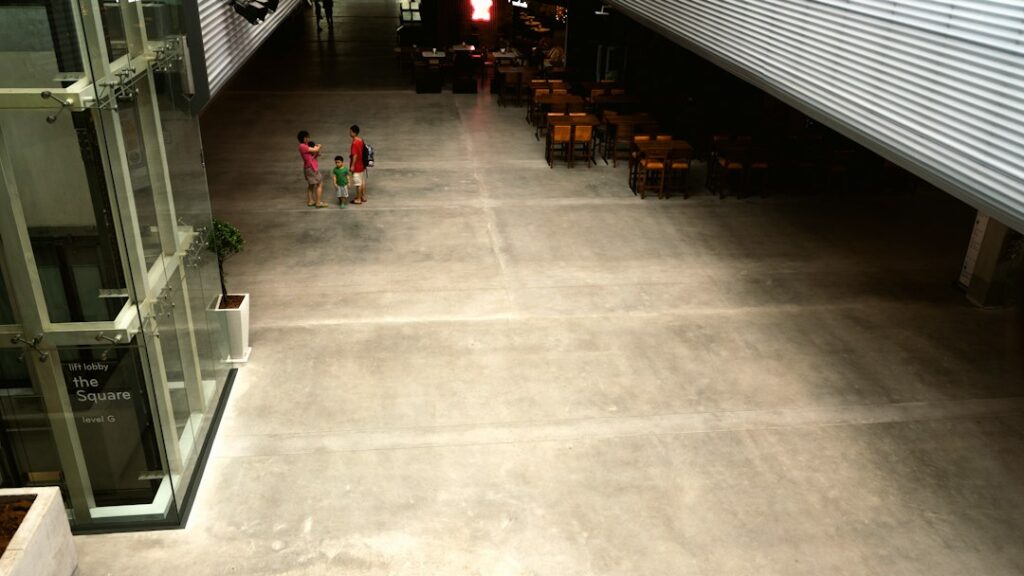
A shiny concrete floor does not always mean a fully ground and polished one. Burnished concrete floors get their sheen from high-speed buffing of the top surface, sometimes with a chemical densifier, rather than from a long sequence of diamond grinding passes. The result is a satin to semi-gloss finish that costs noticeably less and goes down much faster than a true polish.
Part of our Epoxy, Concrete & Garage Floors guide — explore the full guide →
The trade-off is depth. Burnishing works on the surface paste of the slab, so the look depends heavily on how the concrete was finished when it was poured. A flat, hard-troweled slab with few blemishes can burnish beautifully. A rough, patched or uneven slab usually cannot be fixed by buffing alone and needs grinding first.
- What Are Burnished Concrete Floors?
- Burnishing vs Full Diamond Polishing
- Is Your Slab a Good Candidate?
- Silica Dust and Equipment Safety
- How Burnishing Is Done
- Cost of Burnished Concrete
- Maintaining the Shine
- Troubleshooting a Burnished Finish
- When to Call a Pro, and When to Choose Polishing
- Frequently Asked Questions
Deciding between the two comes down to the slab you have, the sheen you want, how long you can keep the room out of service and what you are willing to spend. Basements, garages, shops and loft-style living spaces all have different answers.
What Are Burnished Concrete Floors?
Burnishing is the process of running a high-speed floor machine, typically spinning somewhere around 1,500 to 3,000 RPM, over cured concrete with resin or diamond-impregnated pads. The friction and heat tighten and smooth the very top of the slab, raising a reflective sheen. Many contractors spray a lithium or sodium silicate densifier first; it reacts with free lime in the concrete to harden the surface so it accepts a better shine and resists dusting.
There are two common versions. The first is burnishing newly placed concrete: the finisher hard-trowels the slab with a power trowel until it closes tight and starts to shine, a technique sometimes called a burned or burnished trowel finish. The second is burnishing an existing, cured slab, which is what most homeowners mean when they ask about buffing concrete floors or buffing cement floors in a house they already own.
Either way, you are not exposing aggregate or cutting into the slab. Any trowel marks, stains, small pits or color variations in the surface stay visible, and many people like that mottled, industrial character.
Burnishing vs Full Diamond Polishing
Diamond polishing grinds away the top layer of the slab with progressively finer metal-bonded and resin-bonded diamonds, often starting around 30 to 80 grit and finishing at 800 to 3,000 grit. That flattens the surface, can expose sand or larger aggregate, and produces a deep, mirror-like reflectivity. Burnishing skips the heavy grinding.
| Factor | Burnished | Diamond polished |
|---|---|---|
| Process | Densifier plus high-speed buffing | Multi-step grinding and honing |
| Sheen | Satin to semi-gloss | Semi-gloss to high gloss |
| Flattens defects | No | Yes |
| Time | Often 1 day | Several days |
| Relative cost | Lower | Higher |
Durability is closer than many people expect, as long as the surface is densified. A properly densified, burnished slab resists dusting and abrasion well. Polished concrete still wins on long-term gloss retention because the shine comes from a smooth, ground surface rather than a thin layer of compressed paste and, often, a guard coat.
Is Your Slab a Good Candidate?
Before you plan on burnished concrete floors, walk the slab with a bright flashlight held low to the surface. You are looking for the things a buffer cannot remove.
- Good candidates: hard-troweled garage, basement or shop slabs; newer construction slabs in good condition; floors where an industrial, mottled look is welcome.
- Poor candidates: broom-finished or rough slabs, floors with adhesive residue from old carpet or tile, deep pits or spalls, and slabs with large patches that will read as a different color.
- Coatings: paint, epoxy or old sealers must come off before burnishing, and removing them usually requires grinding anyway, which shifts the job toward polishing.
Older homes deserve one more check. Mastic under old vinyl or tile installed before the 1980s can contain asbestos; have residue tested before grinding or scraping it.
Silica Dust and Equipment Safety
Concrete contains crystalline silica. Burnishing a clean, sound slab creates relatively little dust, but any grinding, scraping or dry pad work releases fine silica dust that is harmful to breathe. Use wet methods where the product allows, connect grinders to a HEPA-filtered vacuum with a shroud, and wear a fitted N95 or P100 respirator plus eye protection during any dusty step. Clean up with a HEPA vacuum and damp mopping, never dry sweeping.
Large buffers and burnishers are heavy and torquey. Keep cords behind you, wear hearing protection with high-speed propane or battery machines, and only run propane units in areas with ample ventilation and a carbon monoxide alarm nearby. Indoors, an electric machine is the safer pick.
How Burnishing Is Done
Here is the typical sequence a flooring contractor follows on an existing slab. Experienced DIYers can rent equipment, but expect a learning curve.
- Clean deeply. Scrape off paint drips and drywall mud, degrease oil spots, and scrub the floor with an auto-scrubber or a floor machine and a neutral cleaner. Let it dry.
- Repair joints and small pits. Fill control joints with a semi-rigid filler and patch small holes, knowing patches will show some color difference.
- Apply densifier. Spray a lithium or sodium silicate densifier at the label rate, keep it wet for the dwell time with a microfiber pad, and remove any puddles before they dry into a white haze.
- Light honing if needed. On a slightly rough surface, one or two passes with fine resin diamond pads (around 400 to 800 grit) on a slow-speed floor machine can smooth it enough to take a shine.
- High-speed burnish. Run the burnisher with a fine diamond-impregnated or hogs-hair pad in overlapping passes. Heat builds the sheen; keep the machine moving so you do not leave swirls.
- Optional guard or stain-resistant coat. Many contractors apply a thin penetrating stain guard and burnish again for extra gloss and oil resistance.
On a two-car garage or a large basement, a crew with the right equipment can often finish in a day. Fully polished concrete in the same space can take three to five days.
Cost of Burnished Concrete
Burnishing usually lands well below full polishing because it uses fewer passes, fewer consumables and less labor. As a general range, professional burnishing of an existing slab is often priced at a low single-digit dollar amount per square foot, while polished concrete commonly costs two to three times more, especially at higher gloss levels or with exposed aggregate. Small jobs carry higher per-foot prices because of setup and minimum charges.
For DIY, the main costs are equipment rental (floor machine or burnisher by the day), pads, densifier and cleaner. That can make sense for a large shop floor if you are comfortable with heavy machines, but a poor result often costs more to fix than hiring out.
Maintaining the Shine
Treated concrete floors are low maintenance, but the sheen does dull with grit and heavy use. Daily or weekly dust mopping removes the abrasive sand that scratches the surface. Damp mop with a pH-neutral cleaner; acidic or harsh alkaline cleaners can etch the surface and strip guard coats. Wipe up oil, wine, vinegar and citrus quickly.
Every 6 to 12 months in a busy space, a quick pass with a burnisher and a fine pad restores much of the original gloss. Many homeowners rent a floor buffer for an afternoon or have a cleaning contractor handle it during a routine visit. Walk-off mats at doors catch grit before it reaches the floor, and felt pads under furniture prevent dragging marks.
Troubleshooting a Burnished Finish
- Uneven, blotchy sheen: the slab was finished inconsistently when poured, or densifier was applied unevenly. Re-densify and burnish again; deep variation needs light honing.
- White haze: densifier dried on the surface. Scrub with a fine pad and clean water, then reburnish.
- Swirl marks: the machine paused or pads were loaded with debris. Change pads and make slower, overlapping passes.
- Dusting surface: the slab is soft; add densifier before burnishing.
- Shine fades fast: grit is getting in. Add mats, dust mop more often, and schedule periodic burnishing.
When to Call a Pro, and When to Choose Polishing
Hire a concrete polishing contractor if the slab needs coatings removed, has lippage or large patches, or if you want a high-gloss or exposed-aggregate look. Those jobs require grinding equipment, dust control and experience reading the slab. A pro is also smart for living spaces where swirl marks or haze would bother you.
Choose burnishing when the slab is already in decent shape, the budget is tight, and a satin, character-rich finish suits the space. Basements, garages, workshops and loft-style rooms are classic fits. For many homeowners, burnished concrete floors deliver most of the polished look at a fraction of the time and cost.
Frequently Asked Questions
Is burnished concrete the same as polished concrete?
No. Burnishing buffs the existing top surface at high speed, often with a densifier, while polishing grinds and hones the slab with progressively finer diamonds. Polishing removes defects and reaches higher gloss.
How long do burnished concrete floors stay shiny?
With regular dust mopping and neutral cleaners, the sheen typically holds for months in a busy area and longer in light-use rooms. A periodic reburnish every 6 to 12 months restores it.
Can I burnish an old garage floor myself?
You can if the slab is smooth and free of coatings. Rent a floor machine or burnisher, clean thoroughly, apply densifier and work slowly. Rough or coated floors need grinding, which is better left to a contractor.
Is burnished concrete slippery?
A satin burnished finish is usually no more slippery than sealed concrete when dry. It can get slick when wet or dusty, so use mats at entries and wipe spills promptly.
Does burnishing seal the concrete?
Burnishing alone does not seal it, but a densifier hardens the surface and many contractors add a penetrating stain guard that improves resistance to oil and water.
Can burnishing hide cracks and stains?
No. Burnishing makes the surface reflective, which can actually highlight cracks, patches and stains. Many owners accept them as part of the industrial look.