
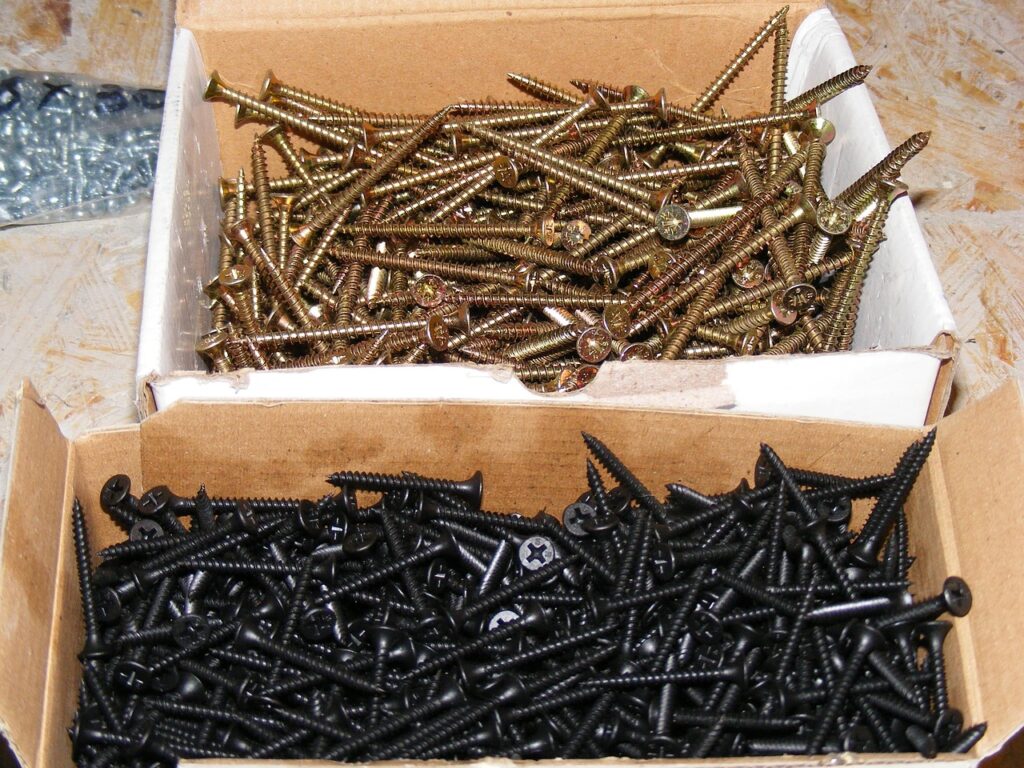
You bought beautiful new knobs, started installing, and hit a wall: the screws are too short to reach through your thick cabinet doors, or they spin uselessly in a stripped hole. Cabinet hardware screws are the tiny, overlooked detail that can stall an entire kitchen refresh. They follow a standard thread size, but length, head type, and quality vary in ways that matter. Get the specs right and installation is effortless; get them wrong and you are making an extra trip to the hardware store.
Part of our Kitchen Remodeling guide — explore the full guide →
The Universal Thread Size: 8-32
Nearly all cabinet knobs and pulls in North America use a #8-32 machine screw. The “8” is the screw diameter and the “32” means 32 threads per inch. This standardization is great news: a knob from one brand will thread onto a screw from another. If you lose the screws that came with your hardware, any 8-32 machine screw from the hardware store fits.
Machine screws differ from wood screws. They have uniform, fine threading meant to bite into the tapped hole inside a knob or a threaded insert, not to grip raw wood. Never substitute a pointed wood screw for a cabinet knob.
Getting the Length Right
Length is where most people get stuck. The screw must pass through the cabinet door or drawer front and still have enough thread to seat fully into the knob. Standard hardware ships with screws around 1 inch long, sized for typical 3/4-inch fronts.
- Standard doors (5/8 to 3/4 inch): 1 inch screws, usually included
- Thick or double-front drawers (1 to 1.25 inch): 1.25 to 1.5 inch screws
- Shaker or applied-molding fronts: may need 1.5 inch or longer
- Backer plates or thick pulls: add length to cover the extra thickness
Measure your door thickness with calipers or a ruler, then add the depth the knob’s threaded hole needs, usually about 3/8 inch. Buy an assortment pack if your kitchen mixes door thicknesses.
Break-Away Screws for Thick Fronts
One clever solution for varying thicknesses is the break-away screw. These have scored notches every quarter inch so you can snap them to length with pliers. A single break-away screw covers doors from about 3/4 inch up to 2 inches thick. They are a lifesaver when your cabinet fronts vary or when you are installing pulls with backing plates.
To use one, thread it into the knob, hold it against the door to gauge how much sticks out the back, then snap off the excess at the nearest notch. Buy a small pack for a few dollars and keep them on hand.
Head Types and Finishes
Cabinet hardware screws come with different heads. Truss and pan heads are the most common. A truss head is wider and low-profile, distributing pressure and sitting flush against the back of the door. Most machine screws use a Phillips drive, though some higher-end hardware uses a combination or square drive.
Screws come in finishes to match hidden hardware, but since these mount from behind the door, appearance rarely matters. Plain zinc-plated steel is standard and fine. If a screw head will be visible, such as on some exposed handle designs, match the finish to the hardware.
Fixing Stripped Screw Holes
A hole that spins the screw without tightening is a stripped or oversized hole, common when reusing old hardware locations. You have a few reliable fixes:
- Toothpick trick: dab wood glue on a few toothpicks, jam them into the hole, snap them flush, let dry, then re-drill and screw. This restores grip for a couple dollars.
- Larger screw: if the hole passes all the way through, the machine screw threads into the knob, not the wood, so a stripped through-hole often just needs the correct length, not more grip.
- Threaded insert: for a permanent fix, install a brass threaded insert sized for an 8-32 screw.
Most cabinet knob holes go all the way through the door, so the machine screw grips the metal knob rather than the wood. That means a spinning screw is usually a length problem, not a stripping problem.
Tools That Make It Easier
A hardware installation jig, around $20, drills perfectly aligned holes for new hardware and takes the guesswork out of spacing. A manual screwdriver beats a power drill for the final tightening, since it is easy to over-torque and crack a decorative knob or strip the threads with a drill.
Keep a small magnetic parts tray nearby. Cabinet screws are tiny and roll off counters into oblivion, and losing three of them mid-project is a real hazard.
Metric vs. Standard: A Rare Catch
Nearly all hardware sold in North America uses the standard 8-32 thread, but a small number of imported knobs and pulls use metric M4 screws. The two look almost identical but do not interchange; force an 8-32 into an M4 knob and you cross-thread and ruin both. If a screw threads on for a turn or two and then binds hard, suspect a metric mismatch.
Keep the original screws that came with imported hardware, and if you must replace them, take one to the store to match the thread exactly. For the overwhelming majority of hardware, though, 8-32 is your answer and any hardware store stocks it.
Screws for Backplates and Handles
Some pulls come with decorative backplates, and cup pulls or exposed-mount handles may use their own screw setup. Backplates add thickness, so factor that extra 1/8 to 1/4 inch into your screw length just as you would a thick door. Handles that mount from the front with visible screws need finished screw heads that match the hardware, unlike hidden knob screws where appearance does not matter.
When in doubt, dry-fit the hardware with the screw before drilling anything permanent. Hold the piece in place, thread the screw, and confirm it seats fully with a thread or two to spare. That 30-second check saves you from stripped holes and repeat trips.
Buying Tips
When ordering hardware, check whether screws are included; most reputable brands include one length. For a whole-kitchen project with mixed door thicknesses, buy a dedicated assortment pack of 8-32 screws in lengths from 3/4 inch to 2 inches, plus a pack of break-away screws. For under $15 you will have every situation covered and avoid the mid-install hardware-store run that derails a productive weekend. The right cabinet hardware screws are cheap insurance for a smooth, professional installation.


