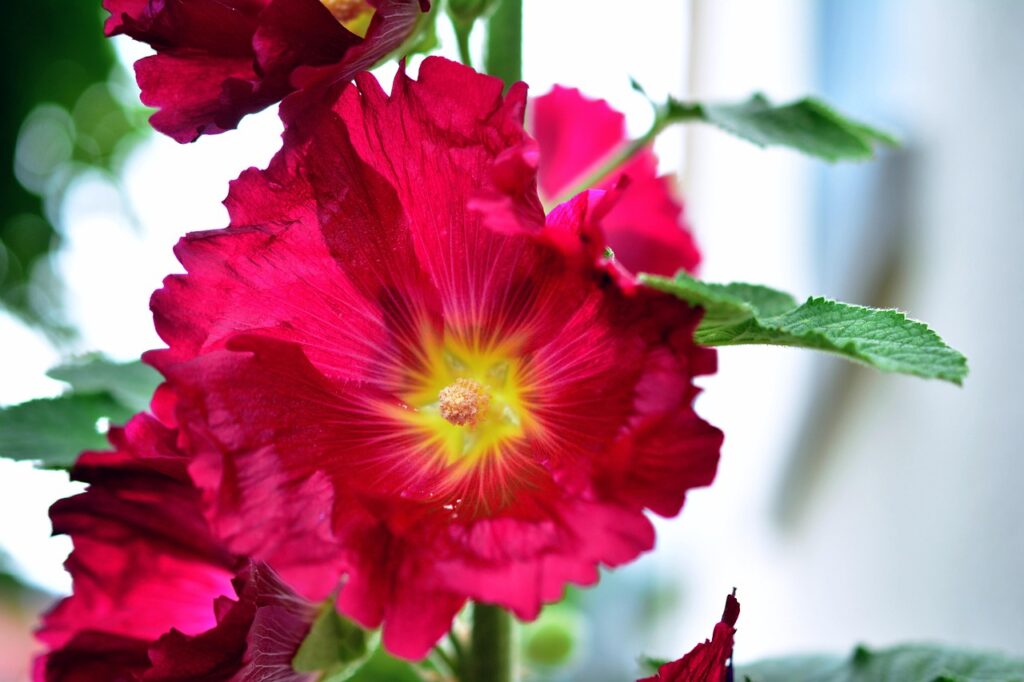
Those towering spires of cottage-garden blooms look like they belong against a sunny fence, and there’s a reason for that. So can hollyhocks grow in shade? The honest answer is yes, but with real trade-offs. Hollyhocks are sun lovers at heart, and while they’ll survive in partial shade, they won’t perform the way they do in full sun. Understanding exactly how shade affects these dramatic biennials helps you decide whether that dappled corner of your yard is worth a try.
- How Much Sun Hollyhocks Really Want
- What Shade Does to Your Hollyhocks
- Best Conditions for Partial Shade Success
- Caring for Hollyhocks in Lower Light
- Better Alternatives for Truly Shady Spots
- Planting and Establishing Hollyhocks
- The Bottom Line on Shade and Hollyhocks
- Understanding the Biennial Life Cycle
How Much Sun Hollyhocks Really Want
Hollyhocks (Alcea rosea) thrive in full sun, which means at least six hours of direct light per day. In their ideal conditions, they shoot up 5 to 8 feet tall and produce dense columns of saucer-sized flowers from early summer into fall.
That said, they’re more flexible than many sun-loving perennials. Hollyhocks tolerate partial shade, roughly three to six hours of direct sun, particularly in hot southern climates where some afternoon shade actually protects them from scorching. The further you drop below six hours, though, the more the plant’s vigor declines.
What Shade Does to Your Hollyhocks
Less light changes how hollyhocks grow in predictable ways. Plants in too much shade tend to stretch and become leggy, reaching desperately toward whatever light they can find. This weak, elongated growth makes the tall stalks more likely to flop over without staking.
Flowering suffers most. Shaded hollyhocks produce noticeably fewer blooms, and the flowers that do appear may be smaller and less vibrant. You may also see more disease, because shade keeps foliage damp longer and hollyhocks are notoriously prone to rust fungus, which spreads fast in low-light, humid conditions.
Best Conditions for Partial Shade Success
If shade is what you have, a few choices stack the odds in your favor. Aim for a spot that gets morning sun and afternoon shade rather than deep, all-day shade. Morning light dries the leaves quickly, which helps prevent the rust disease hollyhocks are so susceptible to.
Choose a location with good air circulation and avoid crowding plants together. Space them 18 to 24 inches apart so air moves freely around the foliage. Rich, well-draining soil amended with compost gives shade-stressed plants the nutrients they need to push out as many blooms as possible despite the lower light.
Caring for Hollyhocks in Lower Light
Shade-grown hollyhocks need a little extra attention to look their best. Water at the base in the morning rather than overhead, keeping the leaves as dry as possible to fight off rust and fungal spots.
Stake the tall stalks early in the season, since shaded plants grow weaker and flop more easily. Remove any rust-spotted lower leaves promptly and clear away debris at the base, where fungal spores overwinter. A balanced fertilizer in spring supports stronger growth, helping the plant compensate for the energy it loses to reduced photosynthesis.
Better Alternatives for Truly Shady Spots
If your space gets fewer than three hours of sun a day, hollyhocks will struggle no matter what you do, and you’ll likely be disappointed by sparse, floppy plants. In that case, consider true shade-loving tall plants that deliver similar cottage-garden drama.
- Foxgloves: Tall flower spires that genuinely prefer partial to full shade.
- Astilbe: Feathery plumes that thrive in moist, shaded beds.
- Ligularia: Bold foliage and yellow spikes built for shade.
- Bleeding heart: Arching stems of heart-shaped blooms for dappled light.
Planting and Establishing Hollyhocks
Whether in sun or partial shade, giving hollyhocks a strong start improves their odds. As biennials, they typically grow leafy foliage the first year and bloom the second, then reseed themselves to keep the display going year after year.
Sow seeds in late spring or early summer, pressing them just below the soil surface since they need some light to germinate. Space plants 18 to 24 inches apart in soil amended with compost, and water consistently while they establish. Plant against a fence or wall that offers some support and reflected warmth, which helps shade-grown plants in particular. Once established, hollyhocks have a deep taproot and dislike being transplanted, so choose the spot carefully.
Managing Rust and Other Diseases
Rust is the defining challenge for hollyhocks, and shade makes it worse by keeping foliage damp. The disease shows as orange-brown pustules on the undersides of leaves, spreading upward and weakening the plant. Vigilance keeps it manageable.
- Water at the base: Keep foliage dry to deny the fungus the moisture it needs.
- Remove infected leaves: Strip and discard rust-spotted lower leaves promptly, never composting them.
- Improve airflow: Space plants generously so leaves dry quickly after rain or dew.
- Clean up in fall: Clear all debris where spores overwinter near the base.
- Apply fungicide if needed: A sulfur or copper spray helps in persistent cases.
The Bottom Line on Shade and Hollyhocks
So when someone asks can hollyhocks grow in shade, the realistic answer is that partial shade is workable but full shade is not. With three to six hours of sun, good airflow, and morning light to dry the leaves, you can grow respectable hollyhocks, though they’ll be a bit taller, floppier, and less floriferous than their full-sun cousins. For a spot with less light than that, you’ll be far happier choosing a plant that actually loves the shade.
Understanding the Biennial Life Cycle
Part of growing hollyhocks successfully, in any light, is understanding that they aren’t typical perennials. Most common hollyhocks are biennials, meaning they live for two growing seasons. The first year they put their energy into a low rosette of leaves and a strong root system, and the second year they shoot up, bloom, set seed, and then decline.
This cycle confuses gardeners who expect flowers the first summer and assume the plant failed when it doesn’t bloom. The trick to a continuous display is succession: let some flowers go to seed each year so new plants are always coming up behind the maturing ones. Within a couple of seasons, you’ll have a self-sustaining patch with plants in both stages, and your bed produces blooms every single year. In shadier spots, where growth is slower, this natural reseeding is even more valuable for keeping the display going.