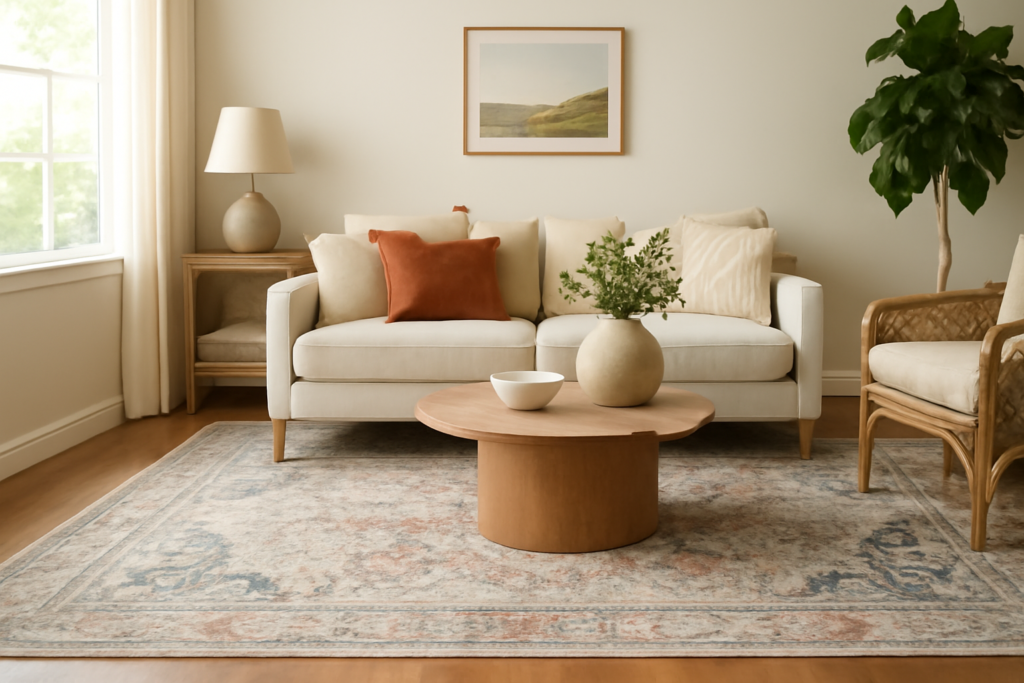
A rug can pull a room together faster and cheaper than almost any other change you make, and coastal-inspired designs are having a moment in American homes. The Capitola rug is a name you’ll find across several home brands, usually attached to a relaxed, casual style borrowed from the easygoing California beach town it’s named after. Whether you’re eyeing one for a sunroom, a back porch, or a living room that needs to feel a little more laid-back, this guide covers what the name typically means, how to size it, and how to keep it looking good.
What the Capitola Name Usually Means
“Capitola” is a style name rather than a single manufactured product, so you’ll see it used by different retailers for rugs that share a coastal, casual sensibility. In most cases it points to a design with soft neutral grounds, subtle stripes or geometric borders, and a texture-forward weave. Some Capitola lines are flatwoven, some are looped or braided, and a good number are marketed as indoor-outdoor rugs made from polypropylene. Because the name is reused, always read the product’s fiber content and construction on the spec sheet, that’s what determines durability and care, not the name on the tag.
The through-line is a beachy, unfussy look, sandy tans, soft grays, faded blues, and off-whites that work with rattan, linen, and weathered wood furniture.
Common Materials and What They Mean for You
The fiber decides almost everything about how a rug performs. Here’s what you’ll typically find in a Capitola rug and how each behaves:
- Polypropylene (olefin): the most common for indoor-outdoor versions. Fade-resistant, sheds water, and cleans with a hose. Great for porches, entryways, and homes with kids or pets.
- Jute or sisal: natural, textured, and eco-friendly, but hates moisture. Keep these indoors and away from spills.
- Wool: soft, resilient, and naturally stain-resistant, but pricier and best in low-moisture living areas.
- Polyester or blends: plush underfoot and budget-friendly, though they flatten faster in high traffic.
If the space sees sun, moisture, or heavy foot traffic, a polypropylene weave is the safe bet. Save natural fibers and wool for formal, protected rooms.
Choosing the Right Size
Size is where most people go wrong. A rug that’s too small makes a room feel choppy and cheap. Use these standard footprints as a starting point:
- Living room: an 8×10 foot rug lets the front legs of the sofa and chairs sit on the rug; a 9×12 lets all legs sit on it for a more grounded look.
- Under a dining table: pick a rug at least 24 inches wider than the table on all sides so chairs stay on the rug when pulled out. A 60-inch round table wants an 8-foot round rug.
- Bedroom: a 9×12 under a queen or king bed leaves a soft border of rug on three sides.
- Entryway or porch: a 5×7 or 6×9 handles most doorways and reading nooks.
Tape out the dimensions on the floor with painter’s tape before you buy. Seeing the actual footprint saves you from a costly return.
Indoor-Outdoor Versatility
The biggest selling point of many Capitola rugs is that they cross the threshold. A polypropylene weave rated for outdoor use shrugs off UV fading far better than natural fibers and can live on a covered patio, a screened porch, or a poolside deck. It won’t rot from occasional rain, and a quick rinse with the garden hose clears off pollen and dust.
Two cautions, though. “Outdoor-rated” doesn’t mean “leave it in standing water,” so let the rug dry fully after a soaking to prevent mildew where it meets the deck. And even fade-resistant synthetics lose color over years of direct desert or coastal sun, so a shaded spot extends the life considerably.
Styling a Capitola Rug at Home
The coastal-casual palette is forgiving, which is why designers reach for it. In a living room, a sandy striped Capitola grounds a slipcovered sofa and pairs naturally with rattan side tables and linen pillows. On a covered patio, it turns hard concrete or composite decking into an outdoor room, add a couple of lanterns and it reads finished. In a kitchen or laundry, a runner version softens the space and gives you something easy to hose off.
Keep the rest of the room’s textures natural and the color story quiet. This style shines when it isn’t competing with bold, saturated furniture. If your space skews modern, choose a Capitola with a cleaner geometric stripe rather than a busy border.
Pricing and Where It Fits
Casual coastal rugs span a wide price range depending on fiber and size. A synthetic indoor-outdoor Capitola in a 5×7 typically runs $60 to $150, while an 8×10 lands around $150 to $350. Natural jute or wool versions cost more, often $300 to $700 for an 8×10 because of the material and hand-work involved. Compared with a hand-knotted wool rug that can run into the thousands, a Capitola is a mid-range, high-value pick, especially the synthetic versions that hold up to real family life.
Buy a rug pad while you’re at it. A quarter-inch felt-and-rubber pad, roughly $30 to $60 for an 8×10, keeps the rug from sliding, protects your floor, and adds cushion that makes even a thin flatweave feel better underfoot.
Cleaning and Care
Care depends entirely on fiber. For a polypropylene Capitola rug, vacuum regularly, spot-clean spills with mild soap and water, and hose it down outdoors a few times a season, standing it on edge to drip-dry. Avoid a stiff brush on looped weaves, which can pull the loops. For jute or sisal, never soak them; blot spills immediately and use a dry-cleaning powder, since water leaves rings and can distort the weave. Wool responds well to a professional cleaning every year or two and resists staining better than you’d expect in the meantime.
Rotate any rug 180 degrees every few months so sun fading and foot traffic wear evenly. Do that, keep it out of standing water, and a well-chosen Capitola rug will look good for a solid five to ten years.
Layering and Placement Tricks
One reason coastal rugs are so easy to work with is that they layer beautifully. A smaller patterned Capitola dropped over a large natural jute rug adds depth and defines a seating zone without buying a single oversized rug, a designer move that also cushions a scratchy sisal underfoot. In an open floor plan, use two coordinating rugs to visually separate the living and dining areas; keeping them in the same tonal family keeps the space from feeling chopped up.
Watch the transitions between rooms. If a runner version meets a doorway, make sure the pile height won’t catch a swinging door, most flatwoven Capitola runners sit low enough at around a quarter inch to clear a standard interior door. In a hallway, leave 4 to 5 inches of bare floor on each side so the runner reads as intentional rather than wall-to-wall carpet.
The two most common mistakes are buying too small and buying the wrong fiber for the room. A 5×7 marooned in the middle of a big living room looks like a postage stamp; when in doubt, size up. And a gorgeous jute Capitola in a mudroom will be ruined by the first wet boot, moisture is jute’s enemy. Match the fiber to the reality of the space, not just the look you want.
The third mistake is skipping the rug pad. It feels like an optional add-on, but a good pad extends a rug’s life by years, keeps it from creeping across the floor, and protects hardwood from the abrasive backing of a synthetic weave. On any rug you plan to keep, budget for the pad up front.