The spot where carpet meets tile, where it stops at a doorway, or where a stair runner ends is exactly where a flooring job looks either professional or amateur. Carpet edge trim is the strip of metal, vinyl, or wood that covers those raw edges, holds the carpet down, and creates a clean, safe transition between floors. Without it, carpet edges fray, unravel, and curl into a tripping hazard within months. Picking the right profile for each situation is a small detail that has an outsized effect on how finished a room feels, and it is one of the more approachable parts of a flooring project for a DIYer.
Why Edge Trim Matters
Carpet is essentially fabric, and like any fabric, a cut edge wants to unravel. Edge trim solves three problems at once. It physically grips and anchors the carpet so the edge cannot lift or fray. It bridges the height difference between carpet and a harder, often lower floor so nobody catches a toe. And it gives the eye a crisp, intentional line instead of a ragged seam. In doorways especially, that strip is what stops the carpet from peeling back every time someone walks through.
Beyond function, the right trim ties two flooring materials together visually, which is why color and finish choices matter as much as the profile itself.
The Main Types of Carpet Trim
Different transitions call for different profiles. Using the wrong one is the usual reason a transition looks clunky or fails early.
- Carpet-to-tile (Z-bar or carpet trim) — A metal strip with a vertical lip and gripping pins that hold the carpet edge while a flat face covers the tile edge. The workhorse for joining carpet to a higher hard floor.
- Carpet-to-carpet seam trim — A narrow divider used where two different carpets meet, common between rooms with different colors.
- Tack strip and gripper edge — Thin wood or metal strips with angled pins that anchor the carpet near walls and transitions, hidden under the carpet itself.
- Stair nosing and binding — Trim and sewn or glued binding tape that finishes the exposed edges of stair runners and area-rug-style carpet.
- Transition or reducer strips — Sloped pieces that ramp down from thick carpet to a thinner floor like vinyl or laminate.
Choosing the Right Material
Trim comes in several materials, and the choice balances looks, durability, and cost. Aluminum and other metals are the most durable, taking heavy foot traffic in doorways and high-use areas without bending, and they come in finishes from satin nickel to brass to bronze. Vinyl and rubber trims are softer, quieter, and cheaper, and they flex to follow slightly uneven floors, making them a good fit for basements and budget jobs. Wood and wood-look trims match hardwood and laminate floors for a seamless, upscale transition, though they cost more and demand more careful fitting.
Match the finish to your room’s hardware where you can. A brushed-nickel transition strip next to brushed-nickel door hardware reads as deliberate and polished.
How to Install Carpet Edge Trim
A clean transition is well within reach for a careful homeowner with basic tools. The key is a tight, straight cut and firm anchoring.
- Measure the opening and cut the trim to length with a hacksaw for metal or a fine-tooth saw for wood, easing the cut ends so they are smooth.
- Position the trim so its gripping edge sits where the carpet will tuck under, and mark its location.
- For pinned metal trim, set the carpet edge over the pins, then tap the metal lip down with a rubber mallet and a block of wood to grip the fibers without crushing them.
- Fasten the trim to the subfloor with the appropriate screws or nails, or use construction adhesive on concrete.
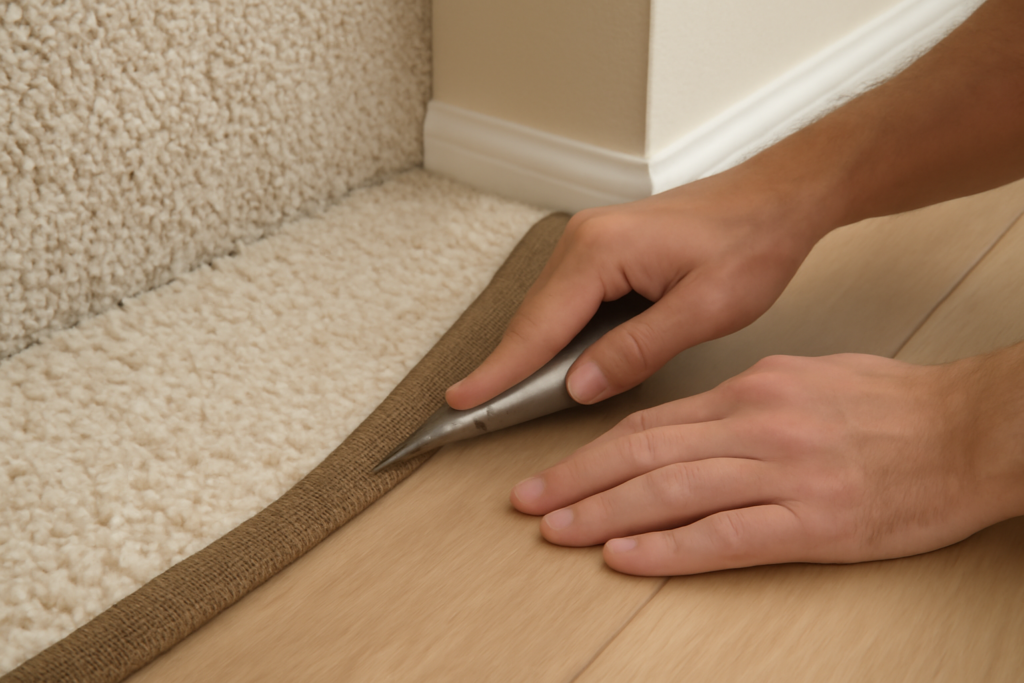
- Tuck the carpet edge firmly into the channel with a stiff putty knife so no raw fibers show.
Common Mistakes to Avoid
A few errors show up again and again. Cutting the carpet too short leaves a gap the trim cannot hide, so always cut long and trim to fit. Hammering metal trim directly with a steel hammer dents and scratches the finish; use a block of wood or a rubber mallet. Forgetting to account for carpet thickness when choosing a profile leads to a strip that sits too high or too low, creating the exact trip hazard you were trying to prevent. And skipping the tack strip near the transition lets the carpet creep and pull away over time. Measure the carpet’s pile height and backing thickness before you buy the trim, not after.
What It Costs
Carpet edge trim is one of the cheaper line items in any flooring job. Vinyl and basic metal transition strips run roughly $5 to $20 per piece for a standard doorway width, while premium metal finishes and wood trims cost $20 to $50 or more. Bulk rolls of binding tape for finishing rug and runner edges are inexpensive. Professional installation, if bundled into a larger carpet job, often adds little, but a standalone trim install might run $30 to $75 per transition in labor. For a whole-house carpet project, transitions typically add a modest amount to the total, money well spent given how much they protect the carpet and improve the finished look. Get the profile and height right, anchor it firmly, and your carpet edges will stay crisp and safe for the life of the floor.
Matching Trim to the Floor on the Other Side
The transition’s job is to bridge two materials, so the floor on the far side of the threshold drives the choice. Carpet meeting tile is usually the biggest height jump, since tile and its mortar bed often sit higher, so a carpet-to-tile trim with a tall covering lip handles that gap. Carpet meeting hardwood or laminate is a gentler step, where a wood-look reducer that ramps down looks most natural. Carpet meeting vinyl or a thinner floor may need a low-profile reducer so nobody catches a toe. When the adjoining floor is lower than the carpet, a reducer slopes down to it; when it is roughly even, a flat T-molding-style divider works. Take the height of both floors into account before choosing, and the transition will feel smooth underfoot rather than like a speed bump.
Finishing Rug and Runner Edges
Edge trim is not only for room-to-room transitions. When you cut a piece of broadloom carpet into an area rug or a stair runner, the raw cut edges need finishing or they unravel fast. Carpet binding tape, applied with adhesive or sewn on, wraps the edge in a clean fabric border and is the most common solution, available in colors to match or contrast the carpet. Serging, a thick overlocked yarn stitched around the edge, gives a more upscale, hand-finished look. For stairs, the runner’s side edges are typically bound, and the runner is anchored at the back of each tread with tackless strip or staples hidden in the crease. Finishing these edges properly is what turns a leftover carpet remnant into a durable, custom-looking rug or runner that holds together for years.