Carpet does a great job of trapping things you would rather not have underfoot: bacteria, dust mites, pet dander, allergens, and the odors that come with them. A surface vacuum lifts the loose debris, but it does not address what is living deep in the fibers, which is where a carpet sanitizer comes in. Sanitizing goes a step beyond cleaning by reducing germs and neutralizing odor-causing organisms in the carpet. For homes with pets, kids, or allergy sufferers, the right sanitizer can make a real difference in how fresh and healthy a room feels. This guide covers the types, how to use them, and how to keep pets safe in the process.
Cleaning vs. Sanitizing vs. Disinfecting
These terms get used loosely, but they mean different things. Cleaning removes visible dirt and debris. Sanitizing reduces the number of germs to a safer level. Disinfecting aims to kill a higher percentage of germs and pathogens. A carpet sanitizer focuses on knocking down bacteria and the microorganisms behind odors, often while also cleaning the fibers. For most homes, regular cleaning plus periodic sanitizing keeps carpet fresh; full disinfection is usually reserved for illness or accidents.
Why Sanitize Your Carpet
There are several good reasons to sanitize, especially in active households:
- Pet accidents and odors: Urine and other accidents leave bacteria that cause lingering smells even after cleanup.
- Allergens: Dust mites, dander, and pollen build up in carpet and can aggravate allergies and asthma.
- High-traffic germs: Entryways and living areas collect bacteria tracked in from outside.
- Odor control: Sanitizing tackles the source of smells rather than just masking them.
- Households with kids: Babies and toddlers spend a lot of time on the floor.
Types of Carpet Sanitizers
Carpet sanitizing products and methods come in several forms:
- Spray sanitizers: Ready-to-use or concentrated liquids you mist onto the carpet, useful for spot treatment and odor zones.
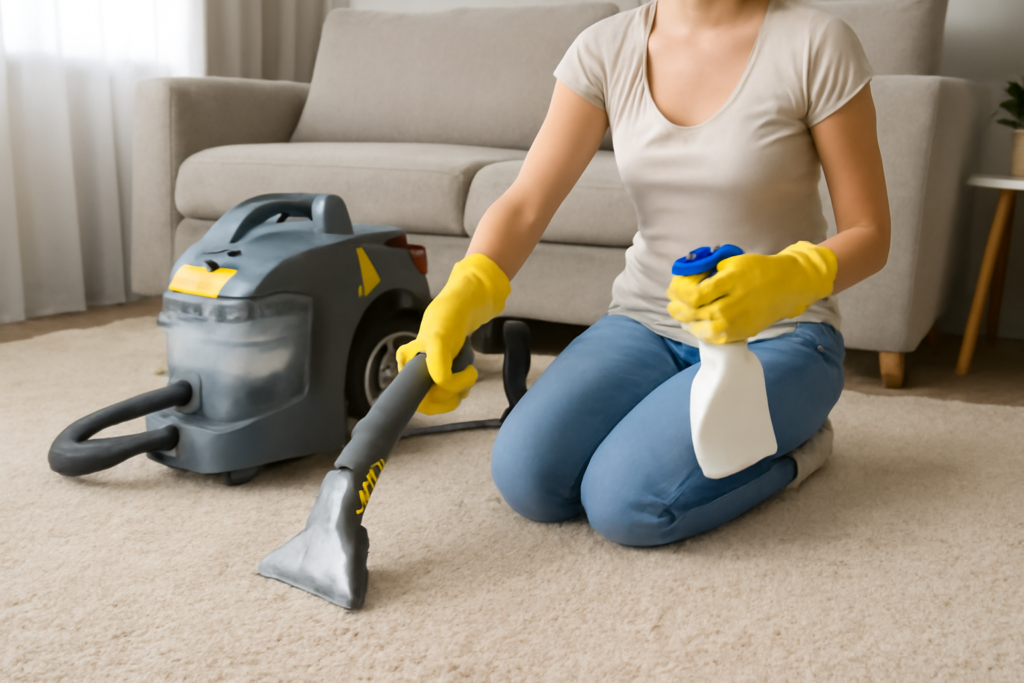
- Machine sanitizing solutions: Formulas added to a carpet cleaning machine for whole-room treatment with extraction.
- Steam cleaning: Hot water extraction reaches deep and uses heat to reduce germs and dust mites, often with little or no chemical.
- Powder and granular treatments: Sprinkled on, worked in, and vacuumed up, mainly for odor control.
- Enzyme-based cleaners: Use natural enzymes to break down organic matter, especially effective on pet odors.
Choosing the Right Product
Match the sanitizer to your main concern. For pet odors and stains, an enzyme-based cleaner that breaks down the organic source works better than a fragrance-heavy spray. For allergy households, steam cleaning with hot water extraction reduces dust mites and allergens with minimal residue. For routine freshening, a machine sanitizing solution covers the whole floor. Always confirm the product is rated for your carpet type, since some treatments are not suited to wool or other delicate fibers.
How to Use a Carpet Sanitizer
Good technique makes the treatment effective and avoids leaving residue or moisture problems:
- Vacuum thoroughly first to remove loose dirt, hair, and debris so the sanitizer can reach the fibers.
- Test the product on a hidden area to check for colorfastness before treating the whole carpet.
- Apply the sanitizer per the label, whether spraying, running a machine, or steam cleaning.
- Allow the recommended dwell time so it can actually work on germs and odors.
- Extract or blot up moisture, then dry the carpet quickly using fans or open windows.
- Vacuum again once dry if you used a powder treatment.
Fast, thorough drying is important, since carpet left damp can develop mildew and its own odors.
Keeping Pets Safe
If you have pets, take a few precautions. Choose products labeled pet-safe or pet-friendly, and look for non-toxic enzyme cleaners for accident areas. Keep pets and children off the treated carpet until it is fully dry, since wet chemical residue is more accessible and some animals will lick or chew the carpet. Ventilate the room well during and after treatment. Steam cleaning with little or no chemical is one of the most pet-friendly options because it relies mostly on heat and water. Always read and follow the product’s safety instructions.
How Often to Sanitize
Frequency depends on your household. A home with multiple pets and allergy sufferers may benefit from sanitizing high-traffic areas every few months and a full deep clean once or twice a year. Lower-traffic homes can stretch deep sanitizing to once a year. Spot-treat pet accidents and spills right away regardless of schedule, since prompt treatment prevents odors and stains from setting. Regular vacuuming between treatments keeps debris from accumulating in the first place.
Tackling Pet Odors at the Source
Pet odors deserve special attention because they come back if you only treat the surface. When a pet has an accident, urine soaks through the carpet into the pad and sometimes the subfloor, and ordinary cleaners leave behind the compounds that bacteria feed on to produce that stubborn smell. Enzyme-based sanitizers are the most effective answer because the enzymes actually break down the organic residue, removing the food source for odor-causing bacteria rather than masking it. For best results, saturate the affected area enough to reach the full depth of the contamination, give the enzymes plenty of dwell time, and let the spot dry thoroughly. Repeat treatments may be needed for older or repeated accident spots.
DIY Sanitizing vs. Professional Service
For routine freshening and minor pet or allergen issues, DIY sanitizing with a spray, a rental machine, or a home carpet cleaner is practical and economical. Professional service makes sense for deep-set odors, large-scale contamination, delicate carpets like wool, or when allergies are severe and you want a thorough hot water extraction. Professionals have higher-powered equipment that reaches deeper and extracts more moisture, which means faster drying and a more complete result. A reasonable middle ground for many homes is regular DIY sanitizing between annual or semiannual professional cleanings.
Is a Carpet Sanitizer Worth It?
For households with pets, kids, or allergies, a carpet sanitizer is a worthwhile addition to your cleaning routine. It addresses the germs, allergens, and odor sources that ordinary vacuuming leaves behind, making the whole room feel and smell cleaner. Pick a product suited to your carpet and your main concern, follow safe application and drying practices, and keep pets off until it is dry. Done regularly, sanitizing keeps your carpet healthier and extends the time between costly professional deep cleans.