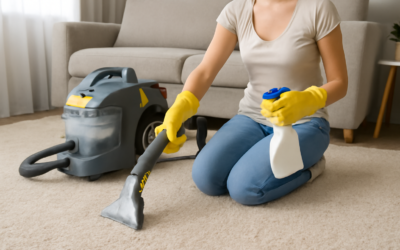
You do not need to rent a heavy machine to get your carpet genuinely clean. Knowing how to sanitize carpet without a steam cleaner is about pairing the right products, baking soda, vinegar, and an appropriate disinfectant, with good technique and enough dwell time to actually kill germs and lift odors. Everything needed fits in a cleaning caddy.
This guide walks through a full deep-clean, from a routine refresh to disinfecting after illness or a pet accident, all without steam. Do it right and your carpet will look, smell, and feel like it just came back from a professional service.
- Understand What "Sanitizing" Really Means
- Start with a Thorough Vacuum
- Method 1: Baking Soda for Odor and Freshening
- Method 2: Vinegar Solution for Cleaning and Deodorizing
- Method 3: Disinfecting to Truly Sanitize
- Handling Pet Accidents and Stubborn Stains
- Dry the Carpet Fast to Prevent Mold
- A Simple No-Steam Deep-Clean Routine
- Tools and Supplies Worth Keeping On Hand
- Frequently Asked Questions
Understand What “Sanitizing” Really Means
Cleaning and sanitizing are two different jobs. Cleaning removes visible dirt and stains. Sanitizing reduces the bacteria, viruses, and allergens living in the pile down to a safe level. To truly sanitize, you need a product with disinfecting power and, just as important, enough contact time on the fibers for it to work, usually several minutes, not a quick spray and wipe.
Carpet is a reservoir for dust mites, pet dander, mold spores in humid rooms, and bacteria tracked in on shoes. A steam cleaner uses heat to kill them, but you can reach the same goal with the correct chemistry and patience.
Start with a Thorough Vacuum
Every deep clean begins here, and skipping it wastes everything that follows. Loose dirt turns to mud when it gets wet, so pull it out first.
- Vacuum slowly in overlapping passes, going over each section two or three times in different directions.
- Use the crevice tool along baseboards and in corners where dander and grit collect.
- Empty the canister or change the bag so airflow stays strong.
- For allergy concerns, run a vacuum with a HEPA filter so you trap the fine particles instead of blowing them back into the air.
Give high-traffic zones extra attention. A good vacuum alone removes a surprising share of the allergens and dry soil, which is the foundation for sanitizing.
Method 1: Baking Soda for Odor and Freshening
Baking soda is the first move for anything smelly. It neutralizes odor at the source instead of covering it, and it costs about $1 a box.
- Sprinkle a generous, even layer of baking soda across the entire carpet. Do not be shy; a light dusting will not do much.
- For deep odors, work it gently into the pile with a soft brush so it reaches down into the fibers.
- Let it sit for at least 30 minutes. For strong pet or smoke smells, leave it overnight, 8 hours or more.
- Vacuum thoroughly, again in slow overlapping passes, until all the powder is gone.
Baking soda handles freshening and mild odor. For actual germ-killing, pair it with one of the disinfecting methods below.
Method 2: Vinegar Solution for Cleaning and Deodorizing
White vinegar is a mild acid that cuts through grime, lifts many stains, and knocks back odors. It is not a registered disinfectant, but it is an excellent all-purpose carpet cleaner and safe around kids and pets.
Mix a solution in a spray bottle:
- 1 cup white vinegar
- 1 cup warm water
- A teaspoon of mild dish soap for extra cleaning power (optional)
Mist the carpet evenly until damp but not soaked, then let it dwell for 5 to 10 minutes. Blot with a clean microfiber towel, working from the outside of any stain toward the center so you do not spread it. The vinegar smell fades completely as it dries. For a one-two punch, sprinkle baking soda first, spray the vinegar solution over it to create a light fizz that loosens grime, then blot and vacuum once dry.
Method 3: Disinfecting to Truly Sanitize
When you need to kill germs, after a stomach bug, a pet accident, or in a home with someone immune-compromised, reach for a genuine disinfectant. The key is choosing one that is carpet-safe and giving it the full dwell time on the label.
Hydrogen Peroxide
Standard 3% hydrogen peroxide disinfects and brightens. Test it first on a hidden corner, because it can lighten some dyes. Mist it onto the affected area, let it sit 5 to 10 minutes, and blot. It is the go-to for organic messes because it breaks down into water and oxygen and leaves no residue.
Carpet-Safe Disinfectant Sprays
Look for a disinfectant labeled safe for use on carpet and upholstery. Follow the contact-time instruction exactly, most need the surface to stay visibly wet for several minutes to sanitize. Spray, wait the full time, then blot.
Rubbing Alcohol for Spot Disinfecting
For small areas, 70% isopropyl alcohol on a cloth disinfects and evaporates fast. It works well on doorway zones and pet spots. Ventilate the room and keep it away from open flame.
Handling Pet Accidents and Stubborn Stains
Pet messes need an enzyme cleaner, not just a disinfectant. Enzymes digest the proteins in urine that cause both stains and the ammonia smell that draws pets back to the same spot. Blot up as much liquid as possible, saturate with an enzymatic cleaner, and let it dwell the full time on the bottle, often 10 to 15 minutes, before blotting dry. Skipping the enzyme step is why so many pet odors keep coming back.
For old or set stains, a paste of baking soda and a little hydrogen peroxide, dabbed on and left 15 minutes, lifts a lot of discoloration. Always blot, never scrub hard, which frays and fuzzes the fibers.
Dry the Carpet Fast to Prevent Mold
The one real risk of cleaning carpet without a steam extractor is leaving it too wet, which invites mold and mildew in the padding. Keep moisture under control:
- Blot up excess liquid with dry towels; press, do not just wipe.
- Open windows and run a fan or two aimed across the carpet.
- Run a dehumidifier in humid weather to pull moisture out of the air.
- Stay off the carpet until it is fully dry, usually a few hours to overnight.
Because these methods use far less water than a machine, drying is quick, one of the quiet advantages of the no-steam approach.
A Simple No-Steam Deep-Clean Routine
Put the methods together and you have a repeatable schedule that keeps carpet healthy without ever renting a machine. Here is a rotation that works in a busy household.
- Weekly: Vacuum every room with slow overlapping passes, hitting edges and under furniture. This alone removes most of the dry soil and allergens.
- Monthly: Do a full baking-soda deodorizing treatment, then follow with the vinegar solution on traffic lanes and any spots. Blot and let dry.
- As needed: Disinfect with hydrogen peroxide or a carpet-safe spray after illness, and treat pet accidents immediately with an enzyme cleaner.
- Seasonally: Move furniture and clean the whole floor, including the spots that normally stay hidden, so soil and germs do not build up unseen.
Consistency beats intensity here. A carpet that gets a light monthly treatment never reaches the state where it needs an expensive rescue.
Tools and Supplies Worth Keeping On Hand
None of this requires a big investment. For under $40 total you can stock everything the routine needs, and most of it lives in the average kitchen already.
- A vacuum with strong suction, ideally with a HEPA filter (the one appliance worth spending on).
- A large box of baking soda, about $1 to $2.
- A gallon of white vinegar, roughly $3 to $4.
- A bottle of 3% hydrogen peroxide, $1 to $3.
- A stack of white microfiber towels for blotting.
- Two spray bottles, one for the vinegar mix and one for peroxide, clearly labeled.
- An enzymatic pet cleaner if you have animals, around $10 to $15.
Label your spray bottles and never store peroxide in a clear bottle, since light breaks it down. Keep the caddy stocked and the whole routine takes minutes instead of a weekend.
Frequently Asked Questions
Can I disinfect carpet without any machine at all?
Yes. A carpet-safe disinfectant or 3% hydrogen peroxide applied with a spray bottle and given the full contact time will sanitize the surface. The work is in the dwell time and thorough blotting, not the equipment.
Does vinegar actually kill germs on carpet?
Vinegar cleans and deodorizes well and reduces some bacteria, but it is not a registered disinfectant. For true germ-killing after illness, use hydrogen peroxide or a labeled carpet disinfectant instead.
How often should I deep-clean my carpet this way?
A baking-soda refresh every few weeks keeps things fresh, and a full deep clean every 3 to 6 months works for most homes. Increase the frequency with pets, kids, or allergies.
Once you know how to sanitize carpet without a steam cleaner, vacuum first, deodorize with baking soda, clean with vinegar, disinfect with peroxide or a carpet-safe spray, and dry fast, you can keep your floors genuinely clean and germ-free with a few cheap supplies and a little patience.