Whenever a room is wider than a roll of carpet, or a carpet gets patched or repaired, the pieces have to be joined invisibly. That job belongs to carpet seam tape, a strip of backing material coated with adhesive that bonds two carpet edges into a single, seamless surface. Get it right and no one will ever spot the joint. Get it wrong and you end up with a ridge, a gap, or fraying that announces itself with every footstep. This guide explains the types, the tools, and the technique.
What Carpet Seam Tape Does
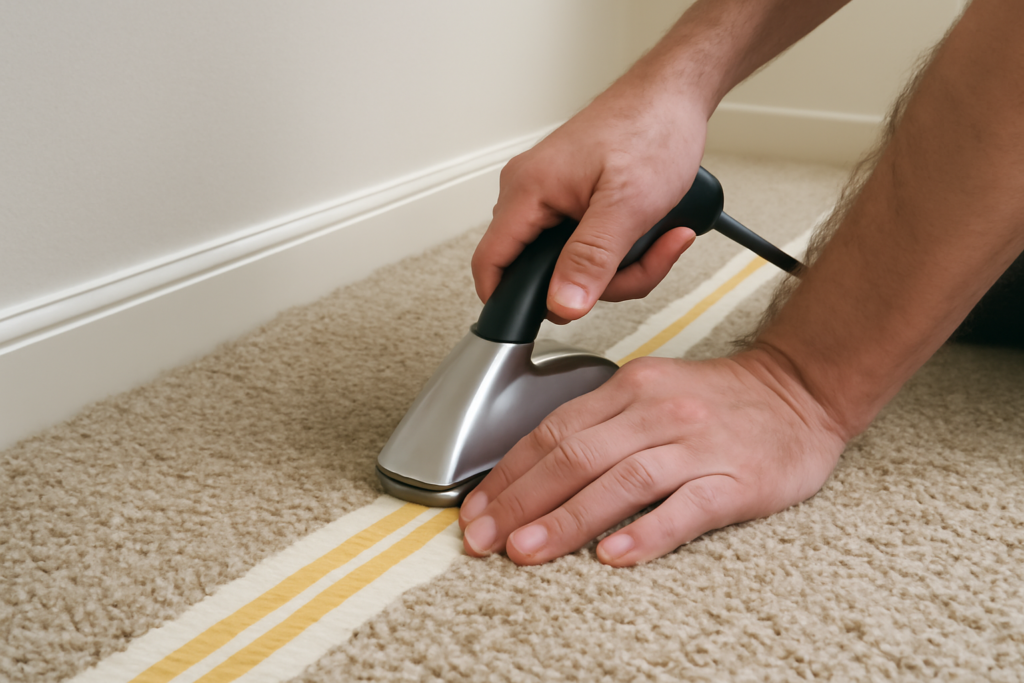
Carpet seam tape sits underneath the carpet, centered along the joint between two pieces. It does not stick to the top of the carpet at all. Instead, it grips the carpet backing from below, pulling the two edges together so the face yarns mesh and hide the line. The strongest, most professional results come from heat-activated tape combined with a seaming iron, which is the method most installers use.
Types of Carpet Seam Tape
There are two broad categories, and choosing correctly matters:
- Heat-activated seam tape: Coated with a thermoplastic adhesive that melts when a heated seaming iron passes over it. As it cools, it locks the carpet backing in place. This is the standard for permanent, durable seams on stretch-in carpet.
- Pressure-sensitive or self-adhesive tape: A peel-and-stick option that bonds without heat. It is easier for quick repairs and small patches but generally less durable than a heat seam for high-traffic areas.
For a full room seam that will see daily traffic, heat-activated tape is worth the extra effort. For a small closet patch or a temporary fix, self-adhesive tape can do the job.
Tools You Will Need
A clean seam comes down to having the right gear ready:
- A carpet seaming iron (rentable from many home improvement stores)
- Heat-activated or self-adhesive carpet seam tape
- A sharp carpet knife or row cutter with fresh blades
- A straightedge for trimming clean edges
- A seam roller and a weighted board to press the seam while it cools
- A knee kicker or power stretcher for stretch-in installs
How to Use Heat-Activated Seam Tape
The basic process for a heat seam:
- Trim both carpet edges straight and clean so they butt together with no gaps.
- Set the seaming iron to the temperature listed on the tape, usually preheated for a few minutes.
- Center the tape adhesive-side up under the seam line.
- Slide the hot iron along the tape, moving steadily and pressing the carpet edges down behind it as you go.
- Push the two edges together over the melted adhesive so the face yarns meet.
- Roll the seam with a seam roller, then weigh it down with a board until the adhesive cools and sets.
Move the iron at a consistent pace. Going too fast leaves a weak bond, and going too slow can scorch the backing or melt the carpet fibers.
Pro Tips for an Invisible Seam
A few habits separate amateur seams from clean ones. Always cut your edges so the carpet pile runs in the same direction on both pieces, since mismatched pile catches light differently and reveals the seam. Tuck stray fibers down into the seam rather than letting them sit on top. Avoid placing a seam in the most visible part of a room or in a doorway where traffic concentrates. And never stretch carpet over a seam that has not fully cooled, or you risk pulling it apart.
Common Mistakes to Avoid
The biggest errors are rushing the cooling stage and using a dull blade. If you remove the weight too early, the seam can lift. A dull knife leaves ragged edges that never close cleanly. Other pitfalls include using the wrong tape for the carpet type and setting the iron too hot, which can damage the carpet backing. When in doubt, practice on a scrap piece first.
Choosing the Right Tape for Your Carpet
Seam tape comes in different widths and adhesive strengths, and matching it to the carpet matters. Standard heat-bond tape works for most residential cut-pile and looped carpets. Heavier or commercial carpet benefits from a wider, stronger tape with more adhesive. For carpets with delicate backing, a lower-temperature tape prevents scorching. The tape backing also varies, with mesh or fiberglass reinforcement adding strength across the seam. When in doubt, ask the supplier what tape they recommend for your specific carpet, since the wrong adhesive can lead to seam failure down the road.
Repairing a Damaged Carpet Seam
Existing seams can come apart over time, especially in doorways and high-traffic lanes. To repair one, first clean out any old adhesive and trim frayed edges. Slide fresh seam tape underneath, then re-bond it with a seaming iron, pressing the edges together and rolling them as the adhesive cools. For small spots, self-adhesive seam tape can serve as a quick fix. The same principles apply: clean edges, full contact, and weight on the seam until it sets. A well-done repair is nearly invisible and far cheaper than replacing the carpet.
Safety Tips When Using a Seaming Iron
A carpet seaming iron runs hot enough to melt adhesive and can burn skin or scorch carpet. Always rest it on its stand or a heat-resistant surface, never directly on the carpet face. Keep the cord clear of your work path, unplug it when you take breaks, and let it cool fully before storing. Work in a ventilated area, since melting adhesive gives off a mild odor. Test the temperature on a scrap of carpet first to dial in a setting that bonds the tape without damaging the backing.
When to Call a Pro
Carpet seaming is doable for a confident DIYer, but large rooms, expensive carpet, and patterned carpet that must align are good reasons to hire a professional installer. The cost of redoing a botched seam, or replacing carpet you damaged with an overheated iron, often exceeds what a pro would have charged. For a simple repair or a closet, though, a roll of carpet seam tape and a rented iron can save you real money.