Most people walk into a carpet store, fall for a soft sample under flattering lights, and walk out overpaying. Carpet showrooms are designed to sell, and the lighting, the warm samples, and the “today only” pricing all nudge you toward a fast decision. Used correctly, though, a showroom is the best place to compare fibers, feel real density, and pin down an honest installed price. Here’s how to shop one like someone who knows the game.
- What a Showroom Does Well
- Before You Go: Prep Work
- The Questions That Expose Markups
- How to Read a Sample
- Take Samples Home
- Big-Box vs. Independent Showrooms
- Closing the Deal Without Pressure
- Decoding Carpet Specs and Jargon
- Understanding Carpet Warranties
- Measuring and the Seam Conversation
- Negotiating and Timing Your Purchase
- The Bottom Line
What a Showroom Does Well
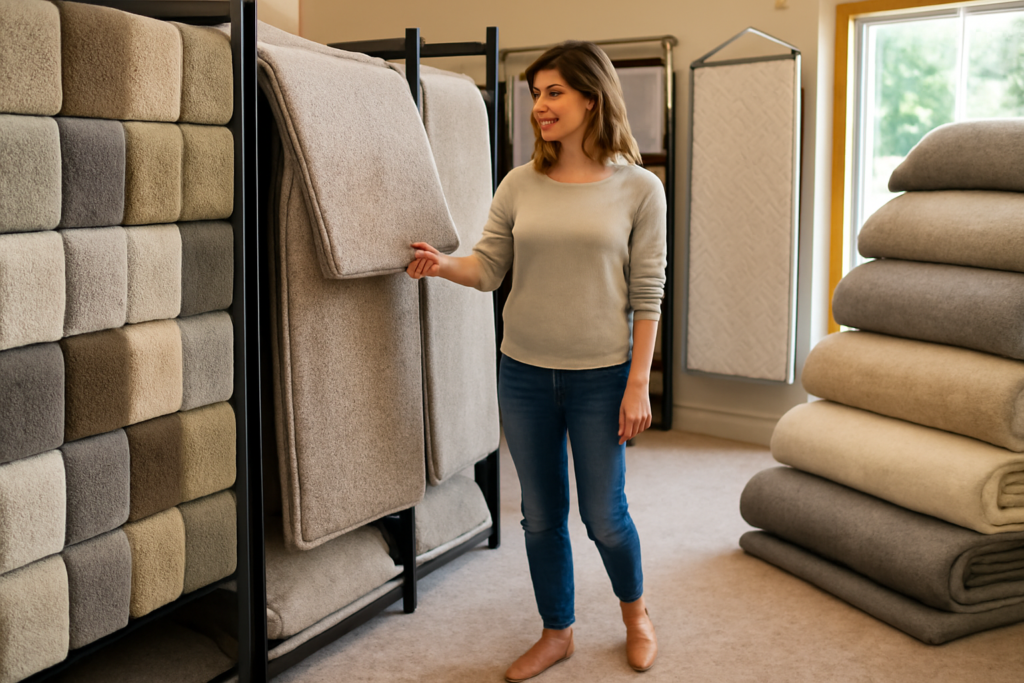
Online photos can’t tell you how a carpet feels underfoot or how dense the pile really is. A showroom lets you press your thumb into the backing, twist a sample to check tuft twist, and compare three fibers side by side in seconds. You can also see large displayed sections rather than a 4-inch swatch, which matters for judging pattern and color at scale.
Before You Go: Prep Work
Walking in prepared changes how a salesperson treats you and what price you’re offered.
- Measure each room and add 10% for waste so you can sanity-check quotes.
- Bring a furniture photo or paint chip to test color in the store.
- Know your traffic reality: kids, pets, and stairs all push you toward nylon.
- Set a per-square-foot budget that includes pad and installation, not just carpet.
The Questions That Expose Markups
A quoted carpet price means little without the surrounding details. Ask these directly:
- Is the quote per square foot or per square yard? Yard pricing makes carpet look cheaper; divide by nine to compare.
- What pad is included, and what’s the upgrade cost to an 8-pound rebond?
- Does the price include tear-out and haul-away of the old carpet?
- Are stairs, transitions, and furniture moving extra?
- What’s the actual face weight and twist, not just the brand name?
When everything is itemized, two showrooms become genuinely comparable. Vague all-in numbers are where margin hides.
How to Read a Sample
Density beats softness for durability. Bend a sample backward into a U shape: if the backing grins through with lots of visible gaps, the carpet is sparse and will mat. A tight, hard-to-see backing signals a dense pile that holds up. For high-traffic areas, also look for a high twist number and a tight loop or frieze construction.
Take Samples Home
Showroom lighting is engineered to flatter. Always take or order full-size samples and view them in your own home at different times of day. A “warm beige” under store halogens can read pink at noon or muddy at dusk near your wall color. Lay the sample on the floor, not against a wall, and live with it for a couple of days.
Big-Box vs. Independent Showrooms
Big-box stores offer convenience, bundled financing, and predictable install scheduling, but a narrower premium selection. Independent flooring showrooms often carry better mid-tier and high-end lines, more knowledgeable staff, and more pricing flexibility, though install lead times vary. Get one quote from each type; the spread on the same spec carpet can be surprisingly wide.
Closing the Deal Without Pressure
Never sign at the first appointment if you feel rushed. Reputable showrooms will hold a quote in writing for several days. Use that window to compare itemized bids, confirm the warranty covers wear and stain separately, and verify the installer is the store’s own crew or a vetted subcontractor. A short pause almost never costs you the deal and often improves the price.
Decoding Carpet Specs and Jargon
Showrooms throw around technical terms that sound impressive but hide what really matters. Face weight, measured in ounces per square yard, tells you how much fiber is in the carpet; higher generally means more durable, but it’s meaningless without density. Density, the weight of fiber packed into a given space, is the true durability driver, which is why the bend-and-look test beats any spec sheet. Twist level, sometimes shown as a turns-per-inch number, indicates how tightly the fibers are wound and how well the carpet resists matting. Ask for these numbers, but remember that a salesperson quoting a big face weight while dodging density questions is steering you toward a fluffy carpet that won’t hold up.
Understanding Carpet Warranties
Showroom salespeople love to tout long warranties, but the fine print matters more than the headline number. A “20-year” warranty often covers only specific failures like manufacturing defects, and the practical wear and texture-retention coverage may be far shorter. Most carpet warranties also require professional hot-water extraction cleaning every 12 to 18 months with documented receipts, or the coverage is voided. Stain warranties typically exclude common culprits like pet urine, bleach, and mustard. Ask the showroom to walk you through exactly what is and isn’t covered, and get it in writing, because a long warranty you can’t actually claim against is just marketing.
Measuring and the Seam Conversation
Carpet comes in rolls, usually 12 feet wide, which means almost any room wider than that will have seams. A good showroom will discuss seam placement up front: seams should fall in low-traffic, low-visibility areas and run away from the main light source, never across a doorway or in front of a sofa. Be wary of a quote that seems suspiciously low on material, as it may rely on awkward seaming or insufficient overage. Professional measuring should add about 10% for waste and pattern matching. If a salesperson glosses over seams entirely, that’s a red flag about install quality.
Negotiating and Timing Your Purchase
Carpet pricing has more give than most shoppers realize. Holiday weekends, end-of-quarter periods, and floor-model clearances are when showrooms cut the best deals. Bundling multiple rooms, or carpet plus another flooring type, gives you leverage to ask for free pad upgrades or waived install fees. Always get the competing quote in hand before negotiating, since a written number from another store is your strongest tool. And don’t let a “today only” price rush you; reputable showrooms will honor a quote for several days, and walking out to think it over frequently produces a better offer by the time you return.
The Bottom Line
Treat carpet showrooms as a comparison lab, not a checkout line. Show up measured and informed, demand itemized installed pricing, judge samples by density at home, and collect at least two quotes before committing. The showroom experience is built to move you fast, and slowing down is exactly how you save money.