Those ripples and waves rising up across your living room carpet are not just unsightly, they are a tripping hazard and a sign of accelerated wear. The fix is carpet stretching, a process that pulls the carpet taut and re-secures it to the tack strips around the room. It restores a smooth surface, extends the carpet’s life, and is far cheaper than replacement. This guide explains why carpet loosens, how stretching works, and whether you should tackle it yourself or hire a pro.
Why Carpet Ripples and Loosens
Carpet does not develop waves by accident. The most common cause is improper installation, specifically carpet that was stretched by hand with a knee kicker instead of a power stretcher when it was first laid. Over time, that under-tensioned carpet relaxes and buckles. Other culprits include high humidity, which causes the backing to expand, dragging heavy furniture across the surface, and simple age. Repeated foot traffic and moisture cycles gradually loosen even a decent installation, and once a ripple forms, walking over it makes it worse.
How Carpet Stretching Works
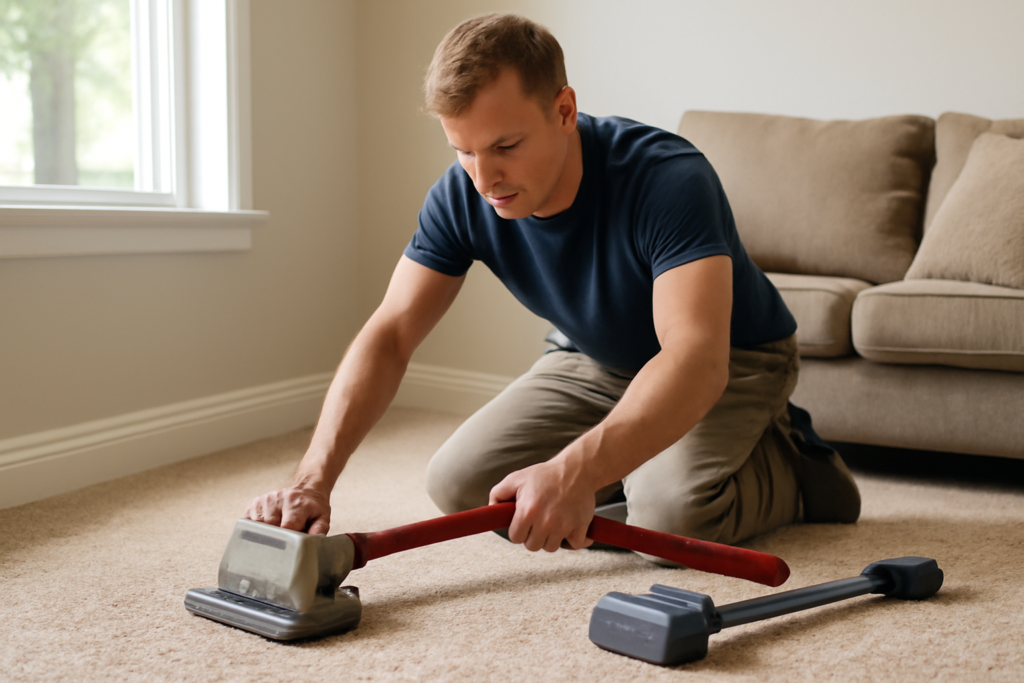
Professional stretching relies on a tool called a power stretcher, a long telescoping device that braces against one wall and grips the carpet near the opposite wall. The installer cranks the head to pull the carpet drum-tight, then tucks and secures the edge onto the tack strips along the perimeter while the tension holds. A knee kicker handles smaller areas and corners but cannot match the even, lasting tension of a power stretcher. Excess carpet is trimmed and tucked along the edges. Done correctly, the room ends up flat, tight, and ripple-free.
The Benefits of Stretching
Re-stretching does more than improve looks.
- Safety: Eliminates ripples that catch toes and cause trips and falls.
- Longevity: Loose carpet wears unevenly at the wrinkles, so stretching protects your investment.
- Appearance: Restores the smooth, professional look of newly installed carpet.
- Cost savings: Far cheaper than tearing out and replacing carpet that is otherwise in good shape.
DIY vs Hiring a Pro
You can rent a power stretcher and a knee kicker from many home centers, and a small, simple room is within reach for a determined DIYer. That said, stretching is genuinely tricky work. It requires moving furniture, detaching the carpet edges, applying correct tension without over-stretching or tearing the backing, and re-securing everything cleanly. Mistakes can damage the carpet or leave it loose again within months. A professional has the tools and experience to do it right in a fraction of the time, which is why many homeowners hire out.
What It Costs
Professional carpet stretching is one of the more affordable flooring services. Many pros charge a per-room rate or by the square foot, and small jobs are often modest, while a whole-house re-stretch costs more. Some companies set a minimum service charge regardless of room size. If you go the DIY route, your main costs are the tool rental and your time. Get a couple of quotes, since pricing varies by region and by how much furniture needs moving. Compared with replacement, even a professional stretch is a bargain.
Preparing for the Job
Whether you hire a pro or do it yourself, a little prep speeds things along. Clear the room of furniture, or at least move it to one side so the installer can work the floor in sections. Vacuum the carpet beforehand. Point out any specific problem areas, seams, or transitions that concern you. If pets or moisture caused the loosening, address the underlying issue first so the carpet does not simply ripple again. Good preparation makes the work faster and the result longer-lasting.
Power Stretcher vs Knee Kicker
Understanding the two main tools clarifies why professional results last longer. A knee kicker is a short tool you jab with your knee to nudge carpet onto the tack strip, and it works for small areas, closets, and corners. The problem is that it relies on your body for force, which produces uneven, limited tension that relaxes over time. A power stretcher spans the room, braces against a far wall, and applies powerful, consistent tension across a wide section before you secure the edge. That even, mechanical pull is why carpet stretched with a power stretcher stays flat for years while knee-kicked carpet often ripples again. For anything larger than a closet, the power stretcher is the right tool.
Signs You Need to Re-Stretch
Catching the problem early saves both money and wear. Watch for visible ripples, waves, or bubbles in the carpet surface, especially in traffic lanes and large open areas. You may feel the carpet shift or bunch underfoot as you walk. Carpet pulling away from the wall or edges, or wrinkles that appear after a humid stretch of weather, are clear signals. A small bump that you can flatten with your foot but that returns is an early warning. Address these signs promptly, because the longer a ripple persists, the more the carpet fibers wear at the crease, and the harder it becomes to achieve a smooth result.
Keeping Carpet Tight
After stretching, a few habits help the carpet stay flat. Lift heavy furniture rather than dragging it across the floor, and use furniture sliders or coasters under heavy legs. Control indoor humidity, since damp air encourages the backing to expand and relax. Vacuum regularly to keep the carpet healthy. If your carpet was originally installed with a knee kicker, a one-time power stretch usually solves the recurring ripples for good. Address waves early, while they are minor, and you will avoid both the wear and the safety risk that come with loose carpet.
When deciding whether to call a professional, weigh the size of the job against your comfort with the tools. A single small bedroom may be a reasonable weekend DIY with a rented power stretcher, but a whole house, a room with many seams, or carpet on stairs is usually best left to an installer who does this work daily. Either way, choose someone or some plan that uses a power stretcher rather than relying on a knee kicker alone, because that is the difference between a fix that lasts years and one that fails within months. Done right, carpet stretching is an affordable way to make an existing carpet look and feel new again.