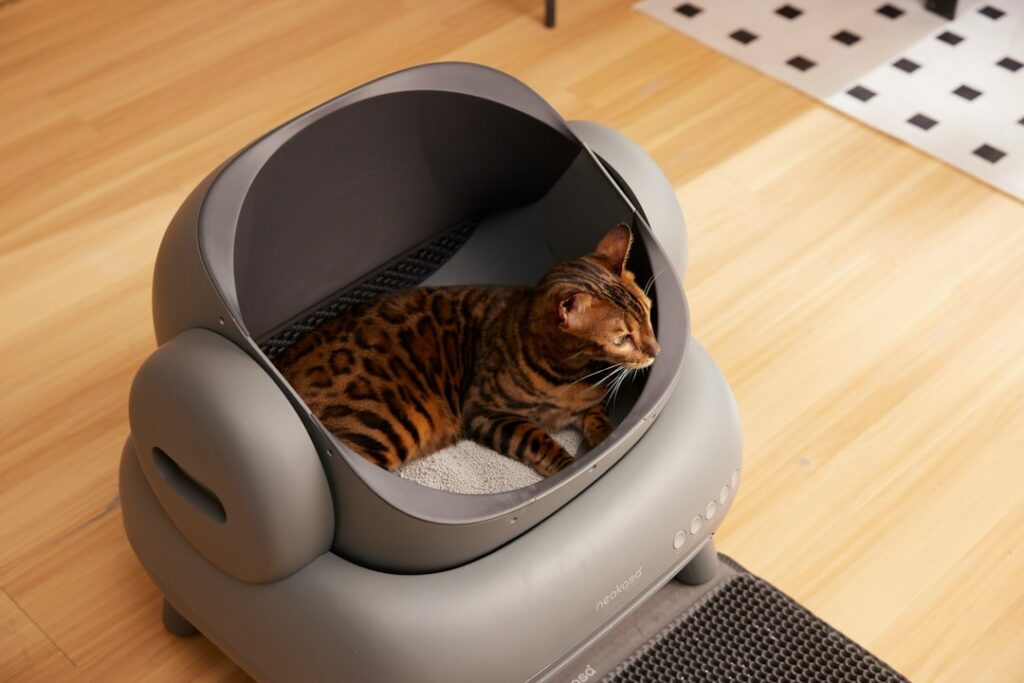
Most litter boxes end up in the worst possible spot: a laundry room corner, the side of a bathroom vanity, or right where guests can see them. A cat tree with litter box enclosure solves that by tucking the box inside a cabinet base and stacking perches, platforms and scratching posts on top. You get one piece of furniture instead of two, and the box disappears behind a door or curtain.
That said, these combo units are not all equal. Some are cramped boxes with a carpeted post glued on top. Others are solid cabinets with removable backs, vent holes, washable liners and a wide entry that a full-size cat can turn around in. The difference comes down to interior size, airflow, how easy it is to scoop, and how well the base protects the floor underneath.
- What a Cat Tree With Litter Box Enclosure Actually Is
- Sizing: Measure the Cat, the Pan and the Room
- Odor Control and Ventilation
- Materials and Build Quality
- Protecting Your Floors Under the Enclosure
- Setup and Cleaning Routine
- Buy, Build or Convert an Existing Cabinet
- Troubleshooting Common Problems
- Frequently Asked Questions
What follows covers what to measure, how to control odor, which materials hold up, how to set one up on hardwood, vinyl, laminate, tile or carpet, and when a built-in or custom cabinet makes more sense than a store-bought tree.
What a Cat Tree With Litter Box Enclosure Actually Is
A cat tree with litter box enclosure is a two-in-one piece: the lower section is a closed cabinet that holds a standard or jumbo litter pan, and the upper section is a climbing structure with posts, hammocks, platforms or a condo. The cat enters the cabinet through a side or front opening, does its business out of sight, and exits to climb or nap above.
Most designs fall into three groups:
- Cabinet base with short tree: a wood or engineered-wood cabinet, usually 20 to 30 inches tall, with one or two platforms and a sisal post on top. Looks the most like furniture.
- Tall tree with enclosed bottom condo: a carpeted tower, 4 to 6 feet tall, where the bottom cube doubles as a litter room. More climbing, less furniture look.
- Corner or wall units: a triangular or narrow cabinet that fits a tight corner, with shelves or a wall-mounted perch above.
For a small apartment, a cabinet base with a short tree usually wins because it also works as an end table or plant stand. For a multi-cat home with energetic climbers, a taller tower gives more vertical territory, which can reduce squabbles over space.
Sizing: Measure the Cat, the Pan and the Room
The most common complaint about these units is that the enclosure is too small. A cat needs room to step in, turn around, dig and squat without its back brushing the ceiling. Start with the cat, not the furniture.
- Measure the cat’s length from nose to base of tail. The litter pan inside should be at least 1.5 times that length. For an average 18-inch cat, look for a pan around 24 inches long or more.
- Check interior height. Aim for at least 16 to 18 inches inside the cabinet for an average cat, and 20 inches or more for large breeds. A cat that has to crouch to enter may start going outside the box.
- Measure your existing pan. If your cat already likes a specific pan, confirm it fits the cabinet’s inside dimensions, not the outside ones listed on the box.
- Plan the entry. A 7 to 9 inch opening suits most cats. Senior or arthritic cats do better with a low threshold, ideally under 5 inches off the floor.
- Measure the room spot. Leave 2 to 3 inches behind the unit for airflow and at least a couple of feet in front of the entry so the cat has a clear exit path.
The tree portion should also match the cat. Heavy cats need thick posts (3 to 4 inches in diameter), platforms with lips, and a base wide enough that the whole unit does not rock when the cat launches off the top.
Odor Control and Ventilation
Enclosing a litter box traps odor as well as hiding it. Without airflow, ammonia builds up inside the cabinet, the wood absorbs it, and the cat may refuse to use a stuffy box. Good ventilation is the feature that separates a pleasant unit from one you regret.
- Vent holes or slots on the sides or back let air move through. More open area is better, as long as litter cannot scatter through it.
- A removable or open back panel lets you pull the pan out from behind and improves airflow when the unit sits a few inches off the wall.
- Carbon filter pockets on some units hold a replaceable charcoal pad near the top vent. Swap it on the maker’s schedule, typically every few weeks.
- Unscented clumping litter and daily scooping do more for odor than any accessory. Strong fragrances inside a closed box can put cats off.
Place the unit away from heat sources such as floor registers and radiators, which warm the cabinet and make smells worse. A spot with some cross-draft, near but not directly in front of a return air vent, helps. Avoid tight closets with the door kept shut, since the air inside barely moves.
Materials and Build Quality
The cabinet takes daily abuse from moisture, scratching and scooping. Materials matter more here than in a normal cat tree.
Cabinet Material
Solid wood and plywood hold screws well and resist swelling better than particleboard. Many budget units use MDF or particleboard with a laminate skin, which is fine if the inside is sealed and edges are banded. Raw particleboard that gets wet will swell and crumble, so check the interior finish before you buy. A painted or sealed interior wipes clean; bare wood soaks up urine.
Tree Covering
Sisal rope on posts gives cats a proper scratching surface and holds up for years. Carpet-covered platforms feel soft but trap hair and litter dust. Removable, washable cushions on the top perch make cleaning far easier than glued carpet.
Hardware and Stability
Look for posts that bolt through the cabinet top rather than screw into a thin panel. If the unit is taller than about 4 feet, plan to anchor it to a wall stud with a furniture strap. A cat leaping from a high platform can tip a top-heavy tower.
Protecting Your Floors Under the Enclosure
Since this is a flooring site, here is the part most product listings skip. Litter scatter, occasional misses and urine that seeps under the pan can ruin a floor slowly and quietly. A few cheap steps prevent expensive repairs.
- Hardwood and engineered wood: urine that reaches the boards causes dark stains that often go through the finish into the wood. Put a waterproof tray or a cut-to-fit rubber-backed mat under the whole cabinet, not just in front of the door.
- Laminate: the surface resists spills, but seams and the fiberboard core swell when liquid sits on them. A waterproof mat under the unit is essential.
- Luxury vinyl plank: the planks themselves are waterproof, yet liquid can still travel through seams to the subfloor. Use a mat and wipe up any misses quickly.
- Tile: the easiest floor for this setup. Seal grout lines nearby so they do not absorb odors.
- Carpet: the hardest. Set the unit on a rigid, waterproof boot tray or a sheet of vinyl flooring offcut cut slightly larger than the base.
Put a textured litter-trapping mat in front of the entry to catch granules from paws. Grit tracked across hardwood acts like sandpaper on the finish, so this mat protects more than just the spot under the cabinet.
Setup and Cleaning Routine
A good routine keeps the enclosure fresh and makes the cat comfortable using it.
- Assemble the unit on a soft blanket to avoid scratching the panels, then tighten all bolts again after a week, since they loosen as the wood settles.
- Line the cabinet floor with a waterproof liner or a thin plastic tray larger than the pan to catch overflow.
- Fill the pan with 2 to 3 inches of unscented clumping litter.
- Introduce the unit gradually. Leave the door or curtain open for the first few days, or place the old uncovered box beside it until the cat uses the new one.
- Scoop daily through the access door. Pick a unit with a door wide enough that you can scoop without pulling the pan out every time.
- Every two to four weeks, empty the pan, wash it with mild unscented soap and warm water, and wipe the cabinet interior with an enzyme cleaner made for pet urine.
- Vacuum the tree platforms and wash removable cushions monthly.
Buy, Build or Convert an Existing Cabinet
Store-bought units range widely. As a general range, basic cabinet-with-post designs often land around $80 to $180, while larger furniture-grade pieces with tall trees can run $200 to $450 or more. If none fit your space, you have two other routes.
Convert a cabinet: an unfinished storage cabinet or a spare bathroom vanity base can become a litter enclosure. Cut an entry hole in one side with a jigsaw, sand the edges smooth, seal the inside with two coats of water-based polyurethane, drill a row of vent holes near the top, and screw a sisal-wrapped post and platform to the top. Wear a dust mask while sanding and let finishes cure fully before the cat moves in, following the product label for cure time.
Build it in: in a laundry room or mudroom, a carpenter can add a litter compartment to a run of base cabinets with a vented door and a wall-mounted perch system above. This costs more but blends into the room and keeps the box out of living spaces entirely.
Troubleshooting Common Problems
The cat will not go inside. The entry may be too small or too high, or the interior may be too dark. Remove the door flap for a while, add a small battery puck light on the ceiling if needed, and move the old box next to it.
Litter scatters out the entry. Use a deeper pan with high sides, add a front lip, and put a grabber mat outside. Some owners flip the pan so the cat enters from the side and digs toward the back.
The cabinet smells even when clean. Urine has probably soaked into unsealed wood. Clean with an enzyme product, let it dry fully, then seal the interior. If the panel has swollen, replace it.
The tree wobbles. Retighten the post bolts, add a wall strap, and check that the unit sits on a flat surface rather than on the edge of a rug.
Frequently Asked Questions
Is a cat tree with litter box enclosure big enough for large cats?
Some are, but many are not. Check the interior dimensions and look for at least 20 inches of inside height and room for a pan around 1.5 times the cat’s body length.
Do enclosed litter furniture pieces smell?
They can if airflow is poor. Choose a unit with vent slots or an open back, scoop daily, and use unscented clumping litter to keep odor down.
Can I put litter box furniture on hardwood floors?
Yes, as long as you place a waterproof mat or tray under the whole base. Urine that reaches wood stains it quickly and is hard to sand out.
How often should I clean the enclosure itself?
Scoop the pan daily, then empty and wash the pan and wipe the cabinet interior with an enzyme cleaner every two to four weeks.
Will my cat use the tree part if the litter box is underneath?
Most cats do, since they see the tree and the box as separate spaces. Keep the box clean, and the climbing section usually gets plenty of use.