Cats are climbers by instinct, and nothing satisfies that drive like vertical space. A floor to ceiling cat tree uses the full height of a room to give your cat perches, scratching surfaces, and lookout points without eating up valuable floor area. Tall and space-efficient, these towers are ideal for apartments and multi-cat homes. But because they reach from floor to ceiling, secure mounting and stability are everything. This guide walks through the designs, sizing, and safety steps that keep both your cat and your home in good shape.
What Sets It Apart
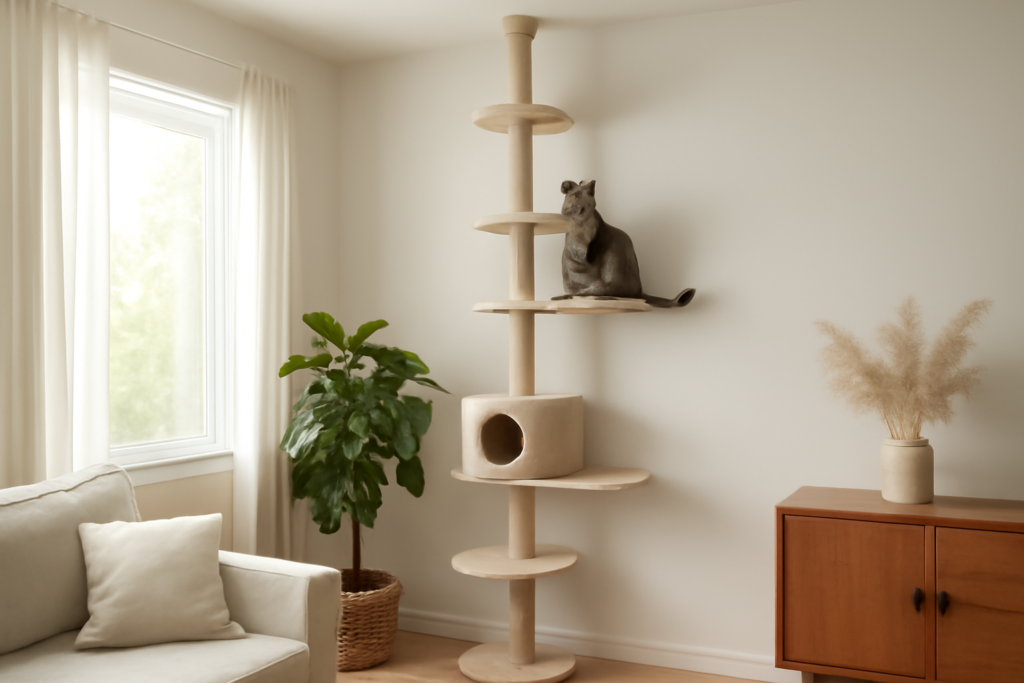
A standard cat tree stands on a weighted base and tops out around four to six feet. A floor to ceiling model extends all the way up, typically seven to ten feet, and braces against the ceiling for support. The big advantages are a small footprint and maximum vertical territory, which matters because cats feel safest when they can survey a room from above. For homes short on square footage, the upward design is a smart use of space.
Tension-Pole vs Anchored Designs
There are two main ways these towers stay upright:
- Tension-pole: an adjustable pole presses against the ceiling using spring or screw tension, gripping between floor and ceiling with no permanent hardware
- Ceiling-anchored: the top is fastened to the ceiling with brackets and screws, ideally into a joist for maximum hold
Tension-pole models are renter-friendly because they leave no holes, but they must be tightened properly and rechecked over time. Anchored models are the most secure, especially for big or very active cats, but require drilling and finding solid framing.
Mounting Securely and Safely
Stability is not optional with a tall tree. A wobbly tower will scare cats away at best and topple at worst. For tension-pole models, set it on a hard, level surface when possible and crank the tension firmly so the pole does not shift; carpet can compress and loosen the fit, so recheck it periodically. For anchored models, locate a ceiling joist with a stud finder and drive the fasteners into solid framing rather than just drywall. Whichever style you choose, give the finished tree a firm push to confirm it does not sway before letting your cat use it.
Sizing for Your Ceiling
Measure your ceiling height before buying. Most floor to ceiling trees adjust within a range, commonly around seven to nine and a half feet, so confirm the product fits your room. Account for thick carpet or padding under tension-pole bases, which can affect the effective height. If you have unusually high ceilings, look for a model rated for that range rather than forcing a shorter one to stretch.
Features to Look For
Beyond height, the right features make the tree more appealing and durable:
- Multiple perches and platforms: at varying heights for lounging and climbing
- Sisal-wrapped posts: for satisfying, furniture-saving scratching
- Cubbies or hideaways: enclosed spots where shy cats can retreat
- Sturdy materials: solid posts and well-built platforms that handle leaping cats
- Easy-clean surfaces: removable, washable covers help with shedding and hair
For multi-cat households, choose a model with several perches so cats are not forced to compete for the top spot.
Placement Tips
Position the tree where your cat already likes to be. Near a window is a favorite, giving a sunny perch and a view of the yard or birds. Avoid placing it where a leap from the top could send a cat onto something fragile. Keep it away from ceiling fans and light fixtures. A corner location often feels secure to cats and uses otherwise dead space efficiently.
Helping a Hesitant Cat Adjust
Not every cat takes to a new tower immediately, especially older or cautious ones. Make the lower perches inviting first by placing treats, a favorite blanket, or a bit of catnip on them, then gradually reward exploration higher up. Play with a wand toy near and up the tree to encourage climbing. Position the tree somewhere your cat already feels comfortable rather than in an unfamiliar corner. Patience usually wins, and once a cat discovers the top perch and its view, the tree often becomes a favorite spot.
If you have multiple cats, watch for one monopolizing the tower. Adding a second climbing option or choosing a model with several equally appealing perches reduces conflict and ensures every cat gets vertical space.
Pros and Cons to Weigh
Before buying, it helps to balance the benefits against the drawbacks:
- Pro: maximizes vertical territory in a small footprint
- Pro: satisfies climbing and scratching instincts, sparing your furniture
- Pro: gives cats a high, secure vantage point that reduces stress
- Con: requires careful, secure mounting to stay stable
- Con: can be harder to relocate than a freestanding tree
- Con: tension-pole models may not work under sloped or very high ceilings
For most cat owners with limited floor space, the pros clearly outweigh the cons as long as the tree is installed correctly.
Protecting Floors and Ceilings
Mounting a tall tree means putting pressure on both the floor and the ceiling, so protect both surfaces. Tension-pole models press a foot against the ceiling, which can dent drywall or leave a mark over time; a wider top plate spreads the load, and placing it near a joist gives firmer backing. At the floor, set the base on a hard surface or use a protective mat under it, since the concentrated weight and any wobble can press into soft flooring. For anchored models, drive screws into a joist rather than bare drywall, and patch and repaint neatly if you ever remove the tree, leaving floors and ceiling undamaged.
Maintenance and Long-Term Stability
Check the tension or anchoring every few weeks, since normal use and seasonal humidity changes can loosen the fit over time. Vacuum the carpeted surfaces, replace worn sisal where possible, and tighten any hardware that has worked loose. A well-chosen and well-secured floor to ceiling cat tree gives your cat years of vertical territory and scratching satisfaction while taking up barely any floor space, a genuine win for both pet and home.
Prefer to explore on your own?
See how new flooring looks in your actual room in seconds — free, no signup.
Try the free Floor Studio →