
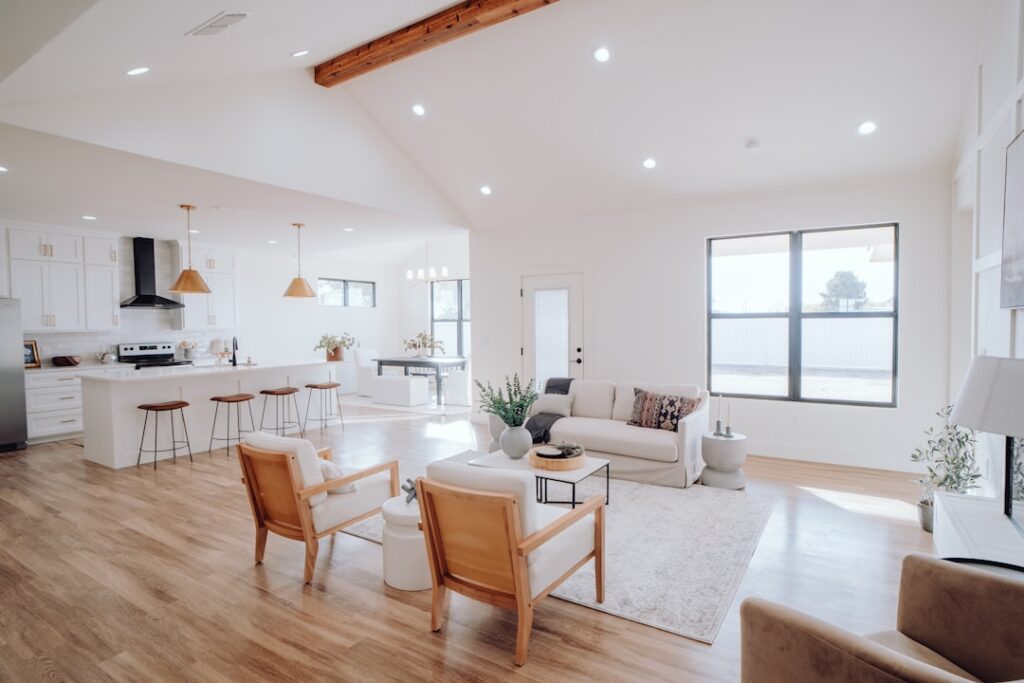
The American Pet Products Association reports that 47% of US households own at least one cat, and floors specifically engineered for pet households are now the fastest-growing residential segment, with sales up 31% in 2025. Cat flooring means surfaces that resist claw scratches, urine staining, hairball cleanup, and the daily wear of pouncing, sprinting, and litter tracking that comes with feline cohabitation. The right specification keeps the floor looking new for 15 to 25 years, while the wrong choice fails within 18 months of bringing a cat home.
What Cats Actually Do to Floors
Three behaviors matter most. Claw extension at landing impact leaves micro-scratches on softer surfaces, particularly hardwood and budget laminate. Urine spray and accidents at litter box edges produce ammonia exposure that bleaches hardwood finishes and stains grout. Sprinting and skidding at high speed introduces lateral pressure that loosens floating floor joints over time.
Hairball regurgitation adds an acid-spill component that most homeowners underestimate. Stomach acid at pH 1 to 3 etches softer surfaces and embeds bile pigment into porous finishes. The window for damage-free cleanup is roughly 15 minutes, after which permanent staining becomes likely on susceptible surfaces.
The Best Floors for Cat Households
- Luxury vinyl plank (LVT) with 20-mil wear layer — fully waterproof, scratch-resistant, the top recommendation for most cat households
- Porcelain tile with epoxy grout — virtually claw-proof and acid-proof, best near litter box areas
- Sealed concrete with polyaspartic coating — seamless, urine-resistant, ideal for basement cat rooms
- Engineered hardwood with aluminum-oxide finish — acceptable in low-traffic rooms with disciplined cleanup
- Cork flooring with UV-cured urethane sealer — surprisingly resilient, softer underfoot for older cats
Materials to Avoid
Solid hardwood with oil-only finish (Rubio Monocoat, OSMO PolyX) is the single worst choice for cat households. The penetrating oil offers no surface scratch resistance, and urine soaks into the open-grain wood within seconds, producing dark stains that require sanding to remove. Reserve oiled finishes for cat-free zones only.
Cheap laminate under $1.99 per square foot also fails quickly. The thin photographic film scratches through to the HDF core within months under cat claws, and HDF swells permanently on contact with urine. Both failures are visually obvious and not repairable without full plank replacement.
Wool and natural-fiber carpet is also a poor choice in cat households. Urine reacts with wool fibers to produce permanent yellow staining that no professional cleaning method can fully remove. Synthetic nylon carpet performs better but still requires aggressive enzyme treatment after every accident.
Why LVT Wins for Most Cat Households
Luxury vinyl plank with a 20-mil wear layer addresses every cat-specific concern at once. The waterproof construction shrugs off urine and hairball spills, the urethane top coat resists claw scratches, and the rigid SPC core handles sprinting and skidding without joint movement. Service life is typically 15 to 25 years in active cat households, well above any other affordable category.
Modern LVT also reads as warm wood underfoot, which matters because cats prefer warm surfaces for napping. Pair LVT with a cat tree, sun-puddle window perch, or low-wattage heated pet pad, and you cover the cat’s comfort needs without resorting to carpet.
Tile and Sealed Concrete for Litter Box Areas
The square footage immediately around the litter box deserves special consideration. Porcelain tile with epoxy grout is the gold standard here, since the grout joints will not absorb ammonia and the glazed surface cleans completely. Limit the porcelain section to a 4-foot by 6-foot zone if you want LVT in the rest of the room.
For basement cat rooms or dedicated litter rooms, sealed concrete with a polyaspartic coating delivers a seamless, fully cleanable surface at $4 to $9 per square foot installed. The polyaspartic chemistry resists ammonia, bleach, and enzyme cleaners without yellowing, making it ideal for the cleaning regime that cat households actually use.
Cost Per Square Foot in 2026
- Mid-grade LVT with 20-mil wear layer: $3.49 to $5.49 per square foot
- Premium LVT with 28-mil to 40-mil wear and attached cork pad: $4.99 to $7.99
- Standard porcelain tile, glazed, with epoxy grout: $7 to $14 per square foot installed
- Sealed concrete with polyaspartic coating: $4 to $9 per square foot installed
- Engineered hardwood with aluminum-oxide finish: $7 to $14 per square foot
- Professional installation labor: $1.49 to $4.99 per square foot depending on material
Brands and Products to Shortlist
For LVT, COREtec Pro Plus Enhanced, Karndean Knight Tile, Mannington Adura Max, and Shaw Floorte Pro Endura Plus all carry 20-mil-plus wear layers with multi-decade warranties. Each line includes wood and stone visuals across all major color families.
For porcelain tile in cat zones, Daltile Emerson Wood, Marazzi Treverkmade, and Florim StonePeak all offer wood-look porcelain that survives litter box use while reading visually as continuous flooring with adjacent LVT or hardwood. Look for slip-resistance coefficient of friction (COF) ratings above 0.42 for safe wet-area footing.
Maintenance Routine for Cat Households
Daily care includes a microfiber dust mop or sweep to lift hair and litter granules before they grind into the finish. Spot-clean any accidents within 15 minutes using an enzyme cleaner like Nature’s Miracle Hard Floor or Anti Icky Poo, which neutralize urine compounds rather than just masking the odor.
Weekly damp-mop with a pH-neutral floor cleaner. Keep two 18-inch entry mats at exterior doors, since dirt and grit tracked in on paws acts as sandpaper on most floor finishes. Trim cat claws every 3 to 4 weeks to reduce scratch impact and protect your investment in the floor.
Final Recommendations
For most cat households across the US, a 20-mil wear-layer rigid-core LVT in the main living areas with porcelain tile around the litter box delivers the best combination of durability, easy cleaning, and aesthetic flexibility. Done right, cat flooring keeps both the floor and the cat happy for 15 to 25 years, and the modest premium over generic budget flooring more than pays for itself in avoided replacement costs and preserved resale value.
Prefer to explore on your own?
See how new flooring looks in your actual room in seconds — free, no signup.
Try the free Floor Studio →

